

Key Findings
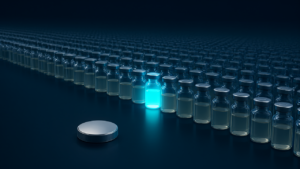
The CLaC (Contrastive Language-Crystal) model demonstrates a high capacity for retrieving materials based on geometric and semantic properties. In zero-shot tests, the CLaC-Synthetic version matched crystal structures to the correct composition description with 95.4 percent accuracy, significantly outperforming a text-only Gemma baseline (17.8 percent) and an untrained version (13.5 percent). When queried for solid-state battery electrolyte candidates, the model successfully identified materials previously flagged as promising in separate studies.
Technical Details
CLaC is a vision-language model employing a dual-branch architecture: a crystal graph encoder for 3D atomic arrangements and a text encoder for natural language. The system uses contrastive learning to map these two inputs into a shared mathematical space, allowing researchers to retrieve crystals by typing property descriptions rather than specific formulas. The model was trained using approximately 126,000 materials from the Materials Project. Text data was sourced from paragraphs in four million academic papers and synthetic narratives generated by a language model based on computed properties.
Background and Context
Traditional AI for crystals often treats structures as 3D graphs, while large language models rely on text. This creates a gap because many crystal structures exist in computational databases without accompanying prose. Furthermore, academic literature is biased toward a small set of popular materials. CLaC addresses this by using synthetic narratives, which covered about 300 times more diverse crystals than the literature sample. Testing showed that CLaC-Synthetic achieved structured alignment between geometry and text, whereas the version trained only on academic papers (CLaC-Paper) did not.
Significance and Outlook
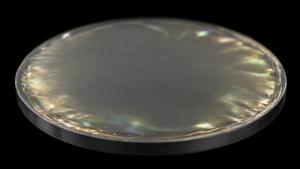
While the research did not produce a new commercial battery cell, it establishes a method to bypass data scarcity and popularity bias in materials science. By connecting a material’s atomic structure to its properties and processing, the model allows for the discovery of materials based on meaning and geometry rather than fixed labels.
Source: https://www.intelligentliving.co/mit-taught-ai-read-crystals-find-better/
Get our weekly technology intelligence — free
Receive an infographic that lets you judge at a glance whether each field’s analysis report is worth reading.
Subscribe Free — Weekly Tech Intelligence
By subscribing, you’ll receive Troy-Technical’s weekly technology intelligence newsletter.
- Your email and selected fields are used only to deliver the newsletter.
- We never share your information with third parties.
- You can unsubscribe anytime via the link in each email.
See our Privacy Policy for details.
Takes about a minute · Unsubscribe anytime