Key Findings
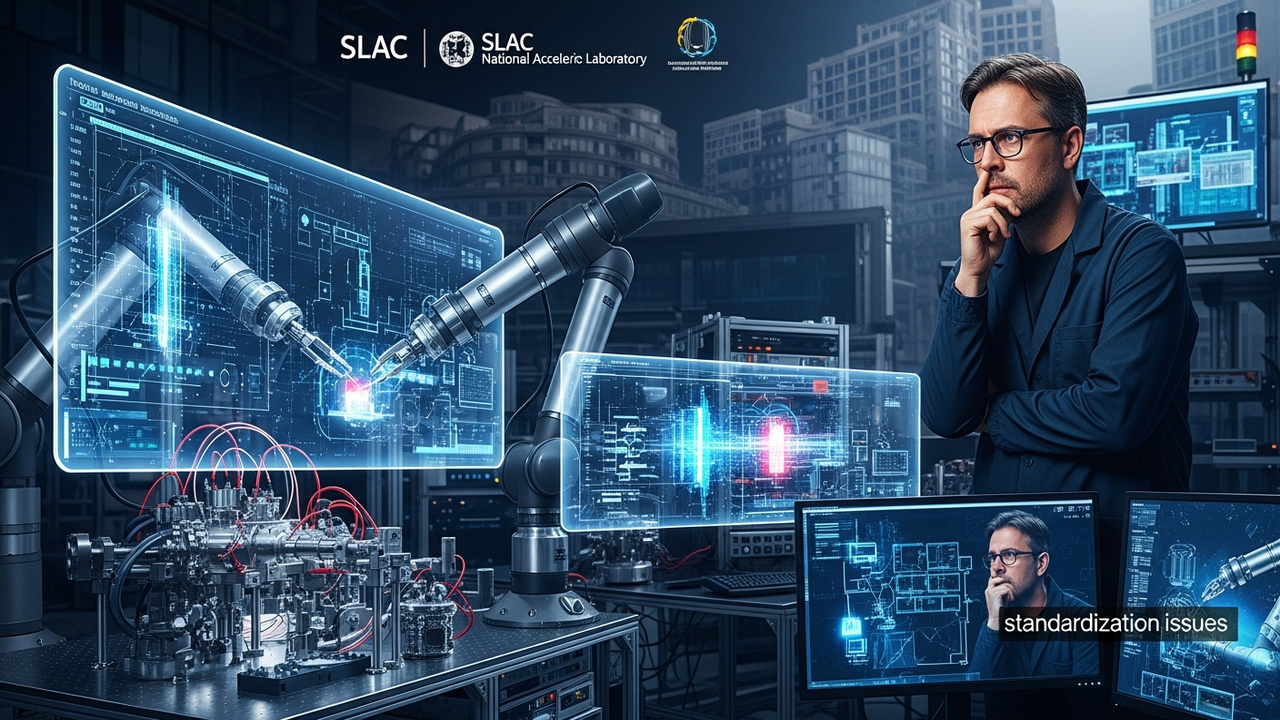
A collaboration involving four leading research institutions—SLAC National Accelerator Laboratory, Stanford University, Penn State, and UC Santa Barbara—demonstrated the potential of AI in developing catalysts for fuel production through joint experiments. This achievement highlights AI’s capability to optimize complex chemical reactions and accelerate the discovery of new materials. Simultaneously, the study revealed significant variations in test results across the participating labs, underscoring the critical need for standardization of methodologies and ensuring reproducibility in AI-driven materials research.
Technical / Clinical Details
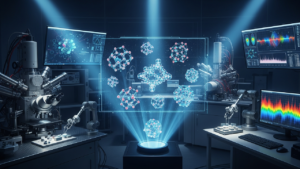
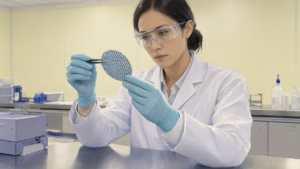
In the collaborative study, AI algorithms were employed to design candidate catalyst materials, which were then independently synthesized and evaluated at each participating laboratory. AI assisted in predicting material structures with optimal catalytic properties under specific reaction conditions, contributing to the efficiency of the experimental process. Catalyst performance was assessed using metrics such as reaction rate, selectivity, and stability. However, the round-robin experiments showed significant discrepancies in performance data for the same AI-designed catalysts when evaluated by different labs. This suggests insufficient standardization across a wide range of experimental factors, including catalyst synthesis conditions, characterization techniques, reactor design, and even data analysis procedures. Such variations pose a barrier to reliably demonstrating AI-predicted performance and scaling up for industrial applications. In contrast, autonomous lab systems like Argonne National Laboratory’s A-Lab, where AI fully controls experimental design, execution, and analysis, are capable of generating and testing up to 200 new material samples per day using robotic arms, dramatically enhancing the speed and reproducibility of material development.
Background & Context
In fields such as fuel production, including hydrogen generation and synthetic fuel manufacturing from CO2, the development of highly efficient and cost-effective catalysts is indispensable for achieving a sustainable society. Leveraging AI for materials discovery holds great promise for significantly reducing the search space and shortening development times compared to traditional trial-and-error approaches. However, ensuring reproducibility at the basic research stage is crucial not only for the reliability of scientific knowledge but also for future industrial-scale implementation. As collaboration among different research institutions increases, there is a growing demand for establishing standard protocols that guarantee the comparability of experimental data.
Strategic Significance & Outlook
The challenges identified in this round-robin experiment point to a critical step in the maturation of AI-driven materials development. Moving forward, the focus will not only be on enhancing AI’s predictive capabilities but also on standardizing and automating the experimental validation process of these predictions. The concept of autonomous labs offers a powerful solution to this reproducibility challenge. Through rigorous control of experimental conditions and automated data collection and analysis, human-introduced variability can be minimized, enabling objective and consistent evaluation of AI-proposed new materials. This is expected to accelerate materials development not only for fuel production catalysts but also across various other fields, paving the way for AI-driven scientific discoveries to contribute more rapidly to real-world applications.
Get our weekly technology intelligence — free
Receive an infographic that lets you judge at a glance whether each field’s analysis report is worth reading.
Subscribe Free — Weekly Tech Intelligence
By subscribing, you’ll receive Troy-Technical’s weekly technology intelligence newsletter.
- Your email and selected fields are used only to deliver the newsletter.
- We never share your information with third parties.
- You can unsubscribe anytime via the link in each email.
See our Privacy Policy for details.
Takes about a minute · Unsubscribe anytime