Background
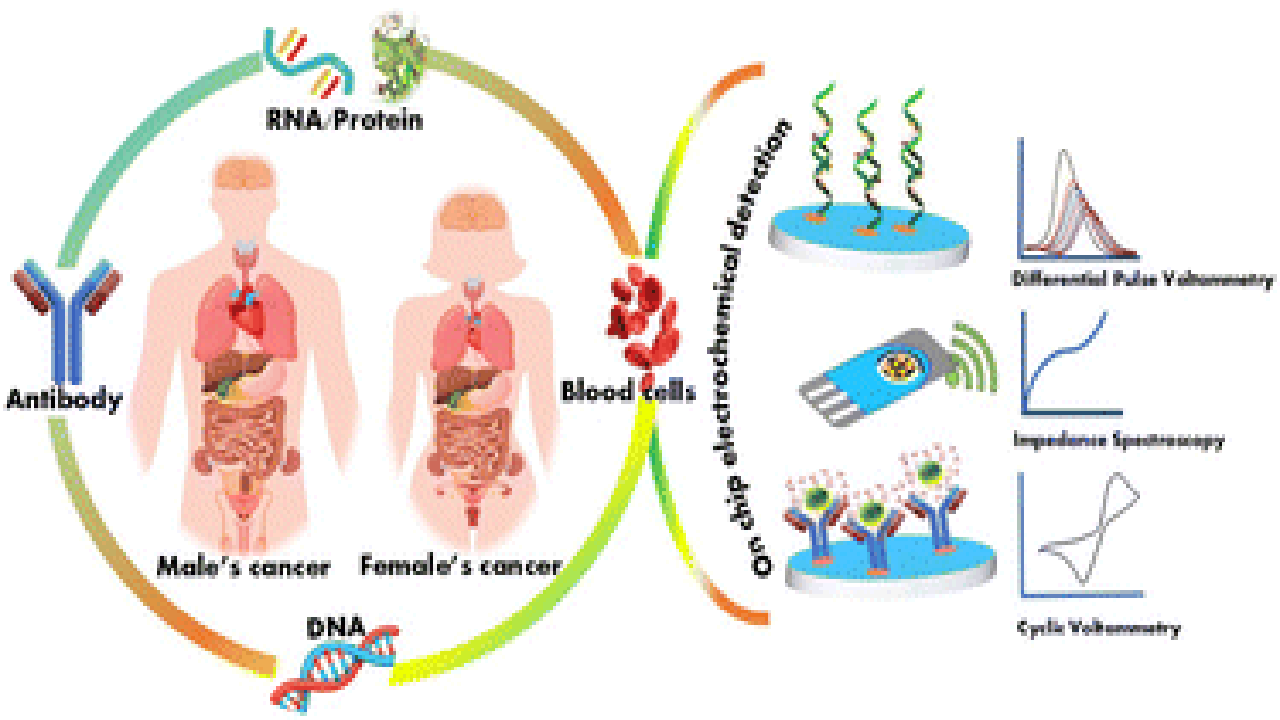
Cancer remains a major global public health challenge, and its early detection is critical for dramatically improving treatment success rates and patient survival. However, many existing cancer diagnostic technologies face limitations such as invasiveness, high cost, time consumption, and low sensitivity in early stages. To overcome these barriers, new biosensor technologies integrated with nanotechnology, particularly electrochemical biosensors, are attracting significant attention. Nanoengineering dramatically enhances sensor performance, offering more accessible and efficient diagnostic solutions.
Key Findings / Results
Nanoengineered electrochemical biosensors have brought several significant advancements in cancer biomarker detection. Key achievements and technical features include:
- High Sensitivity and Specificity: Introducing nanomaterials (e.g., gold nanoparticles, quantum dots, carbon nanotubes, graphene) to the electrode surface vastly increases surface area and provides abundant binding sites for biomarkers. This enables the highly sensitive and selective detection of trace cancer biomarkers (e.g., circulating tumor DNA (ctDNA), microRNA (miRNA), specific protein markers).
- Detection of Diverse Biomarkers: These sensors can incorporate various DNA, RNA, and protein-based biomarkers. For instance, they can detect a wide range of targets such as genetic mutations, gene expression patterns, and specific antigens or enzyme activities, supporting multi-faceted cancer diagnosis.
- Real-time Analysis Capability: Electrochemical sensors instantaneously detect changes in electrical signals upon biomarker binding to the recognition element. This minimizes sample preparation time and provides real-time diagnostic results, which is crucial for rapid clinical decision-making.
- Portability and Ease of Use: The integration of nanomaterials allows for miniaturization and portable design of sensor devices. This promotes their use as point-of-care (POCT) devices, enabling diagnosis without specialized laboratory equipment. Their relatively simple operation means they can be used with limited training.
These characteristics hold the potential to significantly improve diagnostic accuracy and early intervention opportunities for patients, especially in detecting specific biomarkers tailored to cancer types (e.g., breast, lung, and prostate cancers).
Technical Significance & Outlook
Nanoengineered electrochemical biosensors are poised to bring a revolutionary impact to the field of cancer diagnostics. Their greatest advantage is enabling accessible and cost-effective cancer screening and early diagnosis in resource-limited regions or remote areas. This will contribute to bridging global healthcare disparities, allowing more patients to receive early diagnosis and treatment. Furthermore, real-time monitoring capabilities are valuable for evaluating treatment efficacy and recurrence surveillance, accelerating the progress of personalized medicine. Future developments are expected to include enhanced multiplex biomarker detection capabilities, advanced data analysis through AI integration, and extensive clinical trials to further accelerate the clinical translation of these technologies. This will pave the way for a future where comprehensive healthcare solutions, supporting cancer from diagnosis to treatment and prognosis management, are widely available.
Source: https://pubs.rsc.org/en/content/articlelanding/2025/nr/d5nr01675d








Comments