
Background
Cortisol is a crucial steroid hormone deeply involved in stress response, inflammation, and metabolic functions, making its concentration a vital biomarker for evaluating physiological and psychological states. However, traditional methods for measuring cortisol—such as blood tests—are invasive, while saliva and urine tests often lack real-time capabilities. In recent years, there has been increasing interest in wearable sensors that enable non-invasive and continuous monitoring, with sweat-based cortisol detection emerging as a promising alternative. This field demands new sensor technologies capable of high sensitivity, high selectivity, and a simplified design.
Key Findings / Results
This research presents the development of an innovative molecularly imprinted polymer (MIP)-based electrochemical sensor for non-invasive detection of cortisol in artificial sweat, notably without the need for amplifying nanomaterials. Key technical features and achievements include:
- Molecularly Imprinted Polymer (MIP) Technology: The MIP layer, created using cortisol molecules as a template, specifically recognizes and binds the target cortisol. This highly selective molecular recognition ensures that cortisol can be detected with high specificity even in the presence of other structurally similar steroid hormones (e.g., dexamethasone, testosterone).
- Absence of Amplifying Nanomaterials: While many high-sensitivity biosensors traditionally rely on nanomaterials like gold nanoparticles or carbon nanotubes for signal amplification, this sensor achieves high performance without these complex materials. This simplifies the sensor fabrication process and contributes to cost reduction.
- Superior Detection Performance:
- Wide Analytical Range: Accurately quantifies cortisol over a very broad concentration range, from 100 pg/mL to 160 ng/mL, covering the relevant physiological fluctuations.
- Extremely Low Detection Limit: Achieves an impressively low detection limit of 2.2 pg/mL, allowing for sensitive detection of minute cortisol variations in sweat.
- High Selectivity: Experimental validation confirmed excellent selectivity against other steroid hormones, ensuring reliable measurements even in complex biological samples.
- High Versatility: This MIP-based approach is easily transferable to other electrode architectures. This facilitates the development of cortisol monitoring sensors on more flexible substrates and in different form factors suitable for wearable devices.
Technical Significance & Outlook
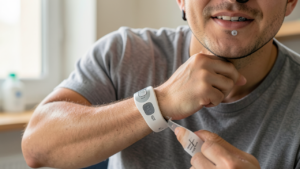
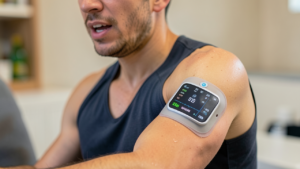
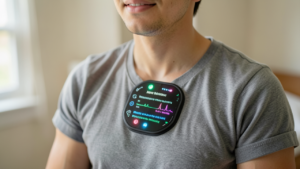
This nanomaterial-free MIP electrochemical sensor marks a significant advancement in non-invasive cortisol monitoring. Its simple and robust design makes it particularly suitable for integration into point-of-care (POC) tests and wearable devices. The ability to continuously monitor cortisol levels in real-time provides invaluable information for assessing individual stress levels, post-exercise recovery, sleep quality, and even managing specific conditions like Addison’s disease or Cushing’s syndrome. This empowers users to better understand their health status and supports decisions for lifestyle improvements or early medical intervention. In the future, embedded in smartwatches or dermal patches, this technology is expected to become a crucial tool for personalized healthcare and preventive medicine, offering more accessible and efficient stress management solutions that contribute to improved public health globally.




Comments