Background
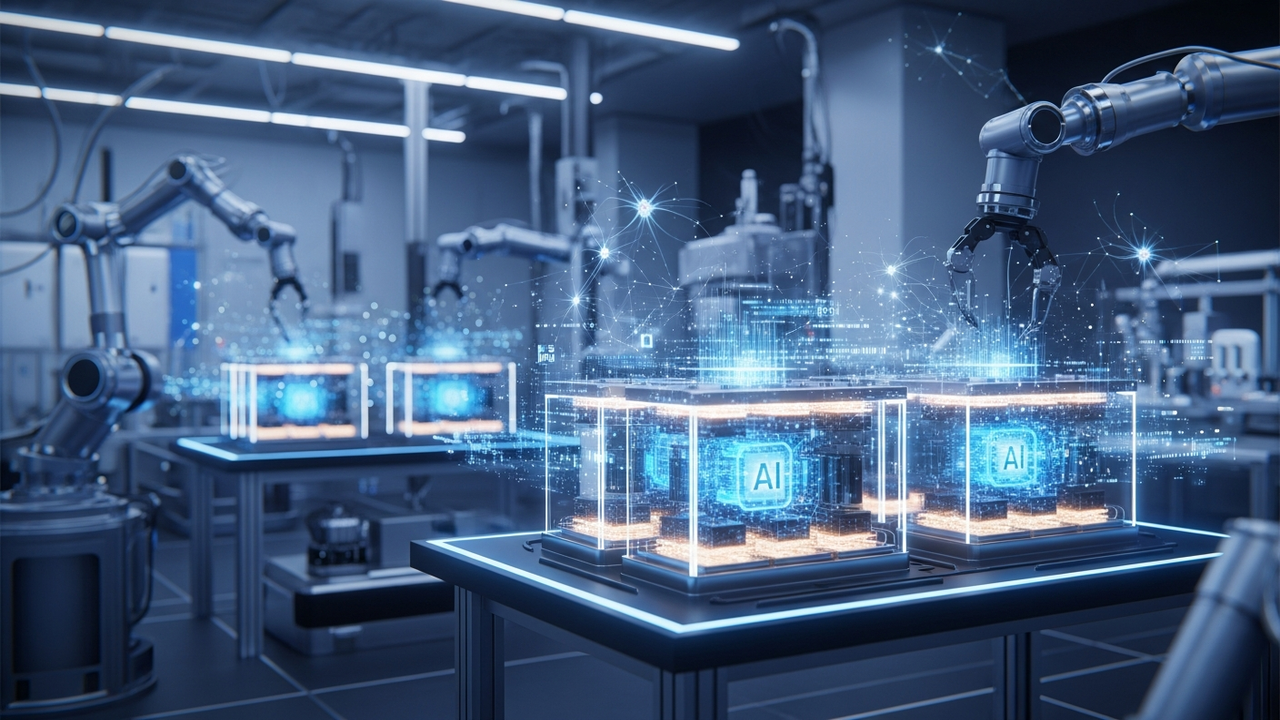
The rapid proliferation and increasing sophistication of Artificial Intelligence (AI) systems, from edge devices to data centers, demand increasingly efficient and reliable power sources. As AI computing power grows, so does the need for battery technologies that are compact, lightweight, and capable of high-frequency power delivery, particularly for mobile and onboard AI applications. Traditional liquid electrolytes in current battery systems pose significant safety concerns, including leakage, flammability, and thermal runaway. These risks underscore an urgent need for safer, higher-performing alternative materials to support the next wave of AI innovation.
Key Findings / Results
In response to these challenges, polymer electrolytes are gaining prominence as a critical component for future AI onboard battery systems. Their solid-state nature inherently eliminates the risk of electrolyte leakage and significantly enhances thermal stability, thereby improving overall battery safety and reliability. Recent advancements in materials science and nanotechnology are enabling the development of highly sophisticated polymer matrices. For instance, researchers are exploring approaches such as uniformly dispersing nanoparticles within polymer matrices to boost ionic conductivity or designing specific molecular architectures to reduce interfacial resistance between the electrolyte and electrodes. These innovations are crucial for achieving the high energy densities and fast charge-discharge cycles required by demanding AI applications, thereby facilitating the realization of advanced battery systems tailored for AI.
Technical Significance & Outlook
The development of AI onboard battery systems utilizing polymer electrolytes is set to have a transformative impact across multiple sectors. For mobile AI devices and wearables, it promises extended operating times and further miniaturization, leading to more seamless user experiences. In autonomous systems like electric vehicles and drones, enhanced battery safety and performance directly translate to increased range and reliability. Furthermore, in large-scale energy systems such as data centers and grid storage, the inherent thermal stability of polymer electrolytes contributes to system safety and reduced operational costs. Future research is expected to focus on discovering novel polymer electrolytes with even higher ionic conductivities and broader electrochemical windows, alongside efforts to reduce manufacturing costs and improve process efficiency. These advancements will be instrumental in empowering the continued evolution and widespread deployment of AI technologies across society.






Comments