Background: Challenges in Hydrogen Transport and the Potential of Compressed Hydrogen
The realization of a global green hydrogen economy fundamentally depends on establishing efficient and cost-effective means of transporting hydrogen from production sites to consumption centers. Currently, long-distance maritime transport of hydrogen primarily considers methods such as liquefaction (LH2) or conversion to ammonia. However, these processes require substantial energy for liquefaction or reconversion and involve complex infrastructure. Against this backdrop, compressed hydrogen (CH2) transport via specialized carriers, known as compressed hydrogen ships, is gaining attention as a relatively simpler and more energy-efficient alternative. This method holds significant potential, particularly for short to medium-distance transport, by contributing to reductions in both infrastructure costs and energy consumption.
Key Developments: H2Neo Carrier and Agreement with K Line
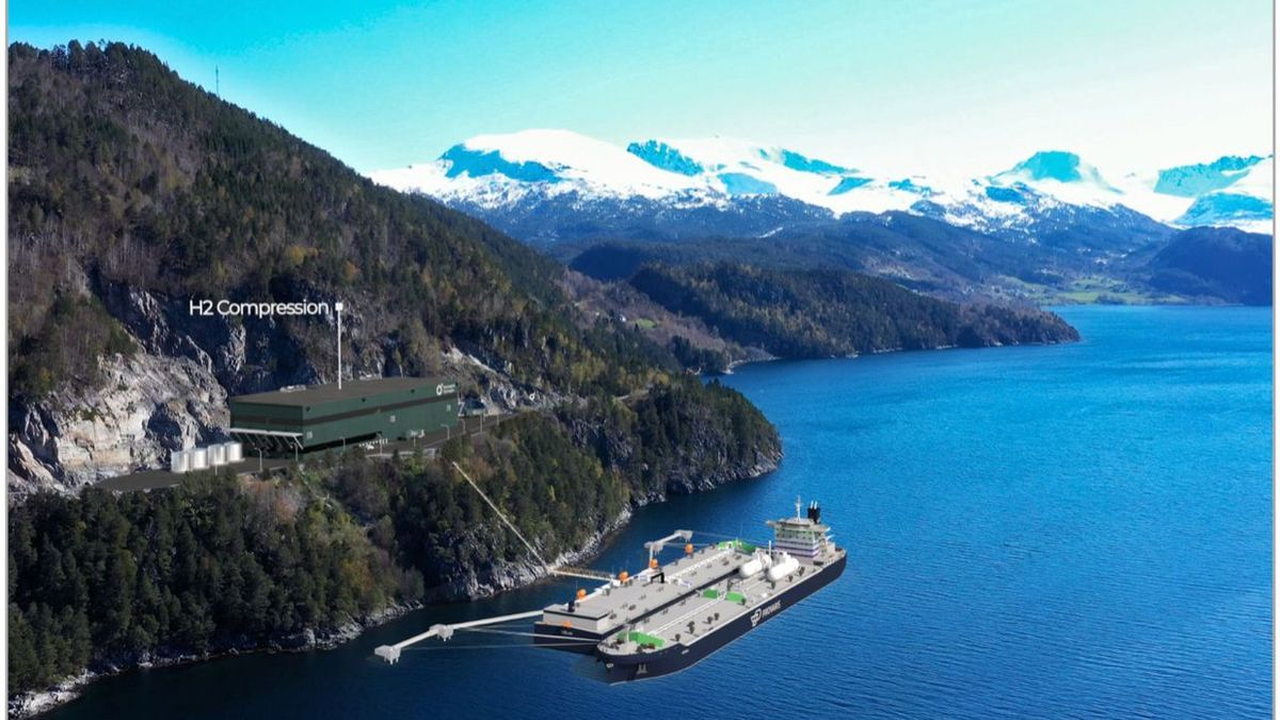
Provaris Energy, an Australian clean energy company, is making significant strides in the development and commercialization of its H2Neo compressed hydrogen carrier. The company is currently pursuing Final Class Approval for the H2Neo, which signifies the ultimate verification of its design’s safety and suitability by a classification society. Concurrently, Provaris is actively advancing a prototype tank program in Norway to validate the performance and safety of its compressed hydrogen tanks under real-world conditions. A recent cooperation agreement with Kawasaki Kisen Kaisha (K Line), a major Japanese shipping company, is poised to significantly accelerate Provaris’s hydrogen export strategy. This agreement is strategically positioned to capitalize on the increasing hydrogen demand in Europe and establish critical hydrogen supply routes to major global markets, including Asia.
Technical Significance and Future Outlook
The H2Neo carrier technology developed by Provaris Energy is technically significant for its integrated approach to high-pressure tank technology and vessel design, enabling efficient and safe compressed hydrogen transport. By eliminating the need for liquefaction or chemical conversion, this method has the potential to minimize energy losses and create a simpler supply chain. The Norwegian hydrogen project, targeting a Final Investment Decision (FID) by late 2027 or early 2028 and projected operations from 2030 to 2031, will be crucial in demonstrating the economic viability, safety, and practicality of maritime transport of compressed hydrogen. Future challenges include optimizing tank design for larger scales, reducing carrier construction costs, and establishing international acceptance and regulatory frameworks for compressed hydrogen trade. Collaboration with major shipping companies like K Line is indispensable for overcoming these hurdles and accelerating market penetration, contributing to the diversification of the future hydrogen supply chain.



Comments