Background
The bioprocessing sector continually seeks advanced, flexible solutions that can streamline R&D while offering robust scalability to production. Traditional bioreactor systems often present limitations in terms of adaptability across different culture types or ease of transition between development phases. Recognizing these challenges, Eppendorf has developed a new control station designed to meet the evolving demands for precision, versatility, and efficiency in biomanufacturing.
Key Findings / Results
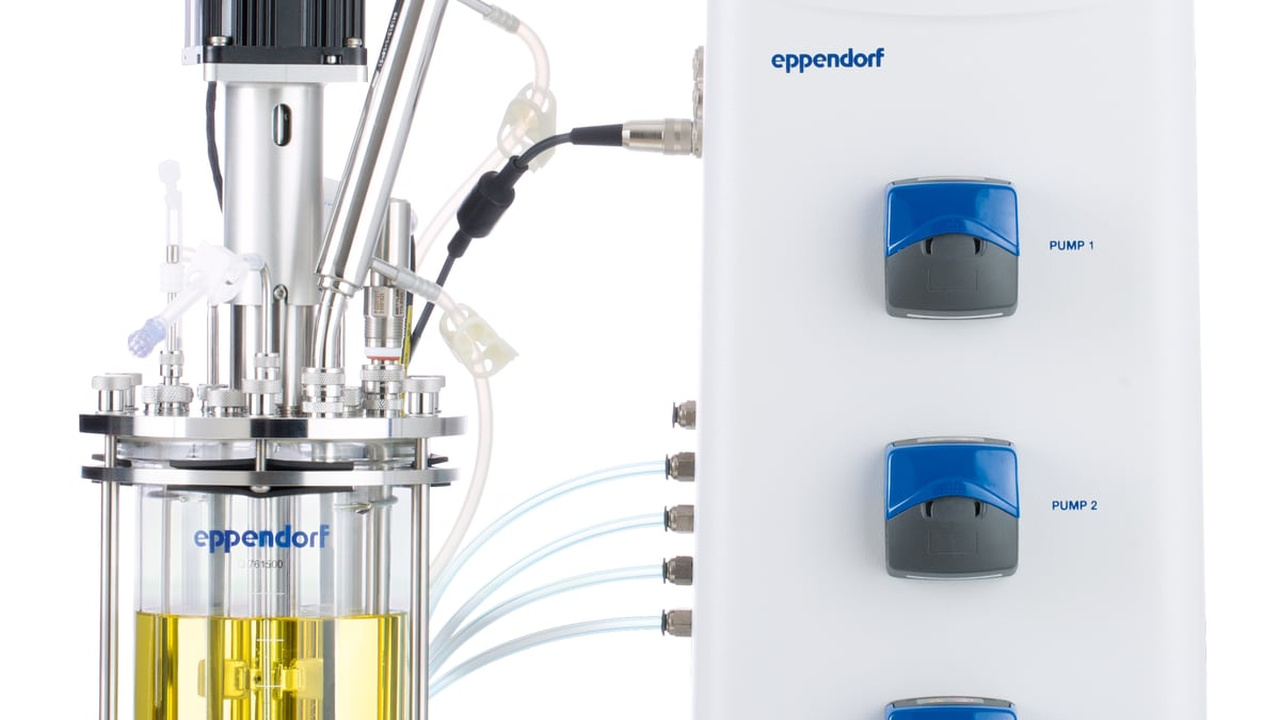
Eppendorf’s newly unveiled BioFlo 120 Bioprocess Control Station represents a significant step forward in benchtop bioprocessing. This system is engineered to handle an extensive array of biological systems, including bacterial, yeast, and algal cultures, as well as mammalian, insect, and plant cell cultures. A core feature of the BioFlo 120 is its ability to precisely regulate critical process parameters such as pH, dissolved oxygen, temperature, and agitation speed, ensuring optimal growth conditions and reproducibility. The platform supports a diverse range of vessel configurations, including both autoclavable glass and advanced single-use bioreactors, with working volumes ranging from 0.5 L up to several liters. This flexibility allows researchers and manufacturers to conduct a broad spectrum of experiments and small-scale production runs on a single, unified control platform.
- Dual-Purpose Versatility: Optimized for both microbial and cell culture applications, expanding its utility across biotechnology disciplines.
- Precision Control: Advanced instrumentation provides tight regulation of environmental factors crucial for cellular growth and productivity.
- Flexible Bioreactor Integration: Compatible with various glass and single-use bioreactor vessels, enhancing adaptability for different process needs and reducing turnaround times.
- Scalable Architecture: Designed to support linear scale-up from early-stage research to pilot production, simplifying process transfer.
Technical Significance & Outlook
The introduction of the BioFlo 120 holds substantial technical significance for the biopharmaceutical, biofuel, and industrial biotechnology industries. Its inherent versatility addresses a common bottleneck in labs juggling multiple projects and diverse culture requirements. By supporting both traditional and single-use technologies, it offers a pragmatic solution for reducing contamination risks and decreasing non-productive time associated with cleaning and sterilization. The system’s precise control capabilities are vital for process characterization and optimization, contributing to higher yields and consistent product quality. Looking ahead, the BioFlo 120 is poised to accelerate innovation in bioprocess development by providing a reliable, adaptable, and cost-effective platform for researchers to rapidly iterate and scale their biomanufacturing processes.







Comments