Key Findings
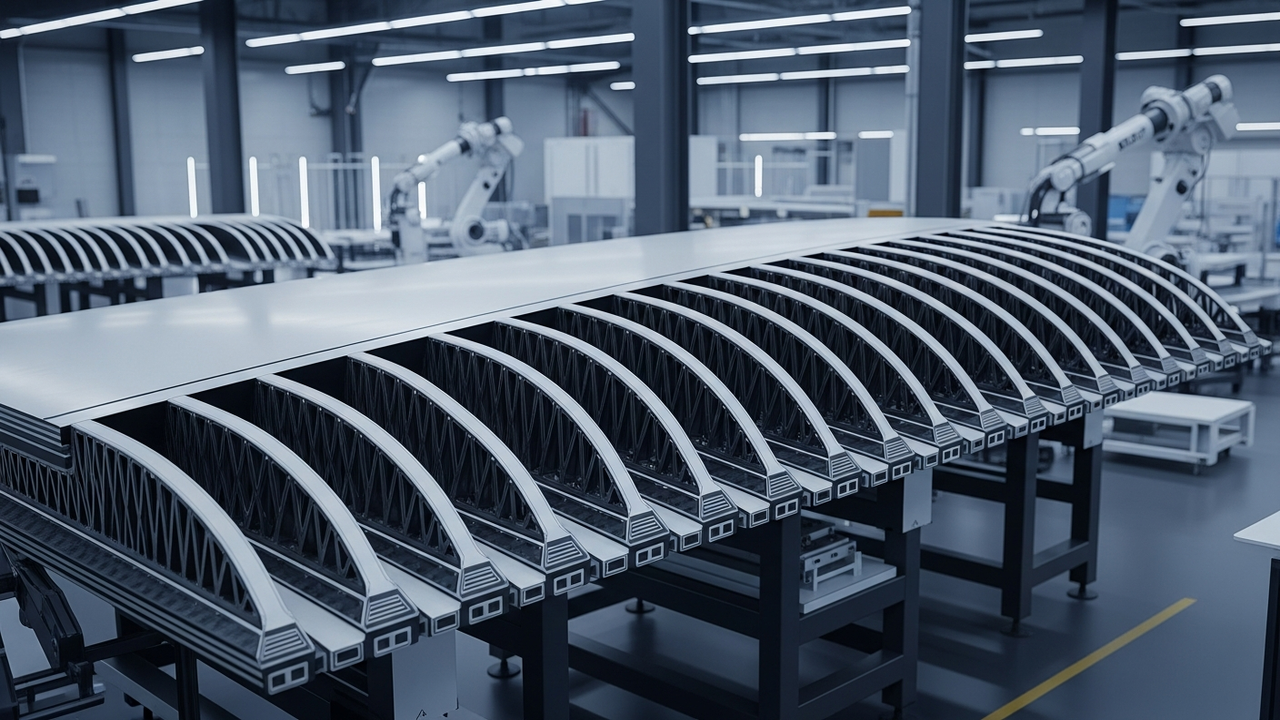
Thermoplastic composites, previously confined to secondary aircraft structures, have now been demonstrated as a viable alternative to aluminum in primary structures, thanks to Daher’s groundbreaking development of an innovative wing rib. This pioneering component is constructed from 64 layers of carbon fiber-reinforced thermoplastic composite (CFRTP) and measures 12mm thick. This serves as definitive proof that thermoplastic resins can adequately meet the rigorous mechanical requirements demanded by the aerospace sector. The technology offers multiple benefits, including aircraft lightweighting, improved manufacturing cost-efficiency, and enhanced recyclability, thus powerfully supporting the aerospace industry’s ambitious decarbonization targets.
Technical Details
Historically, aluminum alloys have been the predominant material for primary aircraft structures. However, achieving further weight reduction is imperative for improving fuel efficiency and reducing emissions. Carbon fiber composites contribute to lightweighting due to their high specific strength and stiffness, but thermoset resin-based composites present challenges in complex processing and recycling. Thermoplastic composites, being melt-processable and re-formable, offer superior processability, repairability, and recyclability. Yet, data on long-term reliability and fatigue properties for primary structures, even with high-performance thermoplastic resins, has been limited until now.
Daher’s developed wing rib represents a technological breakthrough in several aspects:
- Multi-Layer Structure: By stacking 64 layers of CFRTP, high strength and stiffness are ensured. Optimized laminate design allows it to withstand complex stresses encountered during flight.
- High-Performance Thermoplastic Resins: High-performance thermoplastic polymers like PEEK (Polyether Ether Ketone) and PEKK (Polyetherketoneketone) are used as the matrix. These exhibit excellent mechanical properties, fatigue resistance, and impact resistance even in high-temperature environments.
- Efficient Manufacturing Process: Thermoplastic composites soften upon heating, enabling joining by welding and thermoforming. This allows for reduced part counts and increased manufacturing automation, significantly cutting manufacturing costs and lead times. It also has the potential to form more reliable joints compared to conventional adhesive bonding.
- Enhanced Recyclability: Even after reaching the end of its service life, thermoplastic composite material is relatively easy to reprocess by heating or to separate fibers from the resin for recycling. This significantly contributes to reducing the overall environmental footprint of the aviation industry across its lifecycle.
Background & Industry Context
The aviation industry is under immense pressure to meet stringent environmental targets, such as net-zero emissions by 2050. This necessitates not only the electrification of propulsion systems and the transition to Sustainable Aviation Fuels (SAF) but also significant lightweighting of the airframe itself. Replacing aluminum with thermoplastic composites in primary structures signifies more than just a material change; it will profoundly influence aircraft design philosophies, manufacturing methodologies, and the business models of airlines and aircraft manufacturers. Daher has been a long-standing leader in this research and development area, and this achievement underscores their technological leadership.
Strategic Significance & Outlook
Daher’s demonstration of the CFRTP wing rib opens new avenues for aircraft manufacturers to develop lighter, more manufacturing-efficient, and environmentally friendly aircraft. This technology could potentially be applied to other primary structural components such as fuselages, main wings, and tail sections in the future, dramatically reducing overall aircraft weight and further improving fuel efficiency. For investors, this suggests that innovative material technologies and sustainability initiatives in the aerospace sector are creating new growth markets. For engineers and researchers, it serves as an inspiring example of pushing the frontiers of aerospace materials science.
Source: https://www.lfrt-plastic.com/news/can-lft-g-thermoplastics-replace-aircraft-alum-85585836.html
Get our weekly technology intelligence — free
Receive an infographic that lets you judge at a glance whether each field’s analysis report is worth reading.
Subscribe Free — Weekly Tech Intelligence
By subscribing, you’ll receive Troy-Technical’s weekly technology intelligence newsletter.
- Your email and selected fields are used only to deliver the newsletter.
- We never share your information with third parties.
- You can unsubscribe anytime via the link in each email.
See our Privacy Policy for details.
Takes about a minute · Unsubscribe anytime






Comments