Key Findings
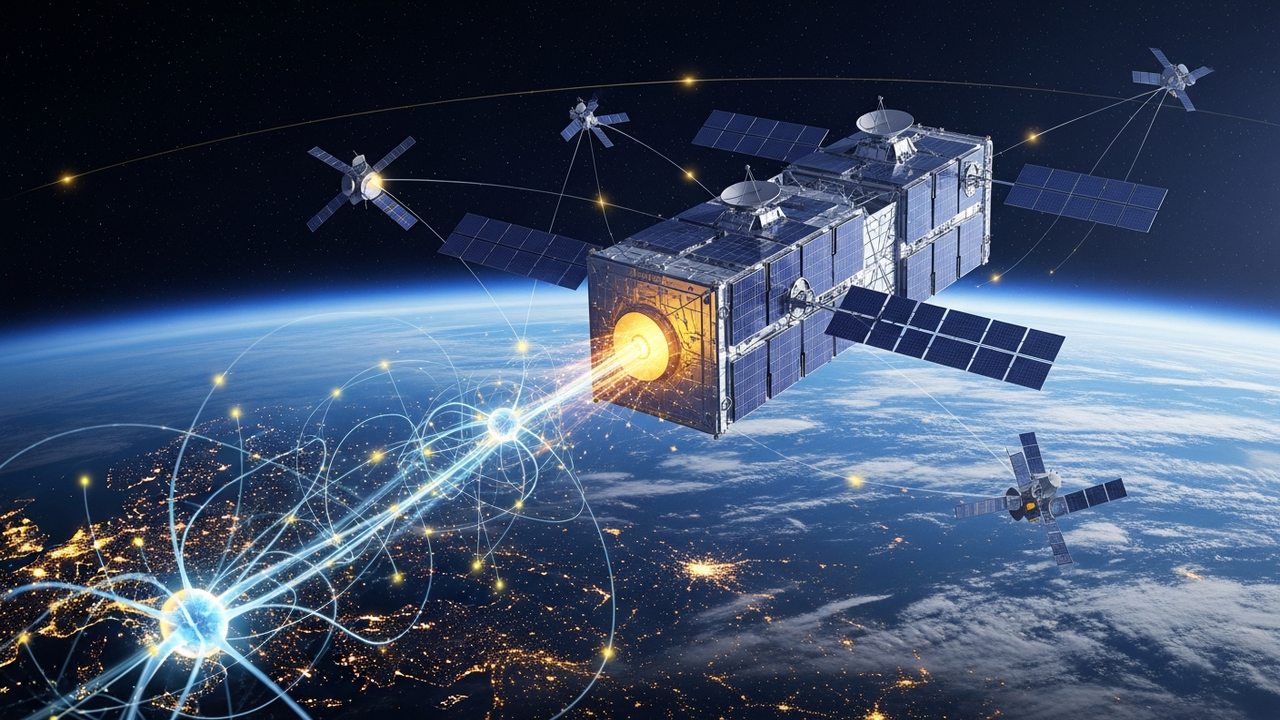
Amid the escalating demands of the Artificial Intelligence (AI) boom, which exacerbates constraints on power, land, and water resources for terrestrial data centers, the concept of ‘orbital data centers’ is garnering significant interest as a novel solution. This space-based computing paradigm, owing to its unique advantages, holds the potential to capture a strategically vital share of global computing capacity by 2040.
Technical & Business Details
Orbital data centers are drawing attention for their ability to circumvent many of the limitations inherent in Earth-bound computing infrastructure. In space, solar energy is abundantly available and continuous, offering a constant power source. There are virtually no land-use restrictions, eliminating a major bottleneck for expansion. Furthermore, the near-absolute-zero temperatures of space can provide passive cooling, negating the need for extensive water resources or complex cooling systems that are a significant challenge for ground-based data centers. These advantages are particularly beneficial for compute-intensive workloads such as AI model training and large-scale data processing, which demand high computational power and efficient heat dissipation.
Tangible steps towards realizing this vision are already accelerating. The startup Starcloud successfully demonstrated in-orbit computing capabilities in 2025. Additionally, SpaceX applied to the U.S. Federal Communications Commission (FCC) for approval of an ‘orbital data center system’ in January 2026, signaling its intent to commercialize this technology. These developments indicate that orbital computing is transitioning from a theoretical concept to a practical and implementable technology.
Background & Industry Context
Current AI data centers are placing immense strain on national power grids due to their voracious energy consumption. The construction of large-scale data centers also demands vast tracts of land and copious amounts of cooling water, posing significant environmental and geographical constraints. These challenges threaten to impede the further development and widespread adoption of AI technologies, necessitating alternative solutions. Orbital data centers offer a radical solution by providing a computing infrastructure independent of Earth’s resources, potentially resolving these fundamental issues. The reduction of launch costs and an increase in launch frequency are critical factors determining the economic viability of these orbital data centers.
Strategic Significance & Outlook
Although the concept of orbital data centers is in its nascent stages, its potential impact is immense. Successful implementation could alleviate bottlenecks in Earth’s computing capacity, fostering new advancements in AI, climate modeling, Earth observation, and other data-intensive applications. However, significant technical and operational challenges remain, including hardware reliability in space, space debris mitigation, cybersecurity, and data transmission latency. Overcoming these hurdles, combined with further reductions in launch costs, could enable orbital data centers to fundamentally transform the future of computing for Earth and beyond.
Get our weekly technology intelligence — free
Receive an infographic that lets you judge at a glance whether each field’s analysis report is worth reading.
Subscribe Free — Weekly Tech Intelligence
By subscribing, you’ll receive Troy-Technical’s weekly technology intelligence newsletter.
- Your email and selected fields are used only to deliver the newsletter.
- We never share your information with third parties.
- You can unsubscribe anytime via the link in each email.
See our Privacy Policy for details.
Takes about a minute · Unsubscribe anytime







Comments