

Key Findings
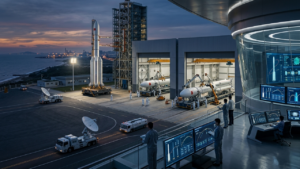
The H3 rocket Flight 10 successfully placed the MMX probe into its designated trajectory, marking the third consecutive success for the vehicle (Flights 6, 9, and 10). With 8 out of 10 flights successful, the H3’s success rate has reached 80%. This mission also achieved the first launch for the H3 without any weather-related delays, a feat not seen at the Tanegashima Space Center since the H-IIA Flight 43 approximately six years ago.
Technical Details
Flight 10 utilized the “24L” configuration, the strongest variant featuring a domestic long fairing manufactured by Kawasaki Heavy Industries. This success completes the verification of all H3 configurations, ranging from the cost-effective “30S” (without solid rocket boosters) to the “24L” for large geostationary and small satellite constellations. The only remaining development milestone is the “LE-9” engine type 2.
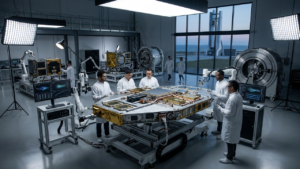
The MMX probe has a launch weight of 4,480kg, including 3,030kg of propellant (1,840kg for the outbound journey and 1,190kg for the return). The launch sequence was highly precise, with errors of only a few seconds per event; MMX separation occurred 1 hour, 11 minutes, and 13 seconds after liftoff. To prevent planetary contamination, the second stage (LE-5B-3) expelled remaining propellant to ensure it would move away from Mars after exiting Earth’s orbit.
Background and Context
The H3 program faced early challenges, including a failure of the first flight and a subsequent failure of Flight 8. However, the program recovered within six months of the second failure. The MMX mission was delayed by two years due to H3 development lags, which allowed JAXA to increase propellant loads to improve mission robustness.
Significance and Outlook
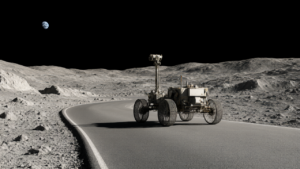
MHI reports an increase in satellite launch inquiries compared to previous years, citing the improved reliability of the H3. The MMX probe is now in its initial checkout phase, with the next critical milestone being the Mars orbit insertion scheduled for August 2027. The mission aims for a return to Earth by July 2031.
Source: https://news.mynavi.jp/techplus/article/H3F10_MMX-4/
Get our weekly technology intelligence — free
Receive an infographic that lets you judge at a glance whether each field’s analysis report is worth reading.
Subscribe Free — Weekly Tech Intelligence
By subscribing, you’ll receive Troy-Technical’s weekly technology intelligence newsletter.
- Your email and selected fields are used only to deliver the newsletter.
- We never share your information with third parties.
- You can unsubscribe anytime via the link in each email.
See our Privacy Policy for details.
Takes about a minute · Unsubscribe anytime