Key Findings
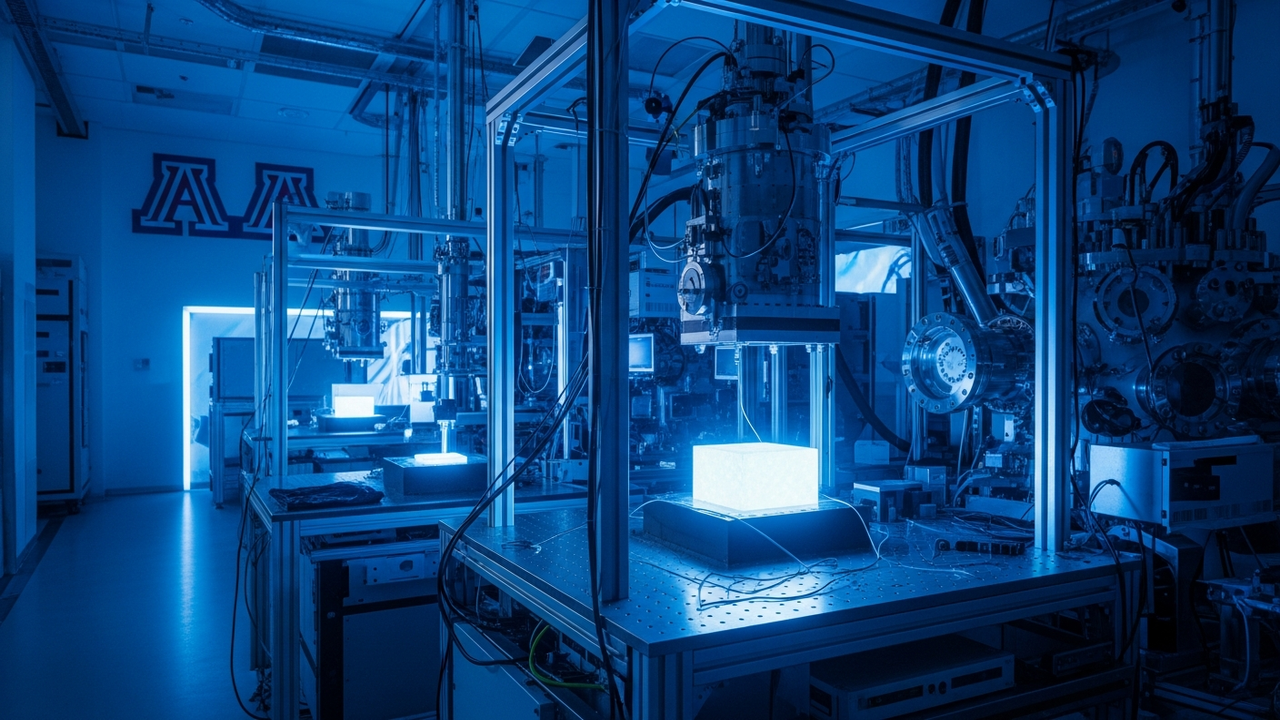
Researchers at the University of Arizona have announced a groundbreaking discovery in quantum materials, which holds the potential to dramatically improve the radiation hardness of electronic components and monitoring devices for extreme environments such as future space systems and fusion reactors. Notably, these materials exhibit changes in electrical performance when exposed to radiation, opening new avenues for sensor applications.
Technical & Research Details
The research focuses on the unique behavior of specific quantum materials when subjected to radiation. Conventional electronic components typically suffer damage and functional degradation in radiation-rich environments, posing a significant challenge. However, the newly discovered quantum materials maintain operational integrity even under high levels of radiation, and crucially, their electrical properties—such as resistance or conductivity—change in response to the radiation dose. This inherent characteristic allows the material itself to function as a radiation sensor, potentially revolutionizing long-term monitoring and data collection in harsh radiation environments like deep space missions or within fusion reactors. The researchers aim to develop sensors and semiconductor chips based on these materials, establishing a new design paradigm where devices not only ‘withstand’ but actively ‘utilize’ radiation for functionality.
Background & Industry Context
Space exploration, particularly deep space missions and long-duration lunar/Mars habitation, faces the critical challenge of cosmic radiation’s impact on electronic equipment. Similarly, in the development of fusion reactors, a promising next-generation energy source, environments near the core are exposed to extremely high radiation levels, demanding exceptionally rad-hard sensors and control systems. Traditional radiation hardening techniques have primarily focused on enhanced shielding and redundant designs to mitigate radiation damage. The discovery in quantum materials offers a fundamental solution from a materials science perspective, moving beyond passive protection to active radiation response.
Strategic Significance & Outlook
The University of Arizona’s research paves a new path for the field of radiation-hardened electronics. Should this quantum material technology be commercialized, it could enable the development of lighter, more compact, and significantly more reliable electronic equipment for spacecraft, as well as robust operational and safety monitoring systems for fusion reactors. This would allow humanity to explore space further and deeper than ever before, while also accelerating fusion research towards clean energy realization. The technology is expected to directly enhance reliability and performance in long-duration missions in extreme environments, profoundly impacting both the space and energy industries.
Source: #
Get our weekly technology intelligence — free
Receive an infographic that lets you judge at a glance whether each field’s analysis report is worth reading.
Subscribe Free — Weekly Tech Intelligence
By subscribing, you’ll receive Troy-Technical’s weekly technology intelligence newsletter.
- Your email and selected fields are used only to deliver the newsletter.
- We never share your information with third parties.
- You can unsubscribe anytime via the link in each email.
See our Privacy Policy for details.
Takes about a minute · Unsubscribe anytime






Comments