Background
The escalating global plastic pollution crisis and its significant contribution to climate change necessitate a rapid transition away from fossil-based plastics. Traditional plastics are characterized by high carbon footprints during production and persistent environmental impacts post-disposal. Bio-based and compostable polymers have emerged as promising alternatives, offering reduced environmental burden and alignment with circular economy objectives.
Key Findings / Results
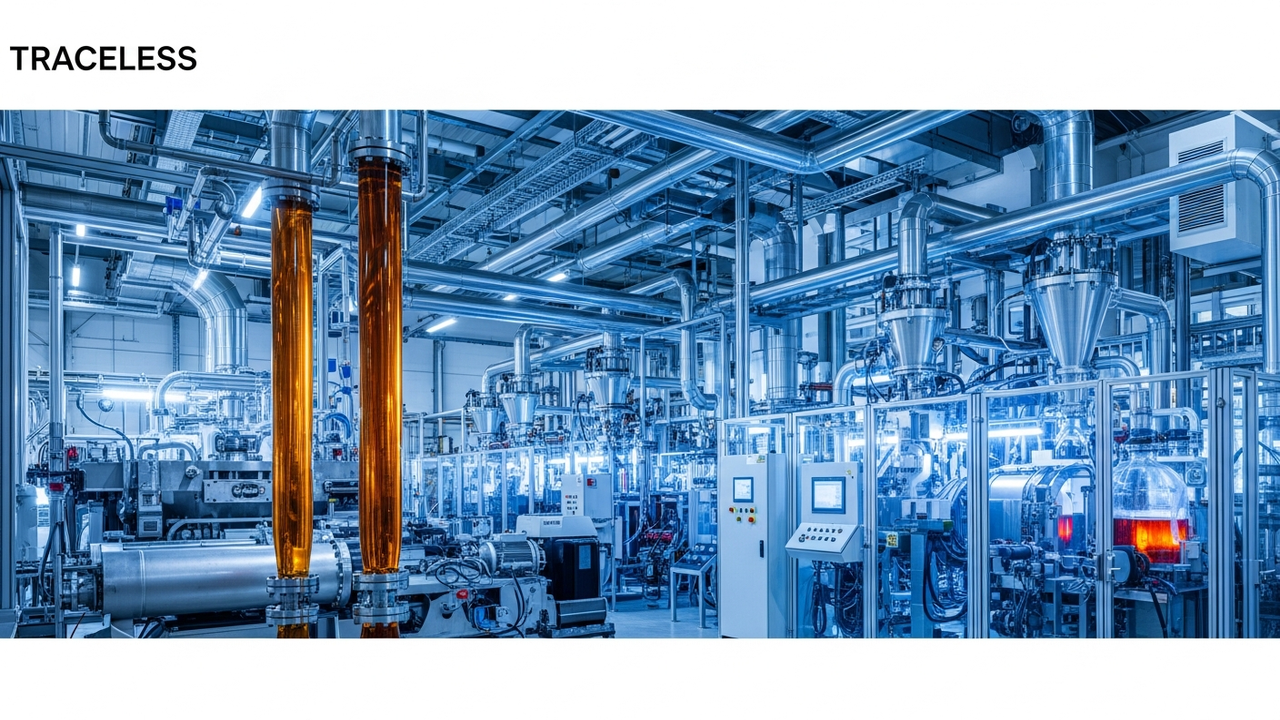
German startup Traceless has commenced industrial production of its ‘Traceless Natural Polymer,’ a bio-based, home-compostable material derived from agricultural plant residues, which are by-products of the food industry. The company’s first industrial facility, located in Hamburg, is engineered to process these residues into granules using a proprietary extraction technology, achieving an annual production capacity of approximately 3,000 tons. This innovative polymer is suitable for diverse applications, including packaging, coatings, and adhesives. A key technical achievement is its ability to reduce CO2 emissions by an impressive 91% compared to conventional plastics. Furthermore, its home-compostable nature addresses concerns regarding microplastic pollution, offering an end-of-life solution that integrates seamlessly into natural cycles.
Technical Significance & Outlook
The commercialization of Traceless Natural Polymer represents a substantial leap forward for the sustainable materials sector, particularly in its potential to accelerate the shift towards a circular economy. Its applicability across various industries, notably food packaging and single-use items, positions it as a vital alternative to conventional plastics. The material’s quantified environmental benefits—91% lower CO2 emissions and complete home compostability—will enable businesses to meet stringent ESG targets and cater to increasing consumer demand for eco-friendly products. Future prospects include scaling up production, expanding into new application areas, and potentially setting a new benchmark for sustainable material innovation within the broader polymer industry.
Source: https://www.trendhunter.com/amp/trends/traceless-natural-polymer







Comments