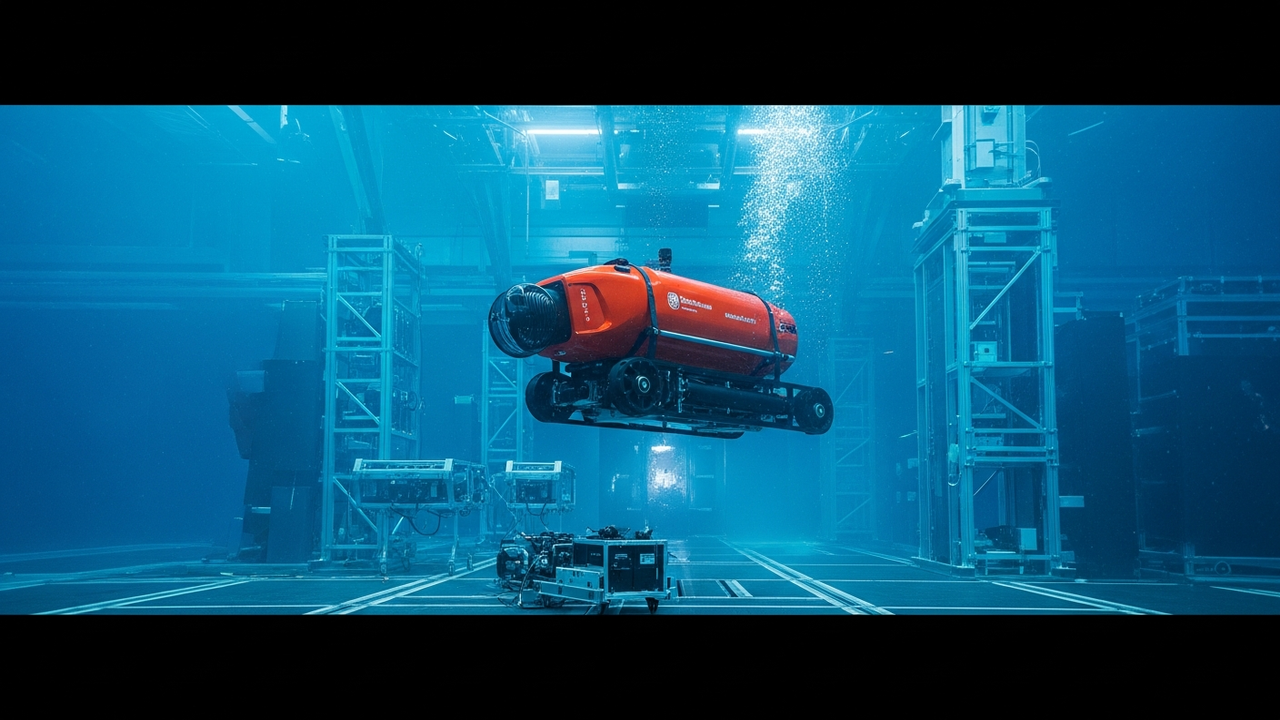
Background: Challenges of Robotic Manipulation in Harsh Underwater Environments
Underwater operations span a wide range of tasks, including ocean exploration, subsea infrastructure maintenance, and biological specimen collection. However, the harsh underwater environment, characterized by cold temperatures, high pressure, limited visibility, and communication difficulties, makes precise robotic manipulation exceedingly challenging. Especially when handling delicate marine organisms or fragile underwater structures, rigid conventional robotic arms carry a high risk of causing damage. Therefore, the development of end-effectors capable of flexible and precise force control has become an urgent priority.
Key Findings: Underwater End-Effectors with Soft Robotics and Smart Materials
A research team at Harbin Engineering University in China has developed innovative soft robotics technology specifically designed for underwater manipulation. Central to their research is an end-effector that combines flexible materials with a pneumatic actuation system. This end-effector integrates smart materials such as Shape Memory Alloys (SMAs) and Electroactive Polymers (EAPs). SMAs possess the property of shape memory and recovery in response to temperature changes, enabling reliable movements in underwater operations. EAPs, on the other hand, function as “artificial muscles” that deform significantly with electrical stimulation, contributing to delicate grip force adjustment. The combination of these materials allows the end-effector to maintain its flexibility and rapid responsiveness even in cold underwater environments.
Technical Significance and Outlook
Furthermore, a groundbreaking aspect of this end-effector is its integrated distributed sensing network across its entire surface. This network detects pressure and strain in real-time when the end-effector contacts an object, providing haptic-like feedback to the robot’s control system. This enables the robot to estimate the hardness and shape of the gripped object and automatically adjust its gripping force accordingly, acquiring “dexterity.” This technology offers significant advantages in fields requiring precise and gentle operations, such as the collection of delicate marine specimens by marine biologists or the handling of fragile artifacts in underwater archaeology. In the future, this underwater soft robotic end-effector technology is expected to provide innovative solutions across a wide range of underwater applications, including deep-sea exploration, subsea cable laying and maintenance, offshore resource extraction, and underwater disaster response robots, thereby significantly contributing to the advancement of marine science and engineering.
Source: https://eureka.patsnap.com/report-optimizing-robotic-end-effectors-for-underwater-use-cases



Comments