Background and Technical Innovations
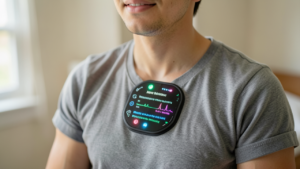
While traditional wearables track physical metrics, detailed molecular biomarker analysis from bodily fluids has remained a significant challenge. Addressing this, researchers at the University of California, Irvine, introduced the IREM-W2MS3 bioelectronic sensor, a flexible skin patch that is both wireless and battery-free. This device is engineered to continuously and simultaneously measure multiple biomarkers in sweat, including cortisol (stress), glucose (blood sugar), lactate (physical exertion), and urea (kidney function).
Key Features and Performance
The IREM-W2MS3 stands out for its sustained accuracy and user convenience over extended periods. A crucial feature is its self-regenerating sensing surface, which ensures reliability throughout prolonged wear. Furthermore, the sensor can actively induce sweat on demand, guaranteeing sufficient sample collection even in dry conditions or during low activity, thus enabling stable, continuous monitoring for up to 21 days. This multi-analyte capability provides a more comprehensive, real-time physiological snapshot, promising richer health insights.
Clinical and Societal Impact
This novel wearable sweat sensor has broad applications in chronic disease management, stress monitoring, and optimizing athletic performance. It offers non-invasive, continuous data streams for managing diabetes, detecting elevated stress levels, and assessing dehydration or fatigue during training. By continuously providing personalized health data, the IREM-W2MS3 is poised to advance preventive medicine and personalized healthcare. Its non-invasive nature significantly reduces patient burden, and its integration with AI could lead to more tailored health advice and earlier interventions, enhancing overall quality of life.
Source: https://www.techbriefs.com/component/content/article/tb/stories/news/46299




Comments