Key Findings
A research team led by the University of Florida (UF) has been awarded a Department of Energy (DOE) Genesis Mission grant. The funding will support the acceleration of developing stronger, more heat-resistant structural materials for aerospace, energy, and nuclear applications through an AI-driven platform. This grant represents a significant investment aimed at dramatically enhancing the speed and efficiency of materials discovery.
Technical / Clinical Details
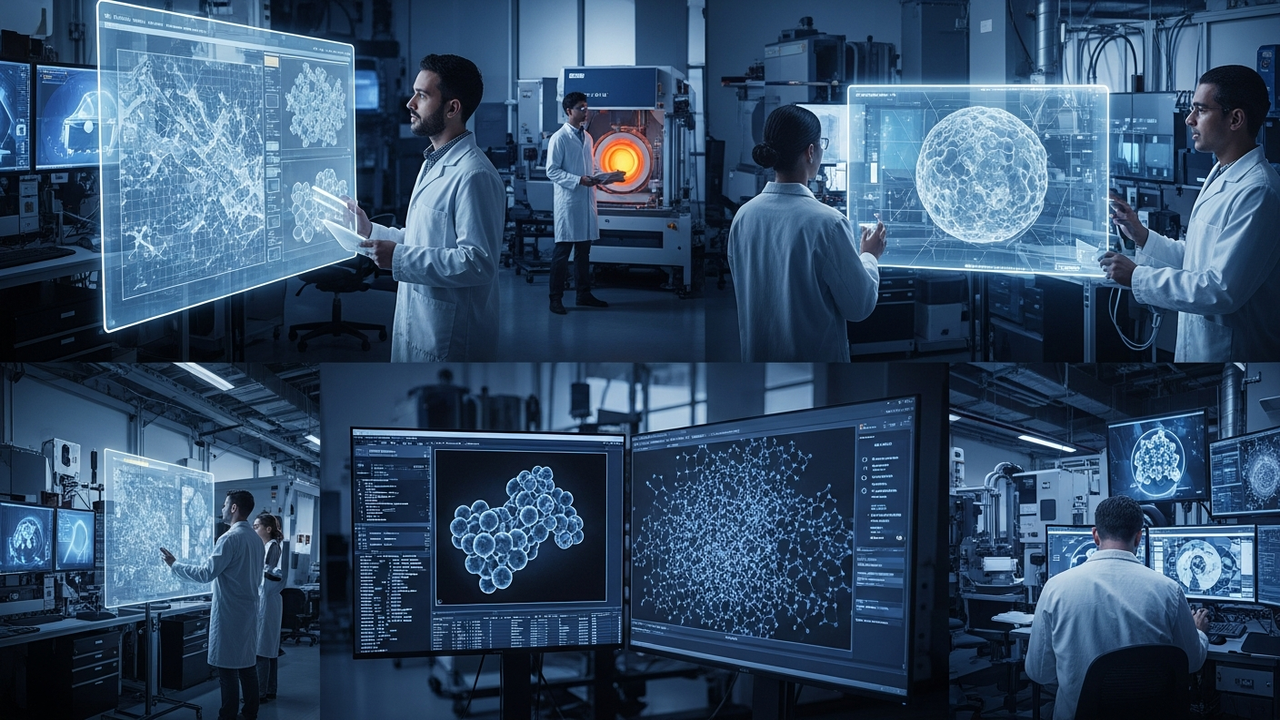
The AI-driven platform to be developed with this grant will integrate cutting-edge electron microscopy techniques, advanced artificial intelligence (AI) algorithms, and physics-based modeling methods. Electron microscopy provides high-resolution data on material microstructure and properties. AI will recognize patterns within these vast datasets and predict novel material compositions and structures. Physics-based modeling, in turn, will validate AI predictions against fundamental physical laws, guiding optimization efforts. This ‘closed-loop’ approach is expected to significantly reduce the cycle time for the design, synthesis, characterization, and optimization of new materials compared to traditional trial-and-error methodologies. The project specifically focuses on developing materials with enhanced high-temperature resistance, superior strength, and corrosion resistance, which are critical for extreme operating environments.
Background & Context
Industries such as aerospace, energy (particularly nuclear power), and defense constantly demand high-performance materials capable of withstanding extreme heat, pressure, and radiation. These materials are essential for improving engine efficiency, enhancing the safety of nuclear reactors, and reducing the weight and increasing the durability of spacecraft. However, existing material development processes are notoriously time-consuming and costly, acting as a bottleneck for innovation. The DOE’s Genesis Mission aims to break this bottleneck by leveraging AI and automation, thereby contributing to national competitiveness and security. UF’s research forms a central pillar of this ambitious mission, aligning with national strategic priorities to bolster advanced manufacturing capabilities.
Strategic Significance & Outlook
The AI-driven materials discovery platform developed through this project will serve not merely as a tool for developing specific materials but as a versatile toolkit for new material discovery across diverse fields. This will further solidify the University of Florida’s position as a global leader in advanced materials science. In the future, the discovered materials are expected to have substantial economic and technological impacts on industries by being incorporated into components such as aerospace engine turbine blades, next-generation nuclear power plant structures, or high-efficiency energy storage devices. Moreover, this platform is envisioned to have broader applications across other scientific disciplines, potentially accelerating a wide range of scientific discoveries and innovations on a global scale.
Get our weekly technology intelligence — free
Receive an infographic that lets you judge at a glance whether each field’s analysis report is worth reading.
Subscribe Free — Weekly Tech Intelligence
By subscribing, you’ll receive Troy-Technical’s weekly technology intelligence newsletter.
- Your email and selected fields are used only to deliver the newsletter.
- We never share your information with third parties.
- You can unsubscribe anytime via the link in each email.
See our Privacy Policy for details.
Takes about a minute · Unsubscribe anytime







Comments