Key Findings
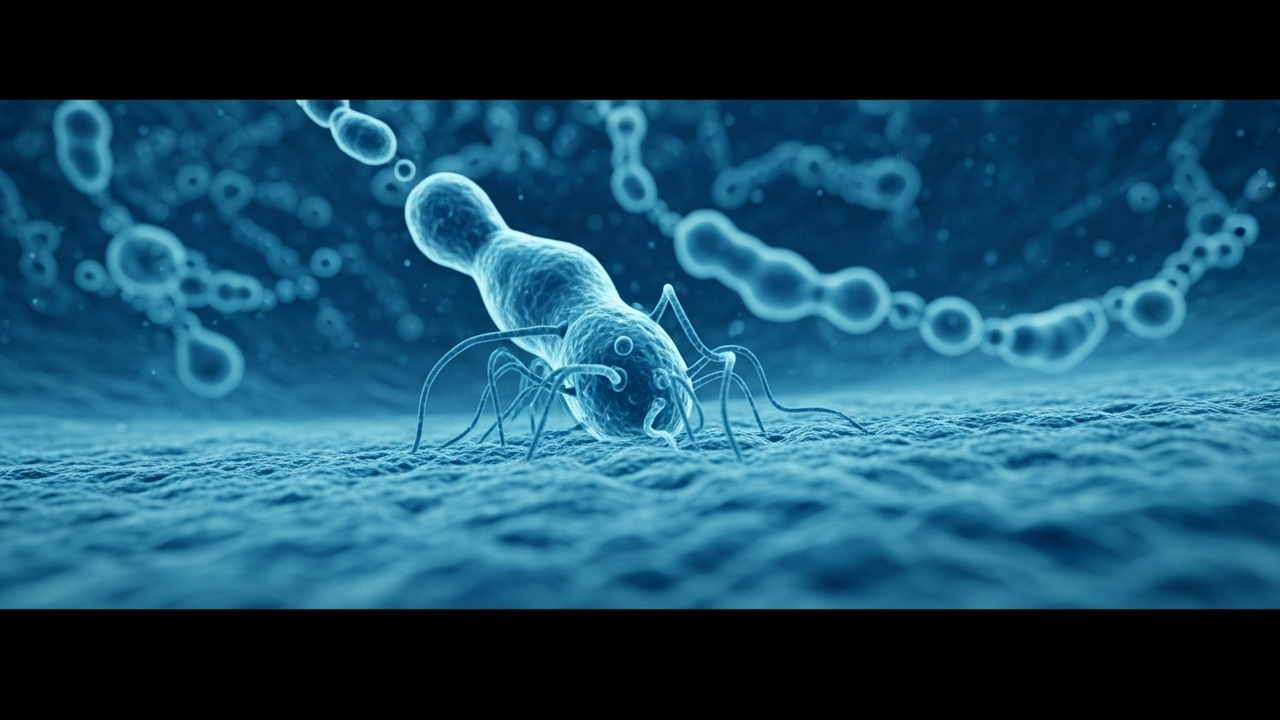
Researchers have successfully engineered a ‘self-destructing living plastic’ that, upon activation under specific conditions, is completely broken down by embedded genetically modified bacteria. This groundbreaking material also exhibits self-healing properties, marking a significant step forward in sustainable materials science.
Technical / Clinical Details
This ‘living plastic’ is fabricated by embedding spores of specific genetically engineered bacteria within a biodegradable polymer matrix, such as polyester. The bacteria remain in a dormant state within the material until a specific trigger (e.g., exposure to humidity, elevated temperature, or particular chemicals) activates them. Once activated, the bacteria produce enzymes that degrade the polymer chains, leading to the complete breakdown of the entire plastic into harmless basic components like water and carbon dioxide. This process has demonstrated high efficiency, capable of degrading over 90% of the material within 24 hours, offering faster and more complete degradation compared to conventional biodegradable plastics. The precise control over the activation and degradation process is crucial for its practical applicability.
Background & Context
Plastic pollution is a global environmental crisis, with conventional plastics taking hundreds of years to decompose, severely threatening marine ecosystems and soil health. While biodegradable plastics have been developed, they often face challenges such as slow degradation rates or requiring specific, limited environmental conditions for breakdown. This ‘living plastic’ addresses these issues by offering an efficient and environmentally benign solution for the complete disposal of used plastics. It is expected to fundamentally transform waste management paradigms and enhance sustainability across the entire material lifecycle, moving beyond simple recycling to full material dissolution into the environment. This represents a significant shift from ‘end-of-life’ to ‘end-of-use’ material management.
Strategic Significance & Outlook
The technology behind self-destructing living plastic holds promise for a wide range of applications, including packaging materials, disposable medical devices, and agricultural films. Its ability to automatically decompose after its functional lifespan significantly reduces the costs and labor associated with waste collection and processing. In the future, by combining with self-healing capabilities, it could contribute to realizing truly ‘circular materials’ that are durable during use but ultimately return to the environment. This technology has the potential to be a harbinger of a materials revolution towards a more sustainable society, offering a pathway to mitigate the escalating global plastic crisis and creating materials with designed biodegradability.
Source: #
Get our weekly technology intelligence — free
Receive an infographic that lets you judge at a glance whether each field’s analysis report is worth reading.
Subscribe Free — Weekly Tech Intelligence
By subscribing, you’ll receive Troy-Technical’s weekly technology intelligence newsletter.
- Your email and selected fields are used only to deliver the newsletter.
- We never share your information with third parties.
- You can unsubscribe anytime via the link in each email.
See our Privacy Policy for details.
Takes about a minute · Unsubscribe anytime






Comments