Key Findings
The U.S. Department of Energy (DOE) has announced a total of $15 million in funding awards for projects aimed at developing next-generation energy storage technologies, under its “Critical Material Innovation, Efficiency, and Alternatives (FOA 3105)” program. This funding is specifically directed towards advancing sodium-ion batteries (NIBs) and silicon oxycarbide (SiOC) anode materials, with a crucial objective to significantly improve cycle stability under extreme temperature conditions, ranging from high (50°C) to low (-40°C).
Technical Details of Funded Projects
The projects selected under the DOE’s FOA 3105 program are designed to enhance battery performance and strengthen the U.S. domestic supply chain:
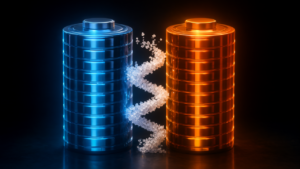
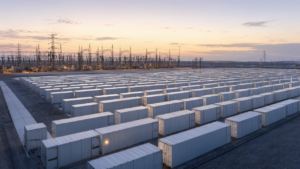
- Development of Sodium-Ion Batteries (NIBs) by Giner Inc.: Giner Inc. will focus on demonstrating NIBs that integrate O-3 type layered transition metal oxide cathodes, advanced electrolytes, and commercially available hard carbon anodes. A primary objective of this project is to dramatically improve temperature stability, addressing one of the most challenging environmental hurdles for batteries. Specifically, the goal is to achieve high cycle stability at both elevated temperatures (50°C) and cryogenic temperatures (-40°C). NIBs are considered a vital alternative technology for stationary energy storage systems (ESS) due to their lower cost and reduced reliance on scarce lithium resources. The commercialization of NIBs is accelerating, with companies like CATL projected to ship GWh-level sodium-ion batteries in 2026.
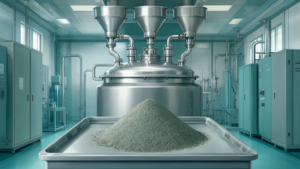
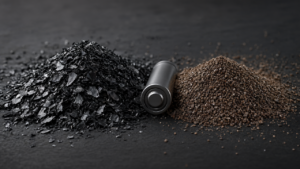
- Development of Silicon Oxycarbide (SiOC) Anode Materials: SiOC is a promising anode material for next-generation lithium-ion batteries (LIBs), combining the high theoretical capacity benefits of silicon with the stability inherent in carbon materials. SiOC anodes have the potential to mitigate the significant volume expansion characteristic of silicon while maintaining high energy density. The development of this material is expected to contribute to extending the range of EVs and improving their fast-charging capabilities.
These projects collectively aim to push the boundaries of battery chemistry, meeting the stringent performance requirements for specific applications such as military use, grid storage, and AI data centers.
Background & Industry Context
The United States is pursuing a national strategy to strengthen its domestic battery material supply chain and reduce foreign dependence, driven by the growth of electric vehicles (EVs) and energy storage systems. China currently dominates the supply chain for many critical battery materials, including battery-grade graphite, and the U.S. vulnerability in this sector has been highlighted in a Pentagon report. The DOE has made significant investments in domestic manufacturing infrastructure, including a $102.1 million loan to Syrah Technologies for graphite manufacturing expansion and a conditional $2 billion loan to Redwood Materials for a battery materials campus. The development of alternative technologies like NIBs and SiOC is a critical means to achieve these strategic goals.
Strategic Significance & Outlook
The $15 million in DOE funding will serve as a crucial catalyst for increasing the technology readiness level (TRL) of NIBs and SiOC anode materials, paving their way toward commercialization. If Giner Inc.’s project succeeds, NIBs could expand their applicability as reliable energy storage solutions across a wide range of climatic conditions. SiOC anodes are expected to accelerate the realization of high-energy-density LIBs, contributing to the further development of the EV market. These technological innovations are integral to enhancing U.S. energy security and accelerating the transition to a clean energy economy.