Key Findings
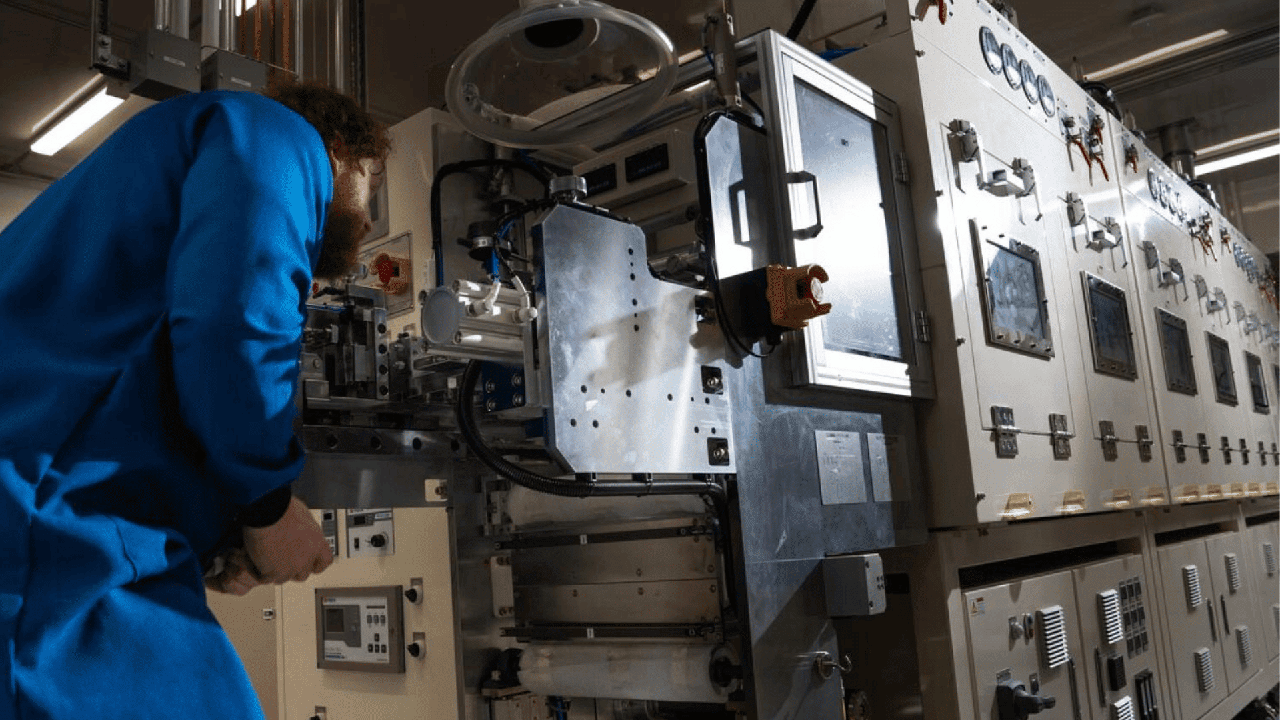
The U.S. Department of Energy’s (DOE) Pacific Northwest National Laboratory (PNNL) has commissioned a cutting-edge production line designed for the manufacturing and testing of grid-scale batteries. This 1,400-square-foot facility features 16 dedicated equipment stations capable of producing prismatic battery cells, which will enable the rapid evaluation and scale-up of various new energy storage technologies. Critically, the facility maintains an ultralow-humidity dry lab environment, essential for preventing battery material degradation and playing a vital role in accelerating the transition from research and development to commercialization.
Technical Details and Capabilities
PNNL’s new production line is designed to accelerate the development and commercialization of next-generation battery technologies by offering the following capabilities:
- Prismatic Battery Cell Manufacturing: The production line specializes in manufacturing prismatic battery cells, a format widely adopted for both grid-scale and electric vehicle (EV) applications. This facilitates a smoother transition from lab-scale prototypes to practical, functional cells.
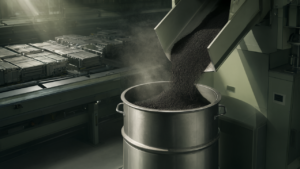
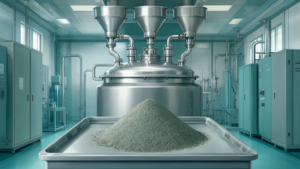
- Comprehensive Equipment Suite: The 16 equipment stations encompass virtually all stages of battery manufacturing, including active material mixing, electrode coating (both wet and dry processes), cell assembly (stacking, winding), electrolyte filling, sealing, formation, and testing. This end-to-end capability allows for integrated development and testing from material formulation to final product assessment.
- Dry Lab Environment: The facility is designed as a dry lab, maintaining an ultra-low humidity environment with a dew point below -50°C. This is crucial for manufacturing advanced lithium-ion batteries, especially lithium metal and solid-state batteries, whose materials are highly sensitive to moisture. Humidity degrades battery performance and shortens lifespan, making this environment indispensable for high-quality battery development.
- Technology Evaluation and Prototyping: Researchers can test new electrode materials (e.g., silicon anodes, sodium-ion battery cathodes), electrolytes, and separators in practical cell formats, evaluating their performance, safety, and cycle life. This helps identify technological bottlenecks and accelerates improvement cycles. PNNL also boasts flow battery prototyping capabilities and utilizes machine learning models for performance prediction.
- Strengthening Domestic Supply Chain: This facility directly contributes to the national goal of building domestic battery manufacturing capabilities in the U.S. and reducing reliance on foreign sources for critical battery materials (e.g., graphite, lithium).
Background & Industry Context
The U.S. is strongly advocating for the establishment of domestic battery production capacity, driven by the growth of the EV market and the integration of renewable energy. A Pentagon report has also highlighted significant vulnerabilities in the U.S. reliance on foreign sources for battery manufacturing equipment in military vehicles, drones, grid storage, and AI data center applications. The DOE, through its Critical Material Innovation program, funds the development of sodium-ion batteries (NIBs) and silicon oxycarbide (SiOC) anode materials and leverages national lab manufacturing capabilities, such as the Battery Manufacturing Facility (BMF) at Oak Ridge National Laboratory (ORNL). PNNL’s new production line is a critical component of these national initiatives.
Strategic Significance & Outlook
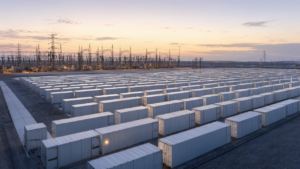
The operational launch of PNNL’s grid-scale battery production line marks a pivotal step in U.S. battery technology development and the strengthening of domestic manufacturing capabilities. This facility will bridge the gap between fundamental research and commercialization, enabling the rapid practical application of new battery chemistries and manufacturing processes. It is expected to play an indispensable role in testing and scaling up next-generation technologies, particularly long-duration energy storage (LDES) and solid-state batteries, thereby contributing to EV adoption, grid stabilization, and enhanced energy security. Furthermore, collaborations with other national laboratories and industry partners will further accelerate the development of the U.S. battery ecosystem.