Key Findings
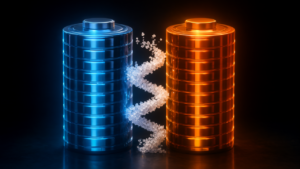
A Chinese research laboratory has announced a breakthrough in battery technology, claiming the development of a revolutionary lithium-metal battery (LMB) that offers double the energy density of existing lithium-ion batteries (LIBs) and can be fully charged in a mere three minutes. The research team asserts that this unprecedented fast-charging performance was achieved by combining an astonishing 20C charge rate with a 4.7V high-nickel cathode. If successfully commercialized, this technology has the potential to fundamentally revolutionize electric vehicle (EV) range and charging experiences, thereby reshaping the existing paradigm of the battery industry.
Technical Details and Breakthrough Mechanisms
Lithium-metal batteries have long been considered the “holy grail” of next-generation battery technology due to their theoretically much higher energy density (potentially over 500 Wh/kg) compared to conventional LIBs using graphite anodes. However, safety concerns arising from lithium metal anode dendrite growth (leading to short circuits and fires) and short cycle life have been major barriers to commercialization. This research breakthrough suggests a multi-faceted approach to resolving these challenges:
- Double Energy Density: While existing LIBs typically offer around 250-300 Wh/kg, this LMB is presumed to have achieved an energy density of at least 500 Wh/kg. This would significantly extend EV driving ranges and enable smaller, lighter battery packs for equivalent ranges.
- 3-Minute Charging (20C Rate): An exceptionally high charge rate of 20C means the battery can be fully charged in just three minutes (60 minutes / 20C). This is a dramatic improvement compared to current EVs, which often require 30 minutes or more at fast-charging stations, offering convenience comparable to refueling a gasoline car. This rapid charging is believed to be achieved through a combination of highly efficient lithium-ion conduction, stable electrolyte and solid electrolyte interphase (SEI) layers, and effective thermal management systems.
- 4.7V High-Nickel Cathode: High-nickel NMC (nickel-manganese-cobalt) cathodes operating at high voltages offer high energy density and power output, but often face challenges with cycle stability. Achieving stable operation at 4.7V suggests significant advancements in cathode material and electrolyte interface stability.
- Optimized Electrolyte and Interface Design: Stable electrolytes and controlled SEI layers on the lithium metal anode surface are crucial for achieving both fast charging and long cycle life. Fundamental research, such as the identification of electrolyte reduction intermediates using spin trapping methods, likely contributes to such electrolyte design.
Background & Industry Context
Addressing range anxiety and long charging times are critical for accelerating EV adoption. This Chinese research directly tackles these two major obstacles, and if successful, could be a “game-changer” that redraws the competitive landscape of the battery industry. Currently, various approaches, including silicon anodes and dry electrode technology, are being pursued to enhance LIB performance, but LMBs hold the potential to surpass even these advancements. Western nations are also accelerating domestic battery technology development and supply chain construction, but the pace of Chinese R&D remains a formidable force.
Strategic Significance & Outlook
If the claims for this lithium-metal battery are independently verified and prove reproducible at a commercial scale, the headline “the lithium-ion era is over” might become a reality. EVs could achieve convenience on par with gasoline cars, dramatically accelerating consumer adoption. However, demonstrating safety (especially the risk of internal short circuits due to dendrite growth) and long-term cycle stability remains the most critical challenge. Future R&D will focus on overcoming these hurdles and establishing mass production techniques. This breakthrough is also expected to have significant implications for aerospace, drone, and portable electronic device markets.
Source: https://www.autonocion.com/us/lithium-metal-battery-double-energy/