Key Findings
A recent study published in Frontiers in Immunology reports the successful establishment of a fully GMP (Good Manufacturing Practice) compliant and scalable manufacturing platform for TRX103, an allogeneic Type 1 regulatory T cell (Tr1 cell). This breakthrough significantly advances the clinical application and broad accessibility of this cell therapy for immune-related diseases such as graft-versus-host disease (GvHD).
Technical / Clinical Details
- TRX103 Manufacturing Process: TRX103 cells are manufactured by transducing CD4+ T cells, isolated from three healthy donors, with a lentiviral vector. This process encompasses multiple steps including cell isolation, gene transduction, expansion, and final formulation, with strict GMP standards applied throughout all phases.
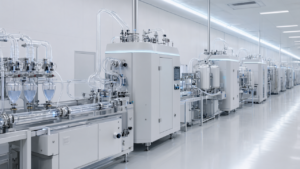
- Overcoming Scalability Challenges: Traditional production of Tr1 cells has been difficult to scale due to complexity and the challenge of maintaining uniform quality. The manufacturing platform established in this study combines automated, closed systems with optimized culture conditions to enable reproducible, high-yield production of homogeneous cell products. This makes the transition from clinical trials to commercial production feasible.
- Potential as an Off-the-Shelf Cell Therapy: As an allogeneic cell therapy, TRX103 does not require patient-specific cells, allowing for pre-manufacturing and cryopreservation. This offers the significant advantage of an ‘off-the-shelf’ product that can be rapidly administered to patients when needed. The scalable manufacturing platform forms the foundation for this off-the-shelf approach.
- Restoring Immune Tolerance: Tr1 cells are known for their ability to induce and maintain immune tolerance through the production of immunosuppressive cytokines. TRX103 employs a therapeutic mechanism to suppress autoimmune diseases and transplant rejection, thereby restoring immune balance.
Background & Context
Cell therapies using regulatory T cells (Tregs) hold immense promise for treating autoimmune diseases, transplant complications, and inflammatory disorders. However, manufacturing complexity and cost have posed significant barriers to their clinical adoption. Allogeneic Treg therapies, in particular, are expected to apply to a wider range of patients due to the absence of donor matching requirements, but large-scale production remained a technical challenge. This research addresses this technical gap, significantly opening the path for the commercialization of Tr1 cell therapies.
Strategic Significance & Outlook
The establishment of a GMP-compliant scalable manufacturing platform for TRX103 is a crucial step in accelerating the clinical development of Tr1 cell therapy. This will facilitate faster progress in ongoing clinical trials and heighten the likelihood of TRX103 becoming a new therapeutic option for GvHD and other immune-related diseases in the future. Furthermore, this manufacturing technology is applicable to the development of other regulatory T cells and allogeneic cell therapies, promising to contribute to the overall advancement of the cell therapy field.
Source: https://www.frontiersin.org/journals/immunology/articles/10.3389/fimmu.2026.1848770/full
Get our weekly technology intelligence — free
Receive an infographic that lets you judge at a glance whether each field’s analysis report is worth reading.
Subscribe Free — Weekly Tech Intelligence
By subscribing, you’ll receive Troy-Technical’s weekly technology intelligence newsletter.
- Your email and selected fields are used only to deliver the newsletter.
- We never share your information with third parties.
- You can unsubscribe anytime via the link in each email.
See our Privacy Policy for details.
Takes about a minute · Unsubscribe anytime