Key Findings
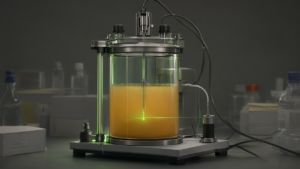
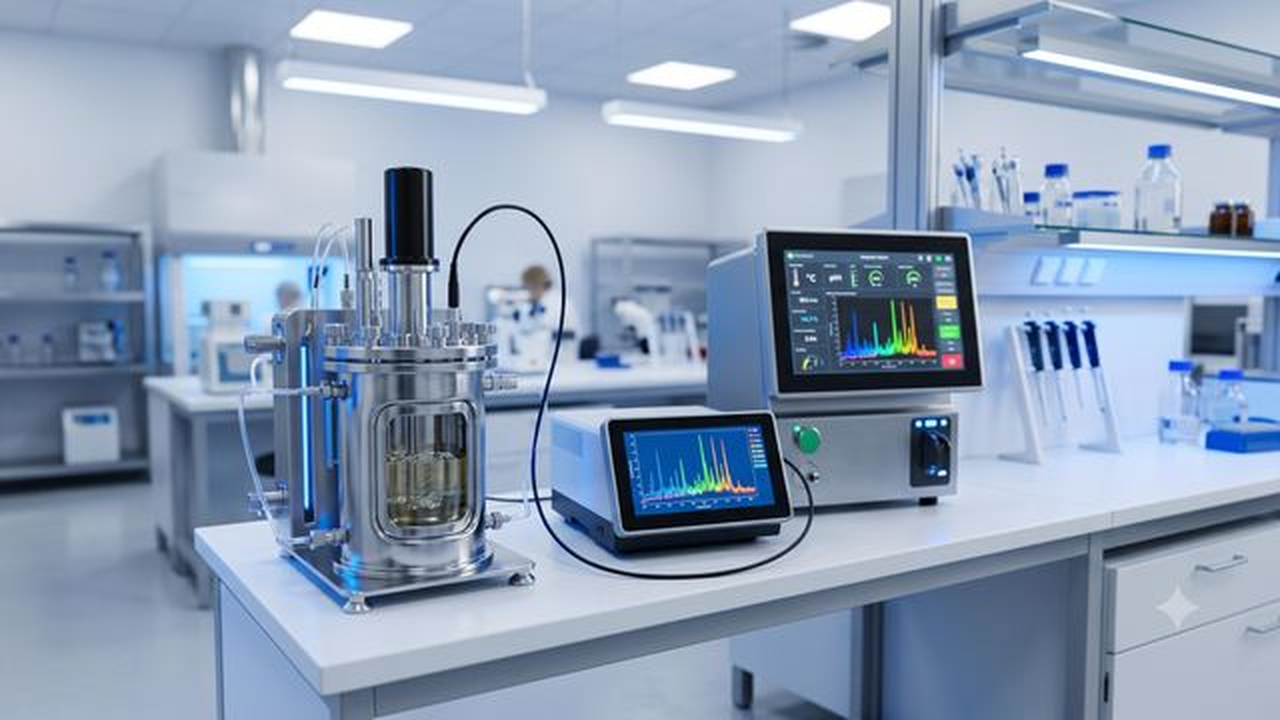
In the realm of real-time bioprocess monitoring for biopharmaceutical manufacturing, Raman spectroscopy has been reported to offer superior selectivity and predictive accuracy for glucose and lactate measurements in mammalian cell cultures, thus solidifying its position as the industry standard. This marks a significant milestone in the evolution of Process Analytical Technology (PAT).
Technical / Clinical Details
- Raman Spectroscopy’s Superiority: Raman spectroscopy directly measures molecular vibrational spectra, providing high specificity for identifying and quantifying distinct metabolites like glucose and lactate. This enables highly accurate measurements within complex cell culture media, furnishing critical information for real-time process control and optimization.
- NIR Spectroscopy’s Application Scope: NIR spectroscopy, which measures overtone vibrations of biomolecules, can provide broader compositional information (e.g., biomass, protein concentration) at a lower cost. It remains a competitive option for applications where cost is a primary constraint or when tracking overall trends is more important than precise metabolite quantification.
- Regulatory Stance in PAT: Both Raman and NIR technologies are recognized for their regulatory validity under the FDA’s 2004 Process Analytical Technology (PAT) guidance. This framework encourages the use of real-time monitoring to enhance product quality consistency and manufacturing efficiency.
- Importance of Data Analytics: Maximizing the utility of these spectroscopic data necessitates advanced data analysis through chemometrics (multivariate analysis). This extracts meaningful process insights from complex spectral data, enabling early detection of process deviations and facilitating corrective actions.
Background & Context
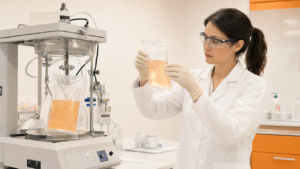
Due to its intricate nature, real-time process monitoring and control are paramount in biopharmaceutical manufacturing. Traditional off-line analytical methods are time-consuming and often cannot keep pace with dynamic process changes. The adoption of PAT has ushered in a paradigm shift, providing essential tools to understand, control, and optimize manufacturing processes, thereby ensuring product quality and safety. Specifically, glucose and lactate are critical indicators of cellular metabolism, and the ability to accurately measure them in real-time directly reflects the health and productivity of the culture process.
Strategic Significance & Outlook
The advancements in Raman spectroscopy are expected to further standardize inline and real-time monitoring in biopharmaceutical manufacturing. This will lead to improved batch-to-batch consistency, reduced manufacturing downtime, and potentially shorter time-to-market for products. Furthermore, with the development of smaller, more robust sensors and the evolution of AI-coupled data analysis techniques, PAT will continue to be a central technology driving digitalization and automation in biopharmaceutical manufacturing.
Get our weekly technology intelligence — free
Receive an infographic that lets you judge at a glance whether each field’s analysis report is worth reading.
Subscribe Free — Weekly Tech Intelligence
By subscribing, you’ll receive Troy-Technical’s weekly technology intelligence newsletter.
- Your email and selected fields are used only to deliver the newsletter.
- We never share your information with third parties.
- You can unsubscribe anytime via the link in each email.
See our Privacy Policy for details.
Takes about a minute · Unsubscribe anytime