Background: The Imperative for Advanced 3D Nanofabrication
The burgeoning fields of medicine, electronics, and optical devices increasingly rely on precisely engineered three-dimensional structures at the nanoscale. Traditional nanofabrication techniques, however, often struggle with the efficient and high-fidelity production of complex 3D architectures, presenting challenges such as multi-step processes and prohibitive costs. The ability to spatially arrange functional materials and integrate multiple elements in three dimensions is now a critical enabler for next-generation device development.
Key Findings / Results: The Novelty of Implosion Carving (ImpCarv)
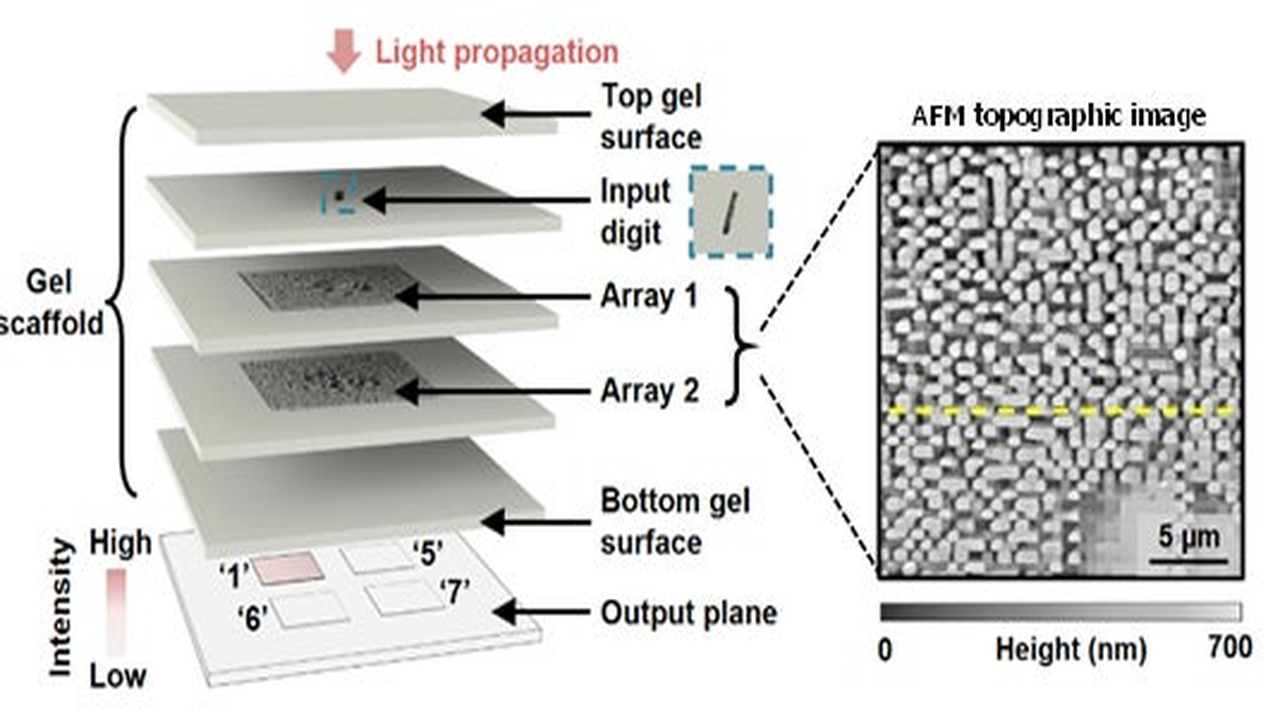
A collaborative research team from Fujikura and the Massachusetts Institute of Technology (MIT) has addressed these limitations by developing a novel 3D nanofabrication technique named “Implosion Carving (ImpCarv),” with their findings published in Nature Photonics. ImpCarv operates by precisely ‘sculpting’ nanometer-scale structures within specific polymer materials using a focused laser beam. The process involves laser-induced shrinkage of a polymer hydrogel in an immersive liquid environment, followed by chemical removal of unwanted material, thereby creating intricate 3D geometries.
Key attributes of the ImpCarv technology include:
- High-Resolution 3D Patterning: The technique allows for nanometer-scale control over complex shapes, facilitating the creation of intricate internal and multi-layered structures with unprecedented ease. For example, structures with features as small as 10 nm have been demonstrated.
- Enhanced Manufacturing Efficiency: By enabling the simultaneous formation of complex 3D structures in a single process, ImpCarv significantly boosts manufacturing throughput compared to conventional multi-stage approaches, potentially reducing processing time by orders of magnitude.
- Integration of Multifunctional Devices: The method allows for the integration of multiple nanometer-sized elements, each possessing distinct functionalities, within a unified material matrix. This capability is pivotal for miniaturizing and enhancing the performance of future devices, such as micro-optical elements or integrated biosensors.
Potential applications span a wide range, including micro-lens arrays, microfluidic devices, highly sensitive biosensors, and advanced waveguide structures for optical communications.
Technical Significance & Outlook: Accelerating Next-Generation Nanodevice Development
ImpCarv technology represents a significant breakthrough that transcends the current limitations of nanofabrication, poised to accelerate the development of groundbreaking nanodevices. Its capacity for efficient, single-step creation of complex 3D structures is particularly relevant for high-sensitivity sensors in medical diagnostics, advanced integrated optical circuits, and high-performance hardware for artificial intelligence (AI). As this technology matures, it could unlock more sophisticated applications in bio-medicine, such as targeted drug delivery systems and nanorobotics, moving beyond static structures to dynamic, interactive systems.
The collaboration between Fujikura and MIT underscores the critical importance of international scientific partnership in nanotechnology, serving as a powerful example of how academic and industrial synergy can drive profound technological innovation. This research not only enhances fundamental understanding of nanoscale material manipulation but also provides a scalable pathway for the commercialization of previously unattainable nanodevice architectures.
Source: https://prtimes.jp/main/html/rd/p/000000188.000056990.html






Comments