Background
Quantum computing, with its immense computational potential, is recognized as a next-generation technology. Neutral-atom quantum computers, in particular, are considered leading candidates for realizing future fault-tolerant quantum systems due to their excellent scalability and long coherence times. However, achieving a large number of qubits while maintaining stable error correction remains a frontier challenge in research and development.
Key Findings / Results
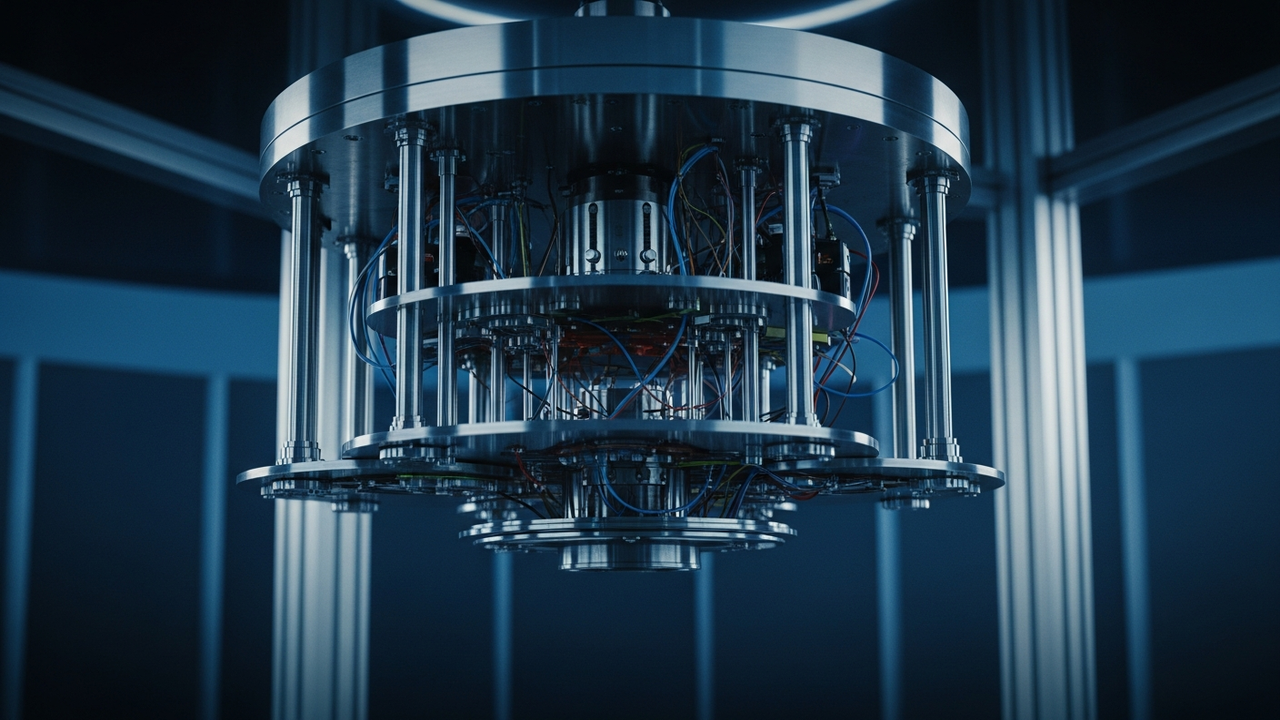
Quantum X Labs has unveiled a new neutral-atom quantum computing platform built on its proprietary technology. This system incorporates over 50 physical qubits and utilizes unique atomic cooling techniques alongside a dynamically reconfigurable optical tweezer array for precise qubit control. The optical tweezer array offers the advantage of flexibly designing interactions between qubits by individually trapping and repositioning neutral atoms.
The company has set an ambitious roadmap, aiming to expand to thousands of physical qubits by the end of the first half of 2027. Furthermore, to make this large-scale quantum system practical, Quantum X Labs plans to integrate an AI-driven error correction system. This is expected to enable real-time fault-tolerant logical qubit operations, significantly enhancing the reliability and computational accuracy of quantum computers.
Technical Significance & Outlook
Quantum X Labs’ announcement signifies an acceleration in technological advancements within the neutral-atom quantum computing sector. A system exceeding 50 qubits moves beyond the current Noisy Intermediate-Scale Quantum (NISQ) era, representing a crucial step towards executing more complex quantum algorithms. Notably, the rapid scaling target to thousands of qubits, coupled with the integration of AI-driven error correction, holds the potential to expedite the realization of fault-tolerant quantum computers.
This technology could bring revolutionary changes to fields requiring large-scale simulations and optimizations, such as drug discovery, materials science, and financial modeling. AI-assisted error correction provides a promising solution to the problem of qubit decoherence, enabling the construction of more robust and practical quantum computers. Quantum X Labs’ efforts are poised to become a significant milestone as quantum computing transitions from a research phase to an industrial application phase.









Comments