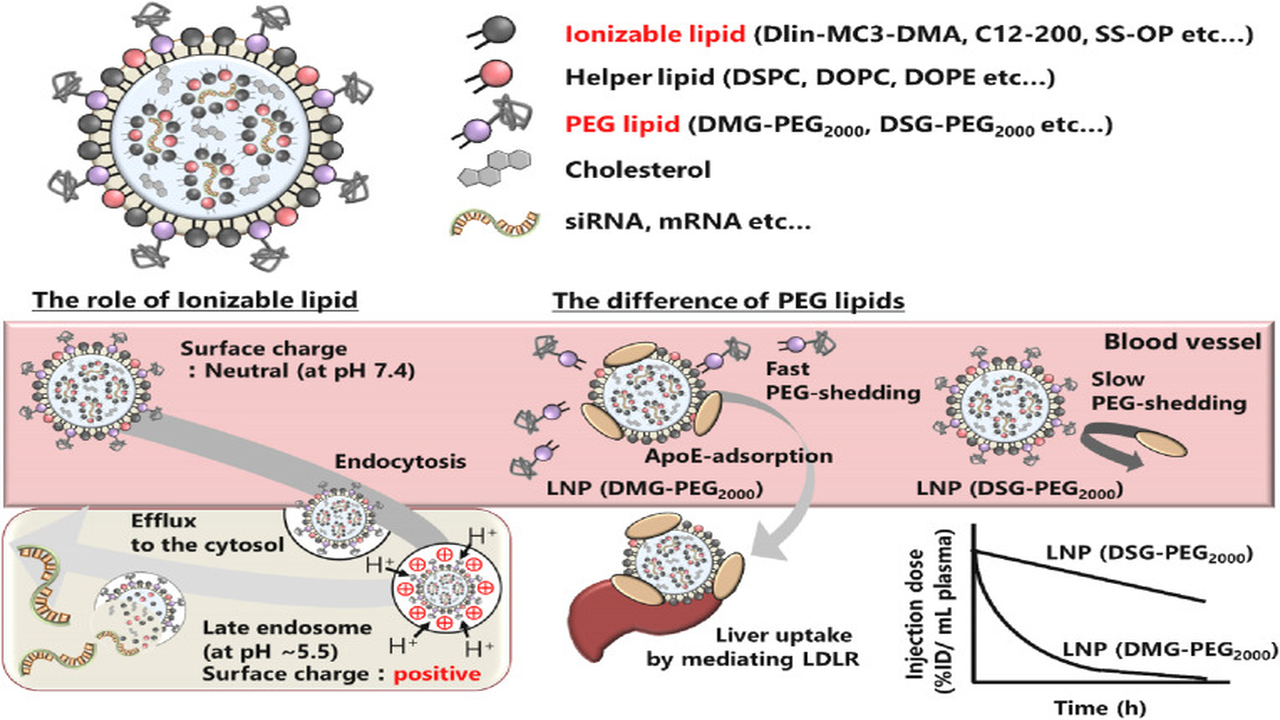
Background: The Critical Need for Efficient Nucleic Acid Delivery
Gene therapy, mRNA vaccines, and gene-editing technologies represent some of the most groundbreaking therapeutic advancements in modern medicine, offering potential curative approaches for a wide range of diseases. However, these nucleic acid-based therapeutics face significant inherent challenges: their instability in biological environments, difficulty in traversing cellular membranes, and propensity to elicit immune responses. An efficient, safe, and targeted delivery system is therefore paramount to overcome these biological barriers and ensure that genetic material reaches its intended cellular destination effectively within the body.
Lipid nanoparticles (LNPs) have emerged as a critically important solution to this delivery problem. Their pivotal role was globally validated by the success of COVID-19 mRNA vaccines, which effectively leveraged LNPs to encapsulate and deliver mRNA. Since then, the development and application of LNP technology have accelerated rapidly, positioning them as a cornerstone of gene and RNA-based therapeutics.
Key Findings / Results: Cutting-Edge Advances in LNP Technology and Application
LNP technology has evolved beyond simple nucleic acid encapsulation to sophisticated targeted delivery systems, with remarkable progress in manufacturing processes, compositional design, and expanded therapeutic applications.
- **Innovations in Manufacturing:** Traditional bulk mixing methods often resulted in variable LNP size and heterogeneity. The advent of microfluidic technologies, such as T-mixers, has enabled precise, nanometer-scale mixing, allowing for highly reproducible control over LNP size, morphology, and encapsulation efficiency. This has established a robust foundation for stable, large-scale production of high-quality LNPs, paving the way for broader clinical translation.
- **Compositional Optimization:** The design of LNP components (cationic lipids, helper lipids, cholesterol, and PEGylated lipids) profoundly impacts their biodistribution, cellular uptake efficiency, cargo release kinetics, and immunogenicity. Recent advances include the development of novel cationic lipids and optimization of PEGylated lipids to enhance targeted delivery to specific organs or cell types (e.g., beyond the liver to lungs, spleen, brain) and reduce off-target effects.
- **AI-Driven Design Acceleration:** Companies like Toshiba are leveraging Artificial Intelligence (AI) to accelerate LNP design. By efficiently exploring vast combinations of lipid compositions and manufacturing parameters, AI can identify optimal LNPs with desired characteristics (e.g., cell-specific targeting, biodegradability, high mRNA encapsulation efficiency). This approach promises to significantly reduce development timelines and costs.
- **Biodegradability and Cell-Specific Targeting:** Toshiba’s proprietary LNP technology focuses on high biodegradability, ensuring that LNPs safely degrade and are cleared from the body after delivering their payload, thus mitigating concerns about long-term toxicity. Concurrent development of cell-targeting LNPs, designed to act selectively on specific cell types, further enhances the precision of gene therapy.
- **Expanded Application Spectrum:** The success in COVID-19 vaccines is just the tip of the iceberg. LNPs are now being explored for diverse applications including cancer immunotherapy (e.g., in vivo CAR-T induction), gene editing for genetic disorders (e.g., cystic fibrosis, Huntington’s disease), cell differentiation induction in regenerative medicine, and the development of next-generation vaccines for infectious diseases.
Technical Significance & Outlook: Powering the Future of Genetic and mRNA Medicine
The continuous advancements in LNP technology are pivotal for shaping the future of genetic and mRNA-based medicine. Further optimization of LNPs will enable the development of safer, more efficient, and broadly applicable therapeutics for a wider range of diseases.
- **Driving Precision Medicine:** LNPs capable of delivering nucleic acids specifically to target cells or tissues will accelerate the realization of personalized medicine. Designing optimal LNPs based on patient genetic information and disease state can maximize therapeutic efficacy while minimizing side effects.
- **Enabling Novel Therapeutic Modalities:** New therapeutic modalities, such as in vivo gene editing and mRNA therapies inducing transient protein expression, will emerge as LNP technology matures. This opens avenues for treating diseases previously unaddressable by small molecule drugs or antibody therapies.
- **Reducing Manufacturing Costs and Improving Access:** Standardization and efficiency gains in LNP manufacturing processes are expected to reduce the cost of LNP-based therapeutics, making these innovative treatments accessible to more patients globally.
- **Continued Safety and Efficacy Validation:** Ongoing research is essential to further validate long-term safety profiles, reduce immunogenicity, and maintain efficacy upon repeat administration. However, the existing track record of success inspires strong confidence in overcoming these remaining challenges.
LNPs are firmly established as a core technology in 21st-century drug delivery systems and are set to continue pioneering the frontiers of genetic medicine.









Comments