Key Findings
AMD has announced an investment exceeding $10 billion in Taiwan’s semiconductor ecosystem to significantly expand its AI infrastructure and advanced packaging manufacturing capabilities. This substantial capital commitment aims to resolve performance bottlenecks in AI chipsets and accelerate the development of next-generation AI and high-performance computing (HPC) solutions.
Technical Details
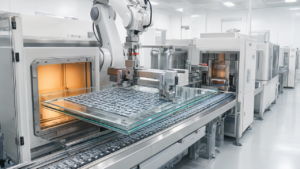
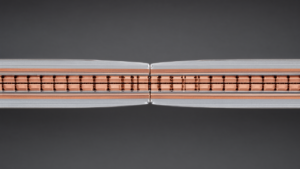
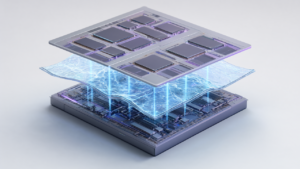
This investment will fortify AMD’s key technological domains. Firstly, it will advance its chiplet architecture, enhancing the ability to integrate diverse functional chips into a single, high-performance processor. Secondly, it will strengthen its high-bandwidth memory (HBM) integration capabilities, crucial for achieving the high-speed data access required by demanding AI workloads. Furthermore, the investment will drive the development of 3D hybrid bonding technology, aiming for denser chip stacking and improved power efficiency. Finally, it will optimize rack-scale system design, thereby boosting the overall efficiency and scalability of AI data centers. AMD is actively collaborating with leading Taiwanese OSAT (Outsourced Semiconductor Assembly and Test) providers, including ASE Technology Holding and its subsidiary Siliconware Precision Industries Co. (SPIL), to develop and qualify Elevated Fanout Bridge (EFB), a next-generation wafer-based 2.5D bridge interconnect technology.
Background and Context
The rapid advancement of AI has led to AI chip manufacturing, especially advanced packaging technologies like TSMC’s CoWoS, becoming a critical industry-wide bottleneck. AMD’s investment directly addresses the supply constraints arising from the surging demand for AI infrastructure. Taiwan, as the global hub for the semiconductor supply chain, is indispensable for AMD to secure strategic supply chains and accelerate technological innovation. Nvidia has also announced plans to invest $150 billion annually in Taiwan, highlighting the pivotal role of the region’s semiconductor industry for major AI chip manufacturers.
Strategic Significance and Outlook
AMD’s investment of over $10 billion into the Taiwanese ecosystem is expected to significantly enhance its competitiveness in the AI semiconductor market. The development and qualification of EFB technology, in particular, will establish new standards for 2.5D packaging and contribute to the realization of higher-performance, more cost-effective AI accelerators. This investment is anticipated to further strengthen Taiwan’s semiconductor industry and foster stability and innovation within the global AI supply chain. In the long term, it could alleviate AI chip shortages and accelerate the broader adoption and evolution of AI technologies.
Source: https://www.eeherald.com/section/news/p20260526nwamd.html