TECHNOLOGY EXPLAINER
Peptide Drugs and GLP-1
— a molecule that vanishes in two minutes, made to last a week with a single fatty acid
Native GLP-1 (glucagon-like peptide-1) is broken down in the blood in 1.5 to 2 minutes. Turning it into a once-weekly drug took a single amino-acid substitution and a chemical modification that attaches one fatty acid. Making it oral called for another material, an absorption enhancer, and there are two routes to manufacture: yeast fermentation and solid-phase synthesis.
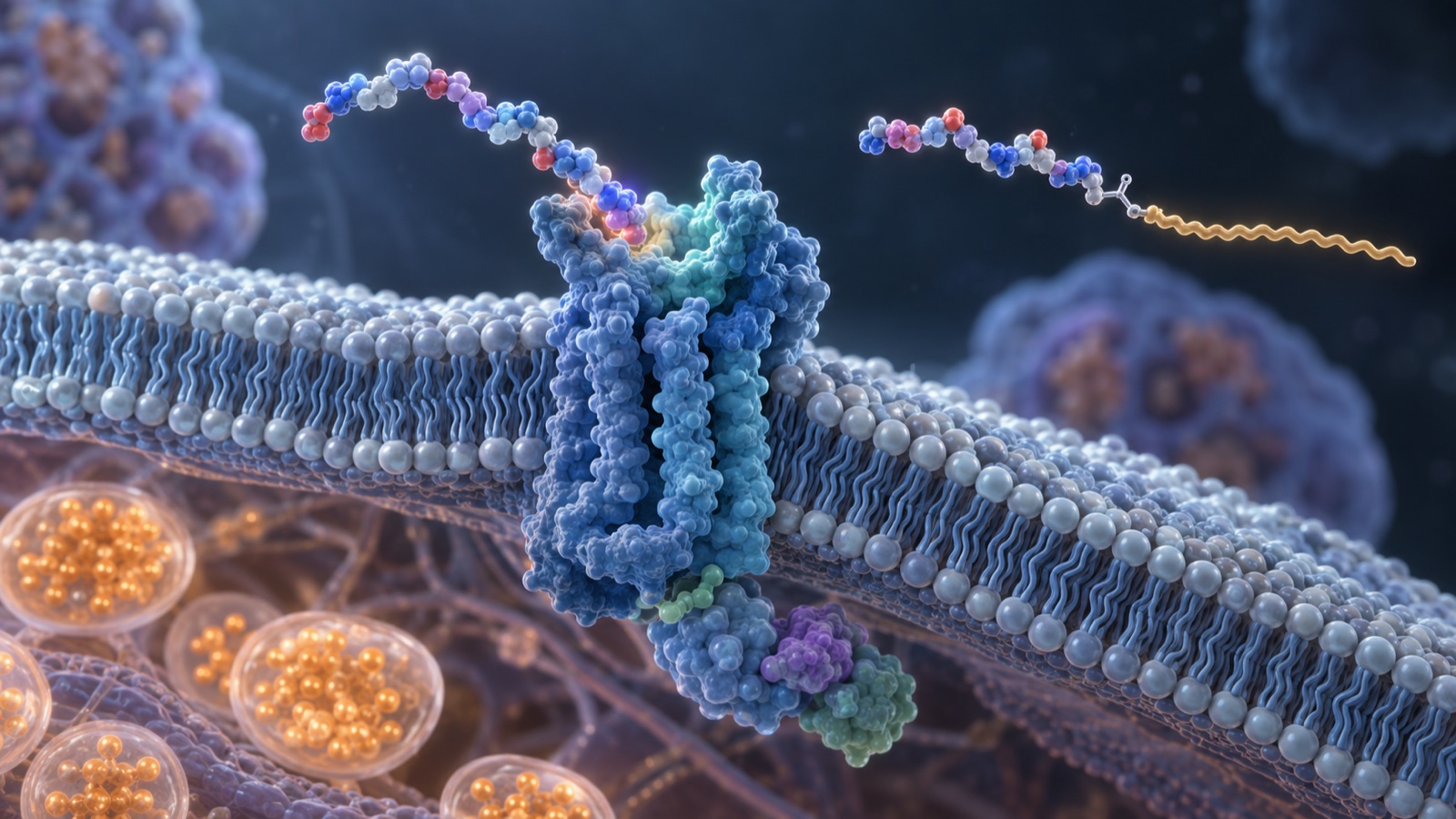 AI-generated concept
- Peptide drugs and GLP-1 (the short version)
- Receptors and agonists — the "lock" and the "duplicate key"
- Why it disappears in two minutes, and two countermeasures
- Attaching a fatty acid — a design that "hitches a ride" on albumin
- Our calculation: how many thousand times the half-life was extended
- A materials engineer's view 1: the fatty acid and the PEG-like linker are "interface design"
- Going oral — the absorption enhancer SNAC and what happens in the stomach
- Our calculation: how much more drug substance does a pill need?
- How it is made — yeast fermentation plus chemical modification, or solid-phase synthesis
- A materials engineer's view 2: in solid-phase synthesis, the yield of every step compounds
- Small-molecule GLP-1 receptor agonists
- Generics and regulatory moves / Open issues, and what is not yet settled
- Glossary / References / Claim-to-source audit
Sourced = stated in published material (link given)
Our calculation = a figure this article derived from stated assumptions
Not yet confirmed = a plan or target whose results have not been confirmed
Structural arrangements and readings on materials and process design are marked separately as commentary.
This article explains the molecular design, formulation and manufacture of peptides from the viewpoint of materials technology. It does not deal with efficacy or safety, such as weight loss or improvement of blood glucose, and it does not compare products. It is not medical advice. The doses and administration conditions in the prescribing information are quoted as figures for explaining the amount of drug substance and the mechanism of absorption, not as instructions for use. For the use of GLP-1 receptor agonists, please always consult a medical professional.
1. Peptide drugs and GLP-1 (the short version)
- What a peptide drug is: a drug made of a molecule in which a few to a few dozen amino acids are linked. U.S. regulation defines a protein as a polymer of more than 40 amino acidsSourced, and the FDA treats polymers of 40 or fewer amino acids as "peptides"Sourced
- What GLP-1 is: a hormone released from the gut in response to food. The VICTOZA prescribing information states that native GLP-1(7-37) has a half-life of 1.5 to 2 minutes because it is degraded by enzymes found throughout the body, namely DPP-4 (dipeptidyl peptidase-4) and neutral endopeptidase (NEP)Sourced
- What is at the heart of the technology: it is the history of solving, one by one, the three weaknesses of peptides ("broken down quickly", "cleared quickly by the kidney" and "not absorbed when swallowed") through chemical and materials design: amino-acid substitution, fatty-acid modification and an absorption enhancer (this article's arrangement)
What supports the once-weekly dosing of semaglutide is "a single fatty acid" in the molecule. The prescribing information states that the main prolonging mechanism of semaglutide is albumin binding, promoted by modifying the lysine at position 26 with a hydrophilic spacer and a C18 fatty diacidSourced. The peptide reversibly "hitches a ride" on a protein (albumin) that is abundant in blood. This is molecular design, and it is also interface and adsorption design (commentary in this article).
2. Receptors and agonists — the "lock" and the "duplicate key"
A receptor is a protein, on the cell surface for example, that passes a signal into the cell when a particular molecule binds to it. An agonist is a molecule that binds to a receptor and makes it work in the same way as the natural substance.
- The OZEMPIC prescribing information describes semaglutide as a GLP-1 analog with 94% sequence homology to human GLP-1 that selectively binds to and activates the GLP-1 receptor, the target of native GLP-1Sourced
- The MOUNJARO prescribing information describes tirzepatide as a once-weekly GIP (glucose-dependent insulinotropic polypeptide) receptor and GLP-1 receptor agonist. It is a design that acts on two receptorsSourced
- Kawai et al. treat the GLP-1 receptor as one of the class B G protein-coupled receptors (GPCRs) and report the small-molecule agonist LY3502970 as a partial agonistSourced. A partial agonist is one that makes the receptor work to a lesser degree than the natural substance (commentary in this article)
3. Why it disappears in two minutes, and two countermeasures
Native GLP-1 is short-lived because two things overlap: it is cut by enzymes, and it is small, so the kidney clears it quickly. The review by Knudsen and Lau explains that the aim of fatty-acid modification is to make analogs that bind reversibly to albumin, and thereby protect the peptide from both DPP-IV degradation and renal filtrationSourced.
(1) Countering the enzyme — replace one amino acid
According to the same review, when the whole GLP-1 sequence was examined by replacing residues one at a time with alanine, only the introduction of aminoisobutyric acid (Aib) at position 8 combined stability against DPP-IV with high affinity for the receptorSourced. The OZEMPIC prescribing information likewise states that semaglutide is modified at position 8 to stabilize it against DPP-4 degradationSourced. Aib is a non-coded amino acid that is not used in natural proteins. Tirzepatide also contains Aib at positions 2 and 13Sourced.
(2) Countering renal clearance and degradation — hitch a ride on a large protein
Another way is to make the peptide itself larger. The same review lists fusion to albumin itself (albiglutide) and fusion to the Fc region of IgG (dulaglutide) as other ways to reduce renal clearanceSourced. Novo Nordisk's approach, by contrast, was not to enlarge the peptide by covalent bonding but to bind it reversibly to albumin through a fatty acidSourced.
4. Attaching a fatty acid — a design that "hitches a ride" on albumin
| Molecule | Backbone | Where the fatty acid is attached | Spacer (linker) | Fatty acid | Half-life (label) |
|---|---|---|---|---|---|
| liraglutide | GLP-1, 97% homology (Lys→Arg at position 34) | Lysine at position 26 | Glutamic acid | C16 fatty acid (palmitic acid) | 13 hours |
| semaglutide | GLP-1, 94% homology (Aib at position 8, Arg at position 34) | Lysine at position 26 | Hydrophilic spacer | C18 fatty diacid | About 1 week |
| tirzepatide | Based on the GIP sequence, 39 residues (Aib at positions 2 and 13, C-terminal amide) | Lysine at position 20 | γ-Glu + 2 × 8-amino-3,6-dioxaoctanoic acid | 1,20-eicosanedioic acid (C20) | About 5 days |
All Sourced (the VICTOZA, OZEMPIC and MOUNJARO prescribing information [Refs. 4, 1, 5]; the linker composition of tirzepatide from the EMA public assessment report [Ref. 6]). For the spacer of semaglutide, Knudsen and Lau describe a γGlu-2xOEG linker [Ref. 7].
The choice of fatty-acid length and of how to attach it to the peptide was settled by systematic exploration.
- Comparing C12 to C20: Knudsen and Lau state that, after systematic testing of fatty-acid derivatives from C12 to C20, the combination of a C18 fatty diacid and a γGlu-2xOEG linker gave the best balance of high albumin affinity and strong action at the GLP-1 receptorSourced
- Attach only one: the same review says that attaching two fatty acids reduced action at the receptorSourced. The OZEMPIC prescribing information also states that the substitution at position 34 is there so that only one fatty diacid is attachedSourced
- On the albumin side: the review notes that crystal-structure analysis has shown fatty acids of C10 to C18 binding at seven sites on albumin, and explains that albumin has a large capacity to carry fatty acids thanks to its high blood concentration, its multiple binding sites and its long half-lifeSourced
- The price: the abstract of the 2015 paper by Lau et al. reports that the GLP-1 receptor affinity of semaglutide (0.38 ± 0.06 nM) fell to one third of that of liraglutide, while its albumin affinity roseSourced. It can be read as a design that chose "staying long" over "acting strongly" (commentary in this article)
5. Our calculation: how many thousand times the half-life was extended
We convert the half-lives in the prescribing information to minutes and compare themOur calculation.
- Native GLP-1: 1.5 to 2 minutes (as stated in the VICTOZA label)
- liraglutide: 13 hours = 780 minutes → 780 ÷ 2 to 780 ÷ 1.5 = about 390 to 520 times
- tirzepatide: about 5 days = 7,200 minutes → about 3,600 to 4,800 times (a ratio to GLP-1, not to native GIP)
- semaglutide: about 1 week = 10,080 minutes → 10,080 ÷ 2 to 10,080 ÷ 1.5 = about 5,000 to 6,700 times
Assumptions and limits: the value for native GLP-1 was obtained under conditions such as intravenous administration, whereas the analog values are after subcutaneous administration, so the measurement conditions are not matched. "About 1 week" and "about 5 days" are the rounded figures in the labels. This conversion is for showing differences in orders of magnitude and does not rank the drugs as medicines.
6. A materials engineer's view 1: the fatty acid and the PEG-like linker are "interface design"
Seen with a materials eye, the side chains of semaglutide and tirzepatide have a structure much like the design of a surfactant or a coupling agent (commentary in this article).
- The hydrophobic tail: a C16, C18 or C20 fatty (di)acid. It was chosen by exploring the length systematicallySourced
- The hydrophilic connector: the linker of tirzepatide consists of γ-Glu and two 8-amino-3,6-dioxaoctanoic acid units, which the EMA report describes as a linker partly resembling polyethylene glycolSourced. It reads as a hydrophilic spacer containing ethylene oxide units whose role is to hold the fatty acid away from the peptide (commentary in this article)
- Controlling the number: attaching two reduces action at the receptorSourced. That is why the lysine at position 34 is replaced with arginine, leaving a single reactive siteSourced
The last point is suggestive for a materials person. By removing from the sequence in the first place the functional group that you do not want to react, the later chemical modification can be made to occur regioselectively at one site only. This is the same idea as blocking the other reactive sites beforehand when you want to introduce a surface-treatment agent at just one point on a polyfunctional substrate (commentary in this article).
Also, "adsorption to albumin" is meaningless unless it is reversible. If it binds too strongly the drug cannot reach the receptor; if too weakly it leaves through the kidney. The trade that Lau et al. showed, a drop of the receptor affinity to one third in exchange for higher albumin affinitySourced, can be read as a design problem of carriers and adsorbents: where to set the balance between adsorption and desorption (commentary in this article).
7. Going oral — the absorption enhancer SNAC and what happens in the stomach
Making a peptide into a pill was long a hard problem. The abstract of the 2018 paper by Buckley et al. opens by saying that oral administration of therapeutic peptides is hampered by poor absorption across the gastrointestinal barrier and by extensive degradation by proteolytic enzymesSourced.
- For semaglutide tableted with the absorption enhancer SNAC (sodium N-[8-(2-hydroxybenzoyl)amino]caprylate), absorption takes place in the stomach, in contrast to the intestinal absorption usual for small molecules; it is confined to a very small area next to the tablet surface and requires co-formulation with SNACSourced
- SNAC protects against enzymatic degradation through a local buffering effect and raises absorption only temporarilySourced
- The mechanism of absorption is compound-specific and transcellular, and there is no evidence of an effect on tight junctionsSourced
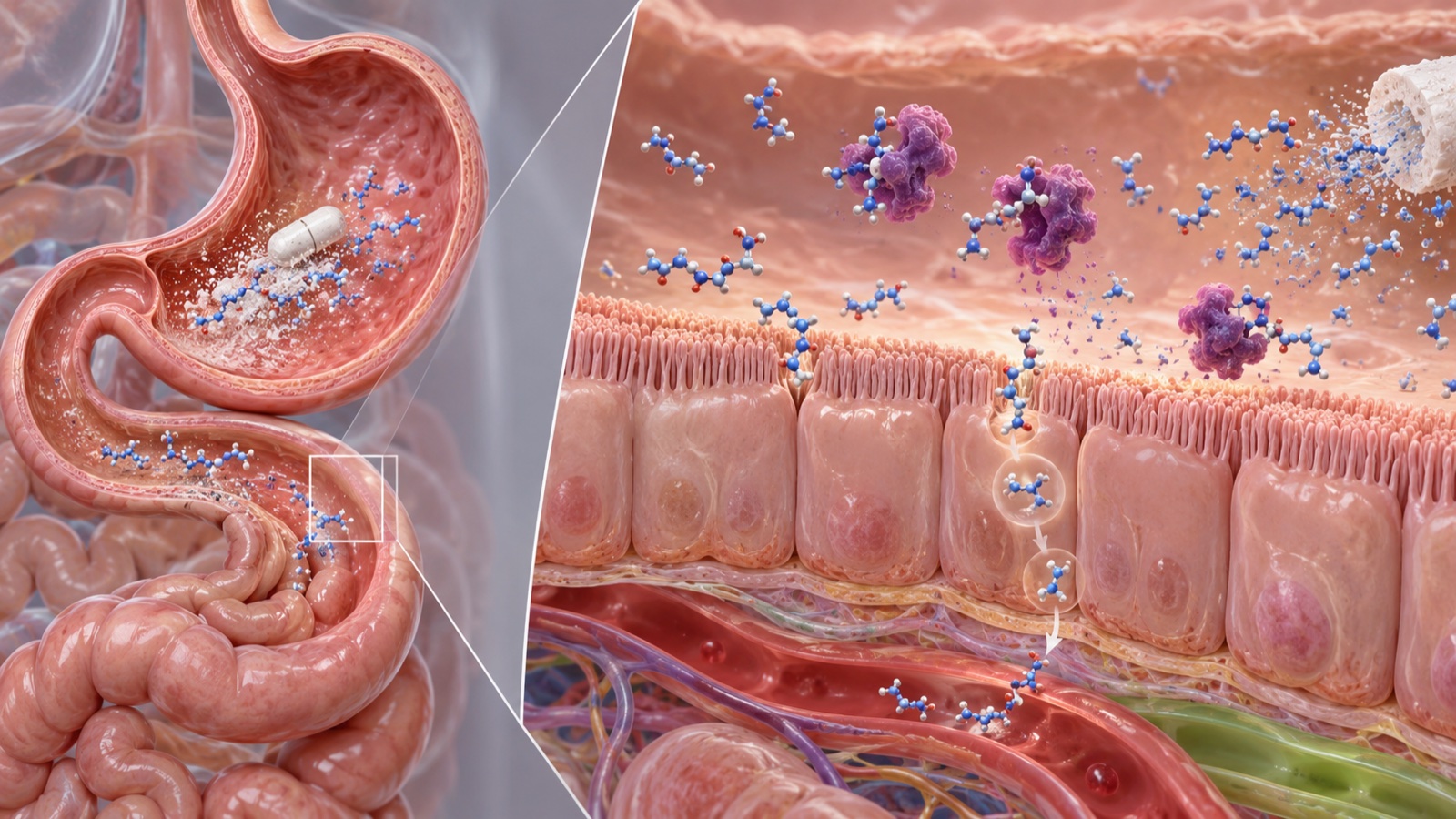
Show the original schematic with sources and numbers
Original schematic for Fig. 3 (concept diagram, vector drawing). That absorption takes place in the stomach next to the tablet surface, the local buffering action of SNAC, and the absence of evidence for an effect on tight junctions in the transcellular route come from Buckley et al. (2018) [Ref. 9]; the estimated absolute bioavailability comes from the prescribing information of oral semaglutide [Refs. 2, 3]. The shape and size of the zone and the arrangement of the cells are schematic and do not show real anatomy.
"Materials design of the formulation" as read from the prescribing information
| Formulation | Semaglutide content | Excipients (label) | Estimated absolute bioavailability |
|---|---|---|---|
| OZEMPIC (injection) | — | Disodium phosphate dihydrate, propylene glycol, phenol and others | 89% (subcutaneous) |
| RYBELSUS tablets | 3, 7, 14 mg | Magnesium stearate, microcrystalline cellulose, povidone, SNAC | About 0.4–1% |
| OZEMPIC tablets | 1.5, 4, 9 mg | Magnesium stearate and SNAC only | About 1–2% |
| WEGOVY tablets | Maintenance dose 25 mg | Contains SNAC as the absorption enhancer | About 1–2% |
All Sourced (the OZEMPIC injection, oral semaglutide tablet and WEGOVY prescribing information [Refs. 1, 2, 3]). The label of the oral semaglutide tablets describes absorption occurring mainly in the stomach and the results of clinical pharmacology studies in which absorption changed with the amount of water at dosing and the fasting time after dosingSourced.
The label of the oral semaglutide tablets states that no clinically meaningful difference in steady-state AUC (area under the concentration–time curve) and Cmax (peak concentration) was seen between RYBELSUS 3, 7 and 14 mg and OZEMPIC tablets 1.5, 4 and 9 mg, and at the same time that they cannot be interchanged on a milligram basisSourced. If exposure is comparable between 14 mg and 9 mg, the calculation gives about 36% less drug substance (1 − 9 ÷ 14)Our calculation. The formulation difference we can confirm from the labels is the presence or absence of microcrystalline cellulose and povidoneSourced. However, whether the difference in content arose from this formulation change alone could not be confirmed in the material we consulted.
8. Our calculation: how much more drug substance does a pill need?
The WEGOVY prescribing information gives a maintenance dose of 2.4 mg once weekly for the injection and 25 mg once daily for the tabletSourced. We put both on a weekly drug-substance basisOur calculation.
- Injection: 2.4 mg/week
- Tablet: 25 mg × 7 days = 175 mg/week
- Ratio: 175 ÷ 2.4 = about 73 times
- By the amount absorbed: injection 2.4 × 0.89 = about 2.1 mg; tablet 175 × 0.01–0.02 = about 1.8–3.5 mg. The amounts entering the body are of the same order
Assumptions and limits: the bioavailabilities are the estimates in the labels (injection 89%, tablet about 1–2%) multiplied as they stand. Actual exposure varies between individuals, and the label itself notes large variability in blood concentration for the tabletSourced. This does not show therapeutic equivalence. It is a conversion to show the order of magnitude of the drug substance needed.
The calculation in this chapter shows the essence of oral peptides. With an absorption of 1–2%, the amount to be swallowed has to be several tens of times, close to a hundred times, that of the injection. Going oral is a formulation device, and at the same time a decision that raises the production volume of drug substance by more than an order of magnitude (commentary in this article).
Moreover, the active ingredient per tablet is a few mg to 25 mg, and the rest is excipients such as SNAC. As Buckley et al. showed, absorption takes place in the immediate vicinity of the tablet surfaceSourced, so how the tablet disintegrates and dissolves in the stomach, that is, the design of disintegration and dissolution, can be expected to govern absorption directly (commentary in this article). That the label instructs not to split, crush or chew the tabletSourced also shows that the shape of the tablet itself is part of its function.
The absorption enhancer is not a "material that does nothing" but a functional excipient. Knudsen and Lau note that SNAC has Generally Recognized As Safe (GRAS) status in the United States for food use, while also writing that the molecular mechanism of its absorption enhancement is not fully understood (as of 2019)Sourced.
9. How it is made — yeast fermentation plus chemical modification, or solid-phase synthesis
Even for peptides of the same GLP-1 family, manufacture divides into two routes.
| Molecule | Manufacturing method (as stated in published material) | Source |
|---|---|---|
| liraglutide | The precursor peptide is made by a process that includes recombinant DNA expression in baker's yeast (Saccharomyces cerevisiae), and a C16 fatty acid is attached through a glutamic-acid spacer to lysine at position 26 | VICTOZA prescribing information |
| semaglutide | The peptide backbone is made by yeast fermentation | OZEMPIC prescribing information |
| tirzepatide | Synthesized by standard solid-phase peptide synthesis (SPPS), including the addition of the side chain on lysine 20. Cleavage from the resin removes the side-chain protecting groups at the same time; the product is purified by reversed-phase chromatography, then concentrated, solvent-exchanged, isolated and dried to give the drug substance. The drug substance is made at one manufacturing site | EMA public assessment report |
All Sourced (the VICTOZA and OZEMPIC prescribing information [Refs. 4, 1]; the EMA public assessment report for Mounjaro [Ref. 6]).
Knudsen and Lau give, as an additional advantage of replacing lysine 34 with arginine in the design of liraglutide, that it made the analog suitable for a semi-recombinant process, in which the peptide backbone is made recombinantly and the fatty acid is attached afterwards by a simple chemical reactionSourced. The molecular design was already deciding the manufacturing method (commentary in this article). On the other hand, a non-coded amino acid such as Aib cannot be made by cells as it is. At which step the Aib at position 8 of semaglutide is introduced could not be confirmed in the material we consulted.
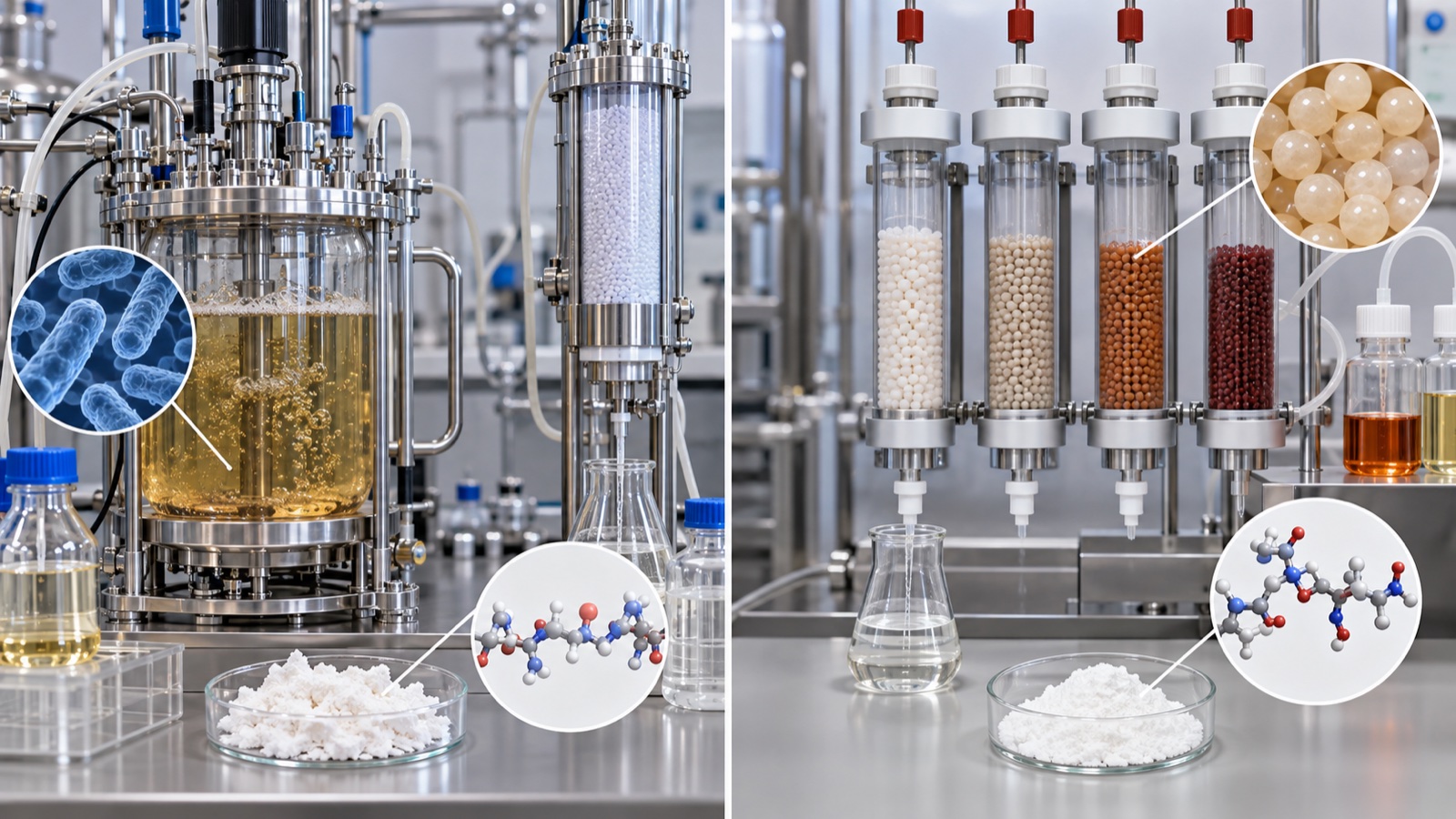
Show the original schematic with sources and numbers
Original schematic for Fig. 5 (concept diagram, vector drawing). The semi-recombinant process comes from the VICTOZA and OZEMPIC prescribing information [Refs. 4, 1] and Knudsen and Lau (2019) [Ref. 7]; the steps of solid-phase peptide synthesis from the EMA public assessment report for Mounjaro [Ref. 6]; and the principle of removing by-products by washing from the Nobel Foundation's 1984 Chemistry announcement [Ref. 10]. The division into three steps is this article's arrangement and does not show the actual steps, equipment or conditions of any company.
10. A materials engineer's view 2: in solid-phase synthesis, the yield of every step compounds
The announcement of the 1984 Nobel Prize in Chemistry explains that, in conventional solution synthesis, even a 90% yield at each synthetic step, which is a very good yield, leaves an overall yield of 0.003% after 100 stepsSourced. With solid-phase synthesis, the yield of each step can be raised to 99.5% or more, and in the same example the overall yield rises from 0.003% to 61%Sourced.
Tirzepatide has 39 residuesSourced. After the first residue is attached to the resin, we assume 38 couplings are needed (a simplification that does not count side-chain additions or deprotections)Our calculation.
- 99.9% per step → 0.99938 = about 96%
- 99.5% per step → 0.99538 = about 83%
- 99% per step → 0.9938 = about 68%
- 98% per step → 0.9838 = about 46%
- 90% per step → 0.9038 = about 1.8%
Turned around, even at 99% per step, about 32% of the chains have a coupling missing at some step. Assumptions and limits: actual process conditions and yields are not published, and these numbers are a simple calculation applying assumed coupling rates. Whether a chain with a missed coupling keeps growing or is stopped partway, and so the actual distribution of by-products, varies with the process.
The difficulty of solid-phase synthesis lies less in the yield itself than in the nature of the impurities. A chain with one coupling missing has almost the same size and the same composition as the target molecule. Purification therefore needs a separation that can tell a one-residue difference apart (reversed-phase chromatography in the EMA report)Sourced. Because the chain is built by sequential reactions, this is the same kind of problem as polymer synthesis, which deals with distributions of degree of polymerization and end-group defects (commentary in this article).
Another is the amount of solvents and reagents. The abstract of the 2019 paper by Isidro-Llobet et al. points out that peptide synthesis today relies mainly on older technology, uses large quantities of highly hazardous reagents and solvents, and has paid little attention to green chemistry and engineering, and notes that in 2016 the ACS Green Chemistry Institute Pharmaceutical Roundtable named the development of greener processes for peptide active ingredients a critical unmet needSourced. If going oral multiplies the amount of drug substance several tens of times, as calculated in Chapter 8, then the use of solvents, resin, protected amino acids and purification media will scale by the same ratio (commentary in this article). Solid supports, protected amino acids, alternative solvents and separation media: this is an area with large room for improvement from the materials side.
11. Small-molecule GLP-1 receptor agonists
Instead of making a peptide oral, there is also the approach of moving the receptor with a small molecule from the start.
- A structural clue: in a 2020 PNAS paper on the small-molecule agonist LY3502970 (OWL833), Kawai et al. note that the currently approved GLP-1 receptor agonists are peptide-based and that small-molecule activators with optimal drug properties have been hard to obtain. From a high-resolution structure of the complex with the receptor, they showed that it binds to a unique binding pocket in the upper helical bundle, surrounded by the receptor's extracellular domain, extracellular loop 2 and transmembrane helices 1, 2, 3 and 7Sourced. The authors of the paper include researchers of Chugai Pharmaceutical and Eli LillySourced
- Approval: on 1 April 2026 Eli Lilly announced that the FDA had approved FOUNDAYO (orforglipron). The company describes orforglipron as a once-daily, small-molecule (non-peptide) oral GLP-1 receptor agonist that was discovered by Chugai Pharmaceutical and licensed in by Lilly in 2018Sourced
- An example of discontinuation: on 14 April 2025 Pfizer announced the discontinuation of development of danuglipron, an oral small-molecule GLP-1 receptor agonist. It says the decision followed review of the totality of the information, including a possible drug-induced liver injury in one participant of a dose-optimization study (which resolved after discontinuation), and input from regulatorsSourced
| Item | Oral semaglutide (peptide + SNAC) | orforglipron (small molecule) |
|---|---|---|
| Molecular weight | 4113.58 g/mol | 902.0 g/mol (calcium salt) |
| Absorption enhancer | Co-formulated with SNAC | SNAC is not listed among the excipients in the label |
| Estimated absolute bioavailability | About 0.4–2% (depends on formulation) | 77% (at the 0.8 mg dose) |
| Food and water conditions | The label describes taking it fasting with a small amount of water and waiting at least 30 minutes | The label describes that it can be taken with or without food |
| Elimination half-life | About 1 week | About 29–49 hours |
| Solubility in water | — | The calcium salt is insoluble in water and hygroscopic |
All Sourced (the oral semaglutide tablet, WEGOVY and FOUNDAYO prescribing information [Refs. 2, 3, 13]). The administration conditions are quoted to show the difference in the mechanism of absorption, not as instructions for use.
Comparing 77% for orforglipron with about 1–2% for oral semaglutide gives about 40 to 80 times (77 ÷ 2 to 77 ÷ 1)Our calculation. With a small molecule, the "separate material" of an absorption enhancer is no longer needed, but in its place a different organic-synthesis process from that of peptides is required. It is an example in which the choice of modality is directly a choice of materials and manufacturing (commentary in this article). Because the doses differ, this ratio is not a ratio of drug-substance amounts.
12. Generics and regulatory moves / Open issues, and what is not yet settled
(1) The first generic, and the revision of guidance for generic peptides
On 23 December 2024 the FDA approved the first generic referencing VICTOZA (liraglutide injection 18 mg/3 mL) (Hikma Pharmaceuticals USA)Sourced. On 28 July 2026 it further published revised draft product-specific guidances (PSGs) for 17 peptide products. They include liraglutide, semaglutide, tirzepatide and teriparatide, and, the FDA says, give recommendations on ANDAs (Abbreviated New Drug Applications, that is, generic applications) for peptides made by recombinant, synthetic or semi-synthetic means, testing of innate immune responses, impurity thresholds, evaluation of higher-order structure and evaluation of biological activitySourced. At the same time it withdrew the May 2021 guidance "ANDAs for Certain Highly Purified Synthetic Peptide Drug Products That Refer to Listed Drugs of rDNA Origin", stating that it does not reflect the FDA's current scientific thinkingSourced.
A reference product made in yeast and a generic made by chemical synthesis can be treated as the same active ingredient: the difference in manufacturing method is being converted into a matter of evaluating impurities and immunogenicity (commentary in this article). The revised PSGs are still in the draft stage, and their final content is not settledNot yet confirmed.
(2) Open issues, and what could not be confirmed
- Manufacturing conditions and yields: the conditions, yields and solvent usage of each company's solid-phase synthesis and fermentation are not stated, because they are not published in the primary sources we consulted
- The full picture of how SNAC acts: Knudsen and Lau said in 2019 that it is not fully understoodSourced. We could not find a primary source showing how far understanding has advanced since, within the scope of this survey
- How far oral peptides can spread: how far the same approach can be used for peptides other than semaglutide is, given that Buckley et al. describe the mechanism of absorption as compound-specificSourced, not settled as to whether it can be generalizedNot yet confirmed
- The place of small-molecule agonists: approval began only in 2026, and how they will be used alongside peptides is not covered here (because it bears on medical judgment)
- The half-life of native GLP-1 is 1.5 to 2 minutes. It is degraded by enzymes such as DPP-4Sourced
- Aib at position 8 makes it resistant to the enzyme, and the fatty acid at position 26 lets it hitch a ride on albumin. The half-life of semaglutide is about 1 weekSourced
- The half-life was extended by about 5,000 to 6,700 timesOur calculation
- The key to going oral is the absorption enhancer SNAC. Absorption takes place near the tablet surface in the stomach, and the estimated absolute bioavailability is about 1–2%Sourced
- For the injection and the tablet under the same product name, the weekly amount of drug substance differs by about 73 timesOur calculation
- There are two manufacturing routes: "yeast fermentation plus chemical modification" and "solid-phase synthesis". In solid-phase synthesis a 1% difference per step matters greatly over 38 stepsOur calculation
13. Glossary
- Peptide drug
- A drug made of a molecule in which a few to a few dozen amino acids are linked. In the United States, 40 amino acids or fewer counts as a peptide.
- GLP-1
- Glucagon-like peptide-1. A hormone released from the gut in response to food.
- GIP
- Glucose-dependent insulinotropic polypeptide. The basis of the tirzepatide sequence.
- Receptor
- A protein that passes a signal into the cell when a particular molecule binds. The GLP-1 receptor is a class B GPCR.
- Agonist
- A molecule that binds a receptor and makes it work in the same way as the natural substance.
- Partial agonist
- An agonist that makes the receptor work to a lesser degree than the natural substance.
- DPP-4
- Dipeptidyl peptidase-4. An enzyme that cuts the N-terminal side of GLP-1 and inactivates it.
- Aib
- Aminoisobutyric acid. A non-coded amino acid not used in natural proteins. Used to resist DPP-4.
- Albumin binding
- A way to prolong action by binding the drug reversibly, through a fatty acid, to albumin, the protein abundant in blood.
- Fatty diacid
- An aliphatic chain with a carboxylic acid at each end. C18 for semaglutide, C20 for tirzepatide.
- SNAC
- Salcaprozate sodium. The absorption enhancer used in oral semaglutide tablets.
- Bioavailability
- The fraction of the administered amount that reaches the systemic circulation.
- Solid-phase peptide synthesis (SPPS)
- A synthesis in which a peptide chain attached to a resin is extended one residue at a time. Purification is done by washing.
- Semi-recombinant process
- A manufacturing method in which the backbone is made by a microorganism and modified afterwards by chemical reactions.
- Reversed-phase chromatography
- A purification method that separates molecules by differences in hydrophobicity. Used to purify peptides.
- ANDA / PSG
- The U.S. application for approval of a generic drug / the product-specific guidance the FDA issues for each product on generic development.
14. References (primary sources)
- DailyMed (FDA-approved prescribing information) "OZEMPIC (semaglutide) injection" — dailymed.nlm.nih.gov
- DailyMed (FDA-approved prescribing information) "RYBELSUS / OZEMPIC (semaglutide) tablets" (revised January 2026) — dailymed.nlm.nih.gov
- DailyMed (FDA-approved prescribing information) "WEGOVY (semaglutide) injection / tablets" — dailymed.nlm.nih.gov
- DailyMed (FDA-approved prescribing information) "VICTOZA (liraglutide) injection" — dailymed.nlm.nih.gov
- DailyMed (FDA-approved prescribing information) "MOUNJARO (tirzepatide) injection" — dailymed.nlm.nih.gov
- European Medicines Agency (CHMP) "Mounjaro — Assessment report" EMA/791310/2022 — ema.europa.eu
- Knudsen, L.B., Lau, J. "The Discovery and Development of Liraglutide and Semaglutide" Frontiers in Endocrinology 10, 155 (2019). doi:10.3389/fendo.2019.00155 — pmc.ncbi.nlm.nih.gov
- Lau, J. et al. "Discovery of the Once-Weekly Glucagon-Like Peptide-1 (GLP-1) Analogue Semaglutide" Journal of Medicinal Chemistry 58(18), 7370–7380 (2015). doi:10.1021/acs.jmedchem.5b00726 — pubmed.ncbi.nlm.nih.gov
- Buckley, S.T. et al. "Transcellular stomach absorption of a derivatized glucagon-like peptide-1 receptor agonist" Science Translational Medicine 10(467), eaar7047 (2018). doi:10.1126/scitranslmed.aar7047 — pubmed.ncbi.nlm.nih.gov
- The Royal Swedish Academy of Sciences "The Nobel Prize in Chemistry 1984 — Press release" — nobelprize.org
- Isidro-Llobet, A. et al. "Sustainability Challenges in Peptide Synthesis and Purification: From R&D to Production" The Journal of Organic Chemistry 84(8), 4615–4628 (2019). doi:10.1021/acs.joc.8b03001 — pubmed.ncbi.nlm.nih.gov
- Kawai, T. et al. "Structural basis for GLP-1 receptor activation by LY3502970, an orally active nonpeptide agonist" PNAS 117(47), 29959–29967 (2020). doi:10.1073/pnas.2014879117 — pmc.ncbi.nlm.nih.gov
- DailyMed (FDA-approved prescribing information) "FOUNDAYO (orforglipron) tablets" — dailymed.nlm.nih.gov
- Eli Lilly and Company "FDA approves Lilly's Foundayo™ (orforglipron)…", 1 April 2026 (PR Newswire) — prnewswire.com
- Pfizer "Pfizer Provides Update on Oral GLP-1 Receptor Agonist Danuglipron", 14 April 2025 — pfizer.com
- FDA "FDA Approves First Generic of Once-Daily GLP-1 Injection to Lower Blood Sugar in Patients with Type 2 Diabetes", 23 December 2024 — fda.gov
- FDA "FDA Publishes Revised Draft Product-Specific Guidances for Certain Generic Peptide Products", 28 July 2026 — fda.gov
- U.S. Code of Federal Regulations (eCFR) "21 CFR 600.3 Definitions" — ecfr.gov
- FDA "'Deemed to be a License' Provision of the BPCI Act" — fda.gov
15. Claim-to-source audit
| Claim in the text | Basis | Category |
|---|---|---|
| That semaglutide is a GLP-1 analog with 94% sequence homology to human GLP-1 that selectively binds and activates the GLP-1 receptor. That the main prolonging mechanism is albumin binding promoted by modifying lysine 26 with a hydrophilic spacer and a C18 fatty diacid, that position 8 is modified to stabilize against DPP-4 degradation, that the substitution at position 34 is so that only one fatty diacid is attached, and that the peptide backbone is made by yeast fermentation. Molecular weight 4113.58 g/mol, half-life of about 1 week, absolute bioavailability of 89% after subcutaneous administration, and the excipients | OZEMPIC (injection) prescribing information Reference 1 https://dailymed.nlm.nih.gov/dailymed/drugInfo.cfm?setid=adec4fd2-6858-4c99-91d4-531f5f2a2d79 | Sourced |
| The excipients of the oral semaglutide tablets (RYBELSUS 3, 7, 14 mg; OZEMPIC tablets 1.5, 4, 9 mg), co-formulation with SNAC, absorption occurring mainly in the stomach, the estimated absolute bioavailability (RYBELSUS about 0.4–1%, OZEMPIC tablets about 1–2%), no clinically meaningful difference in steady-state AUC and Cmax between the two products, that they cannot be interchanged on a milligram basis, the study results in which absorption changed with the amount of water and the fasting time after dosing, taking it fasting with a small amount of water and waiting at least 30 minutes, and not splitting, crushing or chewing the tablet | RYBELSUS / OZEMPIC tablets prescribing information Reference 2 https://dailymed.nlm.nih.gov/dailymed/drugInfo.cfm?setid=27f15fac-7d98-4114-a2ec-92494a91da98 | Sourced |
| That the WEGOVY injection maintenance dose is 2.4 mg once weekly and the tablet maintenance dose is 25 mg once daily, that the tablet contains SNAC as an absorption enhancer with an estimated absolute bioavailability of about 1–2% and the injection 89%, and the reference to large variability in blood concentration for the tablet | WEGOVY prescribing information Reference 3 https://dailymed.nlm.nih.gov/dailymed/drugInfo.cfm?setid=ee06186f-2aa3-4990-a760-757579d8f77b | Sourced |
| That GLP-1(7-37) has a half-life of 1.5 to 2 minutes because of degradation by DPP-4 and NEP. That the precursor peptide of liraglutide is made by a process that includes recombinant DNA expression in baker's yeast, that lysine 34 is replaced with arginine giving 97% homology to native GLP-1, that a C16 fatty acid (palmitic acid) is attached to lysine 26 through a glutamic-acid spacer, the molecular weight of 3751.2, and the plasma half-life of 13 hours after subcutaneous administration | VICTOZA prescribing information Reference 4 https://dailymed.nlm.nih.gov/dailymed/drugInfo.cfm?setid=5a9ef4ea-c76a-4d34-a604-27c5b505f5a4 | Sourced |
| That tirzepatide is a once-weekly GIP receptor and GLP-1 receptor agonist, based on the GIP sequence, with Aib at positions 2 and 13, a C-terminal amide, and 1,20-eicosanedioic acid attached to lysine 20 through a linker. Molecular weight 4813.53 Da, half-life of about 5 days | MOUNJARO prescribing information Reference 5 https://dailymed.nlm.nih.gov/dailymed/drugInfo.cfm?setid=d2d7da5d-ad07-4228-955f-cf7e355c8cc0 | Sourced |
| That tirzepatide is a synthetic peptide of 39 amino acids, that the linker consists of γ-Glu and two 8-amino-3,6-dioxaoctanoic acid units and partly resembles polyethylene glycol, that it is made by standard solid-phase peptide synthesis (including the addition of the lysine 20 side chain) with side-chain deprotection at the same time as cleavage from the resin and purification, concentration, solvent exchange, isolation and drying by reversed-phase chromatography, and that the drug substance is made at one manufacturing site | EMA public assessment report (Mounjaro, EMA/791310/2022) Reference 6 https://www.ema.europa.eu/en/documents/assessment-report/mounjaro-epar-public-assessment-report_en.pdf | Sourced |
| That the aim of fatty-acid modification is to protect against both DPP-IV degradation and renal filtration through reversible albumin binding. That in the alanine scan only Aib at position 8 combined DPP-IV stability with high receptor affinity. The approaches of albiglutide (albumin fusion) and dulaglutide (Fc fusion). That two fatty acids reduced action at the receptor. That in systematic testing from C12 to C20 the C18 fatty diacid with a γGlu-2xOEG linker gave the best balance of albumin affinity and receptor action. That fatty acids of C10 to C18 bind at seven sites on albumin. That replacing position 34 with arginine made possible a semi-recombinant process in which the backbone is made recombinantly and the fatty acid is attached afterwards. That SNAC has GRAS status for food use and that the molecular mechanism of its absorption enhancement is not fully understood (as of 2019) | Knudsen and Lau (2019) Reference 7 https://pmc.ncbi.nlm.nih.gov/articles/PMC6474072/ | Sourced |
| That the GLP-1 receptor affinity of semaglutide (0.38 ± 0.06 nM) fell to one third of that of liraglutide and its albumin affinity rose | Lau et al. (2015), abstract Reference 8 https://pubmed.ncbi.nlm.nih.gov/26308095/ | Sourced |
| That oral administration of therapeutic peptides is hampered by the gastrointestinal barrier and enzymatic degradation. That absorption of semaglutide co-formulated with SNAC takes place in the stomach, is confined to the area next to the tablet surface and requires SNAC, that SNAC protects against enzymatic degradation by local buffering and raises absorption only temporarily, and that the mechanism is compound-specific and transcellular with no evidence of an effect on tight junctions | Buckley et al. (2018), abstract Reference 9 https://pubmed.ncbi.nlm.nih.gov/30429357/ | Sourced |
| That a 90% yield per step gives an overall yield of 0.003% after 100 steps, that solid-phase synthesis makes 99.5% or more per step possible and raises the overall yield to 61%, and the principle of removing by-products by washing | Nobel Foundation, 1984 Chemistry press release Reference 10 https://www.nobelprize.org/prizes/chemistry/1984/press-release/ | Sourced |
| That peptide synthesis relies mainly on older technology and uses large quantities of hazardous reagents and solvents, and that in 2016 the ACS GCI Pharmaceutical Roundtable named the development of greener processes for peptide active ingredients a critical unmet need | Isidro-Llobet et al. (2019), abstract Reference 11 https://pubmed.ncbi.nlm.nih.gov/30900880/ | Sourced |
| That approved GLP-1 receptor agonists are peptide-based and small molecules with optimal properties were hard to obtain; that LY3502970 (OWL833) is a partial agonist biased toward G-protein activation and selective against other class B GPCRs; that it binds in a pocket of the upper helical bundle surrounded by the extracellular domain, extracellular loop 2 and transmembrane helices 1, 2, 3 and 7. That the authors include researchers of Chugai Pharmaceutical and Eli Lilly | Kawai et al. (2020) Reference 12 https://pmc.ncbi.nlm.nih.gov/articles/PMC7703558/ | Sourced |
| The molecular weight of orforglipron calcium salt, 902.0 g/mol; insoluble in water and hygroscopic; absolute bioavailability of 77% at the 0.8 mg dose; that it can be taken with or without food; elimination half-life of about 29–49 hours; the list of excipients | FOUNDAYO prescribing information Reference 13 https://dailymed.nlm.nih.gov/dailymed/drugInfo.cfm?setid=8ac446c5-feba-474f-a103-23facb9b5c62 | Sourced |
| The announcement that the FDA approved FOUNDAYO (orforglipron) on 1 April 2026; that it is a once-daily small-molecule (non-peptide) oral GLP-1 receptor agonist; that it was discovered by Chugai Pharmaceutical and licensed in by Lilly in 2018 | Eli Lilly announcement (a statement of fact about its own product) Reference 14 https://www.prnewswire.com/news-releases/fda-approves-lillys-foundayo-orforglipron-the-only-glp-1-pill-for-weight-loss-that-can-be-taken-any-time-of-day-without-food-or-water-restrictions-302731485.html | Sourced |
| That on 14 April 2025 Pfizer announced the discontinuation of danuglipron; that one participant in a dose-optimization study had a possible drug-induced liver injury that resolved after discontinuation; that the decision took into account all the information and the input of regulators | Pfizer announcement (a statement of fact about its own development candidate) Reference 15 https://www.pfizer.com/news/press-release/press-release-detail/pfizer-provides-update-oral-glp-1-receptor-agonist | Sourced |
| That on 23 December 2024 the FDA approved the first generic referencing VICTOZA (liraglutide 18 mg/3 mL) to Hikma Pharmaceuticals USA | FDA press release Reference 16 https://www.fda.gov/news-events/press-announcements/fda-approves-first-generic-once-daily-glp-1-injection-lower-blood-sugar-patients-type-2-diabetes | Sourced |
| That on 28 July 2026 the FDA published revised draft PSGs for 17 peptide products with recommendations on ANDAs for recombinant, synthetic and semi-synthetic peptides, innate immune response testing, impurity thresholds, higher-order structure and biological activity, and that it withdrew the May 2021 guidance on synthetic-peptide ANDAs | FDA publication Reference 17 https://www.fda.gov/drugs/drug-alerts-and-statements/fda-publishes-revised-draft-product-specific-guidances-certain-generic-peptide-products | Sourced |
| That a protein is defined as an alpha amino acid polymer of more than 40 amino acids | 21 CFR 600.3(h)(6) Reference 18 https://www.ecfr.gov/current/title-21/chapter-I/subchapter-F/part-600/subpart-A/section-600.3 | Sourced |
| That the FDA treats polymers of 40 or fewer amino acids as "peptides" and excludes them from the 2020 "deemed to be a license" provision | FDA page explaining the "deemed to be a license" provision Reference 19 https://www.fda.gov/drugs/guidance-compliance-regulatory-information/deemed-be-license-provision-bpci-act | Sourced |
| The half-life ratios (liraglutide about 390–520 times, tirzepatide about 3,600–4,800 times, semaglutide about 5,000–6,700 times) and the log conversion. About 36% less drug substance from the ratio of RYBELSUS 14 mg to OZEMPIC tablets 9 mg. The weekly drug-substance amounts for WEGOVY (injection 2.4 mg, tablet 175 mg, about 73 times) and the absorbed amounts (about 2.1 mg, about 1.8–3.5 mg). The cumulative shares over 38 couplings (about 96%, 83%, 68%, 46% and 1.8%) and that about 32% of chains have a missing coupling at 99% per step. The ratio of the bioavailability of orforglipron to that of oral semaglutide (about 40–80 times) | Our calculation. Simple conversions of the values in the labels (doses, half-lives, bioavailability); the measurement conditions and individual variation are not matched. The per-step coupling rates are assumptions made by this article and are not actual manufacturing conditions or yields. None of these shows therapeutic equivalence or the merit of any drug | Our calculation |
| The final content of the revised PSGs. How far the oral approach can be generalized to peptides other than semaglutide | The PSGs are at the draft stage, and on generalization we could not confirm, at the time of this article's survey (September 2026), any primary information beyond the paper's statement that the mechanism is compound-specific (commentary in this article) | Not yet confirmed |
| The conditions, yields and solvent usage of each company's solid-phase synthesis and fermentation. The step at which Aib at position 8 of semaglutide is introduced. Whether the difference in content of the OZEMPIC tablets arose from the formulation change alone. How far understanding of SNAC's action has advanced since. The SNAC content per tablet | Could not be confirmed in the primary sources consulted, so they are not stated | Commentary |
| The arrangement of the three weaknesses of peptides (degradation, renal clearance, absorption) as solved by chemical and materials design. Likening the fatty acid and the PEG-like linker to the design of a surfactant or coupling agent, likening the idea of removing a reactive site from the sequence to surface treatment, and reading albumin binding as the design of an adsorption/desorption balance; the reading that the design chose "staying long" over "acting strongly". That going oral is also a decision that raises the amount of drug substance, and that the disintegration and dissolution of the tablet govern absorption. Likening the impurities of solid-phase synthesis to defects in sequential polymerization, and the reading that going oral increases the use of solvents and resin. The reading that the difference in manufacturing method is being converted into evaluation of impurities and immunogenicity | This article's arrangement and commentary based on published content. Not views stated by the authors of the papers, regulators or companies | Commentary |
| The efficacy (weight loss, blood-glucose improvement and so on) and safety of each product, comparisons between products, and how they are used alongside each other | This article explains materials and manufacturing technology and does not evaluate or compare therapeutic effect or safety. Doses and administration conditions are quoted to explain the amount of drug substance and the mechanism of absorption, not as instructions for use | Commentary |
| That the figures combine ImageGen-generated explanatory images and vector drawings, kept distinct from real objects and measured images | Note by this article | Commentary |
Last updated 26 September 2026. Sources are limited to primary material (FDA-approved prescribing information [DailyMed], EMA public assessment reports, FDA publications, the U.S. Code of Federal Regulations, Nobel Foundation announcements, official company announcements and peer-reviewed papers). Because the article includes readings on molecular design, formulation and process, those are marked as commentary and kept separate from sourced fact. Each company's manufacturing conditions, yields and solvent usage, the SNAC content, the step at which Aib is introduced in semaglutide, and the final content of the revised PSGs could not be confirmed in published primary sources and are not stated here. This article is an explanation of materials and manufacturing technology, and it does not evaluate or compare efficacy or safety and is not medical advice. All figures are explanatory concept diagrams. The figures combine ImageGen-generated explanatory images and vector drawings. The generated images are not photographs, micrographs or measured data of real objects. The original schematics, which include numbers and sources, are either shown as they are or kept expandable under the new images.