COMPANY PROFILE / CELL CULTURE TECHNOLOGY
Samsung Biologics
Korea's pure-play CDMO, growing antibodies in some of the largest tank capacity in the world
Samsung Biologics is a biopharmaceutical CDMO (contract development and manufacturing organisation) with five plants in Songdo, Incheon, South Korea. In 2025, 95.6% of its revenue came from antibody drugs, and almost the entire business is contract manufacturing in which animal cells are grown in large tanks to make antibodies. In November 2025 it spun off its biosimilar business (Samsung Bioepis), together with a new holding company, to become a "pure-play CDMO", and in March 2026 it acquired GSK's plant in Rockville, Maryland, its first production site outside Korea. This profile sets out what the company is putting into cell culture, who it works with and where it is heading, using only Korea's statutory disclosures (DART) and the company's official IR materials and press releases.
- Samsung Biologics in 30 seconds, and where it stands in cell culture
- The logo and how the name is written
- Where the company sits in the cell culture landscape
- Scale
- Resources committed to cell culture
- What it has done so far
- What comes next
- What the company is aiming for in cell culture
- Map of cell culture partnerships
- Technologies, products and services
- The risks this company carries
- Glossary, references and claim-to-source audit
1. Samsung Biologics in 30 seconds, and where it stands in cell culture
Co., Ltd.Incorporated in Korea in April 2011
Incheon, South Korea300, Songdobio-daero
207940Listed in November 2016
(pure-play)Biosimilar business spun off in November 2025
Companies involved in cell culture fall into three broad types: contract development and manufacturing organisations (CDMOs), suppliers of equipment, consumables and media, and developers of cell and regenerative therapies. Samsung Biologics is a pure CDMO: it sells no equipment or media and has no drugs of its own Sourced. "Cell culture" has two meanings: (1) growing animal cells to make antibodies and other proteins, and (2) cell therapy, where the cells themselves are the product. Today the business covers only the first. On cell and gene therapy, the company says it will build a hub that includes it at Bio Campus III and that it is currently "pursuing strategic investments through a life science fund in parallel"; it has not yet disclosed any contract manufacturing track record in this area Not yet confirmed.
2. The logo and how the name is written
The Samsung Biologics logo is a trademark of the company. We have not recreated it with generated imagery;
the image (SVG) the official website displays as the company logo is placed here as img/samsung_biologics_logo.svg.
A note on names: Japanese-language coverage usually writes the name phonetically in katakana; this series uses the Latin-alphabet name throughout. Samsung Bioepis, which develops and sells biosimilars, used to be a wholly owned subsidiary of Samsung Biologics, but in the November 2025 demerger it moved under the newly created Samsung Epis Holdings and is no longer a subsidiary of Samsung Biologics. The revenue and profit figures in this article are restated on the basis of the continuing (CDMO) business after the demerger.
Official site: https://samsungbiologics.com/3. Where the company sits in the cell culture landscape
As the company describes it, the business has two parts, CMO (contract manufacturing) and CDO (contract development of cell lines, processes, formulations and analytical methods), and since June 2025 it has also offered contract research (CRO), using organoids (small organ-like tissues grown in culture) to evaluate drug candidates Sourced. In other words, it promotes an end-to-end offer running from CRO through CDO to CMO, but CMO accounts for the overwhelming share of revenue.
4. Scale
Almost all of the revenue relates to cell culture (contract manufacture of antibodies), so the size of the company as a whole is close to the size of its cell culture business Sourced. Amounts are in Korean won (KRW), shown in billions.
| Measure (consolidated, KRW billion) | 2023 | 2024 | 2025 | H1 2026 |
|---|---|---|---|---|
| Revenue | 2,938.8 | 3,497.1 | 4,557.0 | 2,578 |
| Operating profit | 1,205.5 | 1,321.4 | 2,069.2 | 1,167 |
| of which antibody drug revenue | 2,655.4 (90.4%) | 3,380.4 (96.7%) | 4,358.3 (95.6%) | Not disclosed |
| R&D expense | 135.8 | 141.6 | 167.4 | - |
The 2023 and 2024 figures are for continuing operations, reflecting the November 2025 demerger (separation of the Samsung Bioepis group). The H1 2026 figures are the rounded amounts given in the earnings materials.
| Revenue by region (2025) | Amount (KRW billion) | Share |
|---|---|---|
| Europe | 2,367.7 | 52.0% |
| United States | 1,733.9 | 38.0% |
| South Korea | 371.9 | 8.2% |
| Other | 83.5 | 1.8% |
The company had 5,455 employees (31 December 2025, parent company basis), while the fact sheet on its website says "more than 5,800". The Rockville acquisition in March 2026 added more than 500 people Sourced.
The business report includes figures on the size and growth of the biopharmaceutical and CDMO markets (sourced from Evaluate Pharma and Frost & Sullivan) and estimates of the organoid market; because these are research-firm estimates, this article does not use them. The report also describes the company as the largest in the world by production capacity. That is the company's own claim, and this article has not checked it against other companies' disclosures Not yet confirmed.
5. Resources committed to cell culture
As in every profile in this series, we check four kinds of resource (people, money, external investments and acquisitions, and ties with universities and research institutes) and show whether each could be confirmed from primary sources.
| Type of resource | What could be confirmed | Status |
|---|---|---|
| People (R&D organisation) | 609 dedicated R&D staff (109 PhDs, 266 master's degrees): 297 in MSAT (manufacturing science and technology), 194 at the CDO development centre and 118 at the bio research institute. Their remit is "technical support for producing customers' products" and "research and development of cell lines and processes" | Confirmed |
| People (sites) | Bio Campus I and II in Songdo (Plants 1 to 5) and the ADC plant; Rockville, U.S. (two plants). Sales offices in New Jersey, Boston, Tokyo and Amsterdam | Confirmed |
| Money (capital expenditure) | KRW 893.4 billion invested in production facilities and other assets in 2025. Plant 5 (180,000 L) was built for KRW 2.01 trillion and completed in April 2025. About KRW 7 trillion of investment planned for Bio Campus III through 2034 | Confirmed |
| Money (R&D) | KRW 167.4 billion in 2025 (3.7% of revenue), of which personnel costs were KRW 93.5 billion. R&D spending on cell and gene therapy alone is | Not disclosed |
| External investments and acquisitions | Acquisition of 100% of Human Genome Sciences, which owns the Rockville plant, from GSK (completed March 2026). Investments in gene editing (Arbor Biotechnologies) and other areas through the Life Science Fund set up by three Samsung group companies. A takeover offer for PolyPeptide of Switzerland, a peptide CDMO, is under way (not cell culture) | Confirmed |
| University and research ties | No joint research with universities or research institutes in cell culture is mentioned in the business report. A strategic partnership with CEPI (Coalition for Epidemic Preparedness Innovations) and open-innovation work with Eli Lilly have been announced, but neither is specific to cell culture technology | Not confirmed |
According to the business report, raw materials purchased in 2025 came to KRW 746.4 billion for resins and similar items and KRW 403.4 billion for filters and similar items, KRW 1,149.8 billion in total Sourced. That is roughly a quarter of revenue Our calculation, but the company explains that the cost of raw and subsidiary materials is reimbursed by customers in full, plus a fee, and that raw materials are bought from suppliers the customer has confirmed or designated. In other words, the consumables of cell culture, such as media, purification resins and filters, are in effect determined by the specification of the customer's drug, not by the CDMO. For a materials maker, the real contest is being adopted into the pharmaceutical customer's process, before any pitch to the CDMO.
6. What it has done so far
| When | What happened | Why it matters |
|---|---|---|
| April 2011 | Samsung Biologics founded; construction of Plant 1 began the following month | The Samsung group's entry into contract biopharmaceutical manufacturing |
| 2013 | Plant 1 completed. Contract manufacturing agreements with BMS and Roche | First orders from major pharmaceutical companies |
| November 2016 | Listed on KOSPI | - |
| 2018 | Plant 3 (180,000 L) began cGMP production. Entry into the CDO business, developing cell lines and processes for customers | A move to two pillars: larger scale and contract development |
| August 2020 | Launch of its own cell line platform, "S-CHOice" | Its own CHO cells for making antibodies |
| April 2022 | Samsung Bioepis became a wholly owned subsidiary | The biosimilar business brought into the group (spun off in 2025) |
| June 2023 | Plant 4 (240,000 L) ready for cGMP operation | At the time the company's largest single plant |
| June and September 2024 | Launch of the high-density culture platform "S-Tensify" and the cell line platform "S-AfuCHO" | Beyond bigger tanks, towards technology for growing cells more densely |
| April 2025 | Plant 5 (180,000 L) completed and production begun. Construction cost KRW 2.01 trillion; 24 months from groundbreaking to cGMP readiness | The first plant at Bio Campus II |
| June 2025 | Launch of "Samsung Organoids", a service that uses organoids to evaluate drug efficacy | Entry into contract research (CRO) |
| November 2025 | Demerger separating the Samsung Bioepis group, making the company a pure-play CDMO. Contract to buy the site for Bio Campus III (KRW 248.6 billion) | The company says this removed concerns about conflicts of interest with customers |
| December 2025 | Agreement to acquire the company that owns GSK's Rockville plant (60,000 L) (asset purchase price US$280 million) | Its first production site in the U.S. |
| March 2026 | Rockville acquisition completed (given as US$353 million in the Q1 results). Total capacity reached 845,000 L | Continues GSK's existing products while switching to other customers |
| Q1 2026 | Master cell bank manufacturing and vector construction services added | More coverage upstream, in cell line creation |
| July to August 2026 | Takeover offer for PolyPeptide (about CHF 1.46 billion in total) and a KRW 3 trillion rights offering announced | Diversification into peptides, and funds to expand Bio Campus II |
7. What comes next
year on yearIn July 2026 the company said it expects to reach the top of the range
through 2034A multi-modality hub including cell and gene therapy
Pre-filled syringesPlans stated in the business report
The following plans related to cell culture have been announced Sourced.
- Plant 5: being brought up to speed through process performance qualification (PPQ); the company says it will lift revenue in the second half of 2026.
- Rockville: commercial manufacturing has continued since the acquisition, and revenue will start to be recognised from Q3 2026. Further investment is planned to expand capacity and upgrade technology.
- Bio Campus III: the CEO message in the 2025 Business Report says the company "will establish a multi-modality hub covering a broad range of modalities, including cell and gene therapies (CGT)".
- Financing: of the KRW 3 trillion rights offering, about KRW 2.71 trillion is to go to the PolyPeptide acquisition and about KRW 290 billion to expanding Bio Campus II. Existing shareholders subscribe on 9 to 10 November 2026, and the new shares are due to be listed on 30 November.
None of the following appears in the primary sources consulted Not yet confirmed.
When contract manufacturing of cell and gene therapies will start, and at what scale; how much of the Bio Campus III investment goes to cell and gene therapy; a decision to start building Plants 6 to 8 (the company says only that they are "under review"); and the names of the counterparties to large contracts that the business report identifies only as "pharmaceutical companies in Asia, the U.S. and Europe". Company names and amounts that appear in press coverage are not used in this article.
8. What the company is aiming for in cell culture
This section goes beyond what the company says directly. It sets out inferences that can be drawn from primary sources, each with its basis.
| What can be read | Primary evidence behind it | Category |
|---|---|---|
| For now the focus is on adding ever more scale in very large antibody culture | Completion of Plant 5, the Rockville acquisition, the plan under review to reach 1,385,000 L by 2032, and part of the rights offering earmarked for expanding Bio Campus II | Inference |
| In cell and gene therapy the company is still assessing the technology through investments before making anything itself | The business report says that "in the field of cell and gene therapies, the Company is pursuing strategic investments through a life science fund in parallel to secure technological capabilities and preemptively capture market opportunities", and no contract manufacturing record is disclosed | Inference |
| Culture technology is moving not only towards "bigger tanks" but also towards "more output from the same tank" | A string of cell line and culture process platforms: "S-Tensify" for high-density culture and "S-CHOice" and "S-AfuCHO" for cell lines | Inference |
| The organoid business is an entry point for locking customers in early | The business report says the aim is to work with customers from the candidate discovery stage and to secure long-term partnerships and an early "lock-in" effect (our translation from the Korean) | Sourced |
| For now, diversification outside cell culture (ADCs and peptides) is moving first | The ADC plant was ready for GMP in 2025 and the PolyPeptide acquisition is expected to complete at the end of 2026, whereas the facility plan for CGT sits within Bio Campus III (through 2034) | Inference |
The production figures in the business report show capacity of 1,034 batches in 2025 against actual output of 733, a utilisation rate of 70.9% (75.2% in 2024) Sourced. This can be read as the denominator growing first, because Plant 5, completed in April 2025, is still ramping up. Even so, the company has put Plants 6 to 8 under review, set out a figure of 1,385,000 L for 2032, and earmarked part of the rights offering for expanding Bio Campus II. This article reads adding capacity ahead of demand even while utilisation is falling as a sign that the company sees scale itself as the source of its competitiveness Not yet confirmed. Small-batch, many-product businesses such as cell and gene therapy are different in character from that strength in large scale and standardisation, and planning to handle them at a separate campus (Bio Campus III) can be seen as the other side of the same coin.
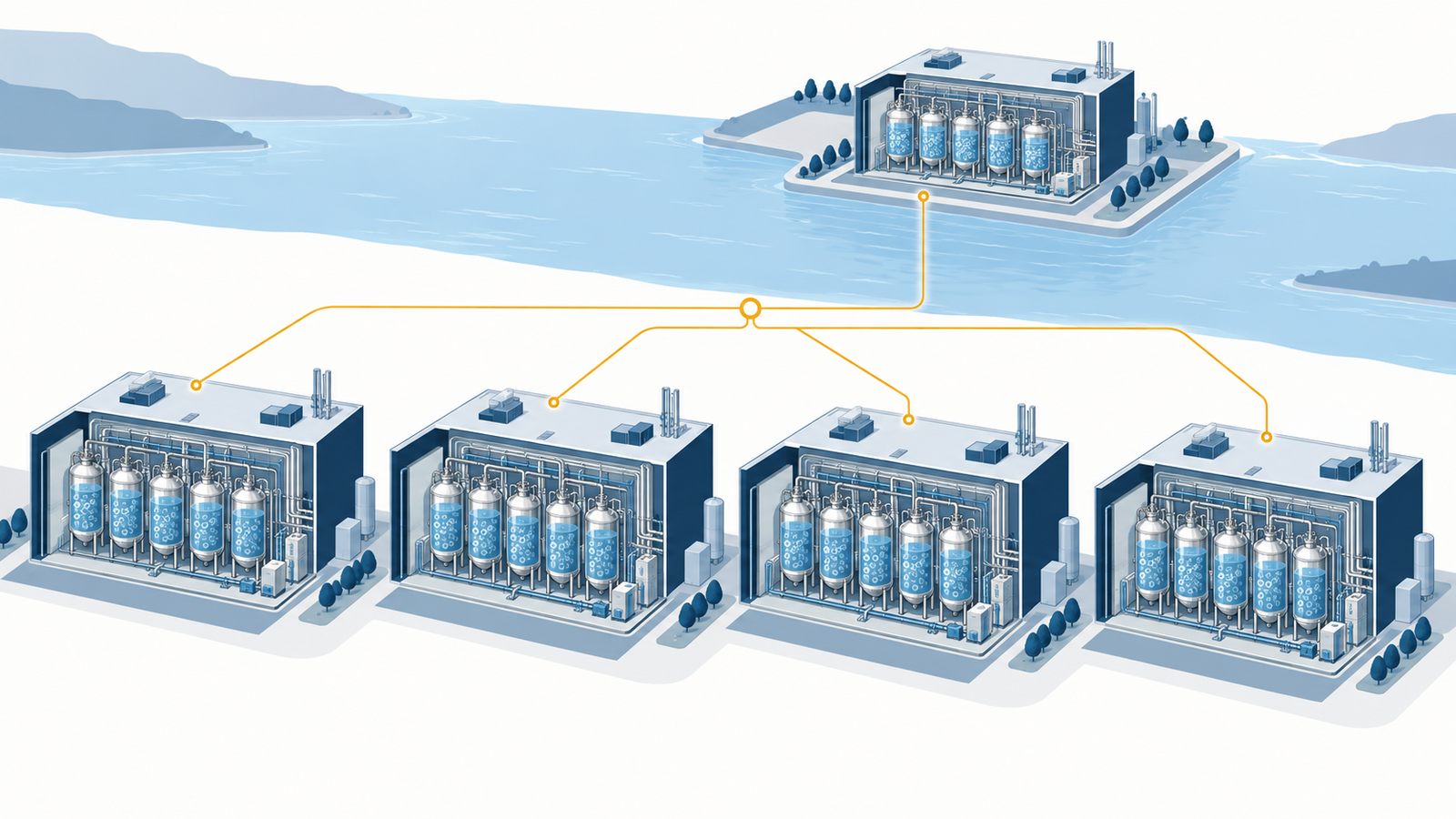
9. Map of cell culture partnerships
10. Technologies, products and services
| Category | What it covers (per the business report and official website) | Type of cell culture |
|---|---|---|
| Contract manufacturing (CMO) | Drug substance such as antibodies, made at Plant 1 (30,000 L), Plant 2 (155,000 L), Plant 3 (180,000 L), Plant 4 (240,000 L), Plant 5 (180,000 L) and Rockville (60,000 L). Drug product (DP) is also offered under contract | (1) Biologics |
| Cell line development (CDO) | Its own cell lines, "S-CHOice" and "S-AfuCHO", and a service for creating high-yielding cell lines. Master cell bank manufacturing offered from 2026 | (1) Biologics |
| Process development (CDO) | Research into combinations of process conditions and media that raise yield (titre) in cell culture, and improvement of purification yield. "S-Tensify" for high-density culture | (1) Biologics |
| Other modalities | ADC plant (ready for GMP in 2025) and mRNA (facilities operating since 2022) | Outside cell culture (culture is involved on the antibody side of ADCs) |
| Contract research (CRO) | "Samsung Organoids": a service that evaluates drug candidates' efficacy using organoids | Cells grown as a "tool" |
| Cell and gene therapy | Planned for Bio Campus III. Not currently listed among the contract manufacturing services on the official website | (2) Cell therapy (planning stage) |
In October 2025 the company unveiled "ExellenS", a manufacturing framework, and says it will apply standardised design and operation to all its plants from now on Sourced. In animal cell culture, even with the same cells and the same medium, slight differences in tank geometry, agitation, aeration and temperature control change the glycosylation of the antibody and the level of impurities. If equipment and procedures are aligned across plants, the comparability studies needed to move a process approved at one plant to another become lighter, which makes it easier for customers to secure a "back-up plant". The business report's description of industry characteristics, including the FDA's requirement for contingency plans for products made at a single site and growing demand for multi-site production (dual sourcing), is the counterpart of this standardisation strategy.
11. The risks this company carries
| Risk | Substance | Category |
|---|---|---|
| Falling utilisation | Utilisation fell to 70.9% in 2025 from 75.2% the year before. If capacity growth runs ahead of orders, profits could come under pressure | Sourced |
| Regional concentration | 90.0% of 2025 revenue came from Europe and the U.S. (52.0% plus 38.0%), leaving the company exposed to each country's drug policy and tariffs | Our calculation |
| Dependence on antibodies | 95.6% of revenue comes from antibody drugs. No contract manufacturing record in cell and gene therapy has yet been disclosed | Sourced |
| Rules on transferring technology abroad | The business report lists, among regulations affecting the business, laws that require prior notification or approval before technical documents on national core technologies or national high-tech strategic technologies are handed to foreign companies. Technology transfer to and from overseas sites could become more cumbersome | Sourced |
| Pending administrative litigation | A suit seeking to overturn sanctions by Korea's Securities and Futures Commission and Financial Services Commission over the accounting treatment of Samsung Bioepis shares (including a KRW 8 billion penalty) was pending before the Seoul High Court at the end of 2025 | Sourced |
| A large acquisition and rights offering | The PolyPeptide acquisition is conditional on acceptances of at least two-thirds and on regulatory approvals. The KRW 3 trillion rights offering dilutes existing shareholders | Sourced |
| Falling behind in new modalities | The facility plan for cell and gene therapy sits within Bio Campus III, running to 2034, so the gap with companies that already have commercial track records may not close | Inference |
12. Glossary
- CDMO / CMO / CDO
- A CDMO takes on both development and manufacturing under contract, a CMO only manufacturing, and a CDO only development (of cell lines, processes and so on). See our explainer on CDMOs for more.
- CHO cells
- Cells derived from Chinese hamster ovary. The animal cells most widely used to produce antibody drugs.
- Cell line
- A lineage of cells selected to produce the target antibody consistently and in large amounts. The starting point of the process.
- Master cell bank
- A large, uniform stock of the production cell line stored frozen. The foundation of product quality.
- Bioreactor
- A tank in which cells are grown. See our explainer on bioreactors.
- High-density culture
- A culture method in which the medium is exchanged as cells grow to higher concentrations, so that the same tank yields more antibody.
- PPQ
- Process performance qualification. The step in which actual production runs show that a defined manufacturing process consistently yields product meeting its quality standards.
- Organoid
- A small, organ-like tissue made by growing stem cells or other cells in three dimensions. Used, for example, to evaluate how well drugs work.
- ADC
- Antibody-drug conjugate. A medicine in which a drug is attached to an antibody. The antibody part is made by animal cell culture.
- DART
- The electronic disclosure system of Korea's Financial Supervisory Service, where statutory filings such as listed companies' business reports are published.
13. References
- Samsung Biologics Business Report for the year ended December 2025 (in Korean; filed on DART on 12 March 2026, amended on 15 May 2026). Business overview, revenue breakdown (95.6% antibodies, by region), production capacity and utilisation, suppliers of major raw materials, production facilities and investment, list of contracts, the Human Genome Sciences acquisition agreement, the Bio Campus III site, R&D organisation and staff, R&D expense, new businesses, regulation and litigation. https://dart.fss.or.kr/dsaf001/main.do?rcpNo=20260515001658
- Samsung Biologics 2025 Business Report (English, on the official IR site). CEO message (2026 priorities, about KRW 7 trillion for Bio Campus III, CGT), history, sites, headcount, three years of results, Life Science Fund investments and the progress of the administrative litigation. https://samsungbiologics.com/common/fileDownload.do?_fdFileName_=cd21696118cd4a7daa6973c02d40f795.pdf&_colunmName_=attCnt0&_downloadIdx_=391&_fdFileOriName_=%5BSamsung%20Biologics%5D%202025%20Business%20Report.pdf&_fdSubPath_=investors
- Samsung Biologics 2025 Q4 Earnings Release (21 January 2026). 2026 revenue growth outlook (+15 to 20%), cumulative orders, completion of the demerger. https://samsungbiologics.com/common/fileDownload.do?_fdFileName_=61a7b9d576694f6c8a10151dfb7067f8.pdf&_colunmName_=attCnt0&_downloadIdx_=382&_fdFileOriName_=%5BSamsung-Biologics%5D-2025-Q4-Earnings-Release.pdf&_fdSubPath_=investors
- Samsung Biologics Press release "Samsung Biologics Reports Second Quarter 2026 Financial Results" (23 July 2026). H1 2026 revenue and operating profit, cumulative orders of US$21.6 billion, PPQ at Plant 5, integration of Rockville, the Life Science Fund, and expectations of reaching the top of the outlook range. https://samsungbiologics.com/media/company-news/samsung-biologics-reports-second-quarter-2026-financial-results
- Samsung Biologics 2026 Q2 Earnings Release (23 July 2026). Timing of the start of Rockville revenue recognition (Q3 2026) and the second-half boost from PPQ at Plant 5. https://samsungbiologics.com/common/fileDownload.do?_fdFileName_=34419027a9d04f32a9347b11a5cba763.pdf&_colunmName_=attCnt0&_downloadIdx_=401&_fdFileOriName_=%5BSamsung%20Biologics%5D%202026%20Q2%20Earnings%20Release.pdf&_fdSubPath_=investors
- Samsung Biologics Press release "Samsung Biologics reports first quarter 2026 financial results" (22 April 2026). Rockville purchase price of US$353 million, partnerships with CEPI and Eli Lilly, and the master cell bank manufacturing and vector construction services. https://samsungbiologics.com/media/company-news/samsung-biologics-reports-first-quarter-2026-financial-results
- Samsung Biologics Press release "Samsung Biologics expands U.S. manufacturing capabilities with strategic acquisition of Human Genome Sciences from GSK" (22 December 2025). 60,000 L, asset purchase price of US$280 million, continued employment of more than 500 staff, and Bio Campus III. https://samsungbiologics.com/media/company-news/samsung-biologics-expands-u-s--manufacturing-capabilities-with-strategic-acquisition-from-gsk
- Samsung Biologics Press release "Samsung Biologics completes acquisition of GSK’s manufacturing facility in Rockville, Maryland" (31 March 2026). Completion of the acquisition, total capacity of 845,000 L, continued supply to GSK and planned further investment. https://samsungbiologics.com/media/company-news/samsung-biologics-completes-acquisition-of-gsks-manufacturing-facility-in-rockville-maryland
- Samsung Biologics Press release "Samsung Biologics announces all-cash offer to acquire PolyPeptide" (20 July 2026). Terms of the offer and expected completion. https://samsungbiologics.com/media/company-news/samsung-biologics-announces-all-cash-offer-to-acquire-polypeptide
- Samsung Biologics Press release "Samsung Biologics Announces KRW 3 Trillion Rights Offering to Fund Its Next-Phase Expansion" (28 August 2026). Use of proceeds, Plants 6 to 8 under review and 1,385,000 L by 2032, and the timetable. https://samsungbiologics.com/media/company-news/samsung-biologics-3-trillion-won-rights-offering
- Samsung Biologics Official website, "Milestones". Launch dates of S-Tensify, S-AfuCHO, Samsung Organoids and ExellenS, and the capacity and construction period of Plants 4 and 5. https://samsungbiologics.com/about/milestones
- Samsung Biologics Official website, "Fact Sheet" and "Locations". More than 5,800 employees, capacity by plant, and sales offices (New Jersey, Boston, Tokyo and Amsterdam). https://samsungbiologics.com/about/fact-sheet
- Samsung Biologics Official website, "Locations" (used to check the list of sites). https://samsungbiologics.com/about/locations
- Samsung Biologics Official website (source of the logo image). https://samsungbiologics.com/
14. Claim-to-source audit
| Claim in the article | Category | Source |
|---|---|---|
| Legal name, founding (April 2011), KOSPI listing (November 2016) and head office address | Sourced | Reference 2 https://samsungbiologics.com/common/fileDownload.do?_fdFileName_=cd21696118cd4a7daa6973c02d40f795.pdf&_colunmName_=attCnt0&_downloadIdx_=391&_fdFileOriName_=%5BSamsung%20Biologics%5D%202025%20Business%20Report.pdf&_fdSubPath_=investors |
| 2023 to 2025 revenue and operating profit (continuing operations), antibody share and revenue by region | Sourced | Reference 1 https://dart.fss.or.kr/dsaf001/main.do?rcpNo=20260515001658 |
| H1 2026 revenue and operating profit, cumulative orders of US$21.6 billion | Sourced | Reference 4 https://samsungbiologics.com/media/company-news/samsung-biologics-reports-second-quarter-2026-financial-results |
| R&D expense (2023 to 2025) and the breakdown of 609 dedicated R&D staff | Sourced | Reference 1 https://dart.fss.or.kr/dsaf001/main.do?rcpNo=20260515001658 |
| 5,455 employees (end of 2025, parent company basis) | Sourced | Reference 2 https://samsungbiologics.com/common/fileDownload.do?_fdFileName_=cd21696118cd4a7daa6973c02d40f795.pdf&_colunmName_=attCnt0&_downloadIdx_=391&_fdFileOriName_=%5BSamsung%20Biologics%5D%202025%20Business%20Report.pdf&_fdSubPath_=investors |
| More than 5,800 employees (website figure) and capacity by plant | Sourced | Reference 12 https://samsungbiologics.com/about/fact-sheet |
| Sales offices (New Jersey, Boston, Tokyo and Amsterdam) | Sourced | Reference 13 https://samsungbiologics.com/about/locations |
| Capacity of 1,034 batches, output of 733 batches, utilisation of 70.9% (75.2% in 2024) | Sourced | Reference 1 https://dart.fss.or.kr/dsaf001/main.do?rcpNo=20260515001658 |
| 2025 capital expenditure of KRW 893.4 billion and Plant 5 construction cost of KRW 2.01 trillion | Sourced | Reference 1 https://dart.fss.or.kr/dsaf001/main.do?rcpNo=20260515001658 |
| Purchases and suppliers of major raw materials, and the cost reimbursement arrangement | Sourced | Reference 1 https://dart.fss.or.kr/dsaf001/main.do?rcpNo=20260515001658 |
| Raw material purchases equal to about a quarter of revenue; 90.0% of revenue from Europe and the U.S. | Our calculation | Calculated in this article from the figures in reference 1 |
| Contract manufacturing agreements with Pfizer, Novartis, Eli Lilly and others | Sourced | Reference 1 https://dart.fss.or.kr/dsaf001/main.do?rcpNo=20260515001658 |
| Separation of the Samsung Bioepis group by demerger (November 2025) and the move to pure-play CDMO | Sourced | Reference 1 https://dart.fss.or.kr/dsaf001/main.do?rcpNo=20260515001658 |
| Agreement to acquire Rockville (US$280 million, 60,000 L, more than 500 staff) | Sourced | Reference 7 https://samsungbiologics.com/media/company-news/samsung-biologics-expands-u-s--manufacturing-capabilities-with-strategic-acquisition-from-gsk |
| Completion of the Rockville acquisition (31 March 2026) and total capacity of 845,000 L | Sourced | Reference 8 https://samsungbiologics.com/media/company-news/samsung-biologics-completes-acquisition-of-gsks-manufacturing-facility-in-rockville-maryland |
| Rockville purchase price of US$353 million, partnerships with CEPI and Eli Lilly, addition of master cell bank manufacturing | Sourced | Reference 6 https://samsungbiologics.com/media/company-news/samsung-biologics-reports-first-quarter-2026-financial-results |
| Life Science Fund investments (Arbor Biotechnologies and others) and their role in CGT | Sourced | Reference 2 https://samsungbiologics.com/common/fileDownload.do?_fdFileName_=cd21696118cd4a7daa6973c02d40f795.pdf&_colunmName_=attCnt0&_downloadIdx_=391&_fdFileOriName_=%5BSamsung%20Biologics%5D%202025%20Business%20Report.pdf&_fdSubPath_=investors |
| Launch dates of S-CHOice, S-Tensify, S-AfuCHO, Samsung Organoids and ExellenS | Sourced | Reference 11 https://samsungbiologics.com/about/milestones |
| Purpose of the organoid business (an early lock-in effect) | Sourced | Reference 1 https://dart.fss.or.kr/dsaf001/main.do?rcpNo=20260515001658 |
| 2026 revenue growth outlook (+15 to 20%) and the expectation of reaching the top of the range | Not yet confirmed | References 3 and 4. Company guidance, not actual results https://samsungbiologics.com/common/fileDownload.do?_fdFileName_=61a7b9d576694f6c8a10151dfb7067f8.pdf&_colunmName_=attCnt0&_downloadIdx_=382&_fdFileOriName_=%5BSamsung-Biologics%5D-2025-Q4-Earnings-Release.pdf&_fdSubPath_=investors |
| Start of Rockville revenue recognition (Q3 2026) and PPQ at Plant 5 | Not yet confirmed | Reference 5. Company outlook https://samsungbiologics.com/common/fileDownload.do?_fdFileName_=34419027a9d04f32a9347b11a5cba763.pdf&_colunmName_=attCnt0&_downloadIdx_=401&_fdFileOriName_=%5BSamsung%20Biologics%5D%202026%20Q2%20Earnings%20Release.pdf&_fdSubPath_=investors |
| Bio Campus III (about KRW 7 trillion through 2034, including CGT) | Not yet confirmed | Reference 2. Company plan https://samsungbiologics.com/common/fileDownload.do?_fdFileName_=cd21696118cd4a7daa6973c02d40f795.pdf&_colunmName_=attCnt0&_downloadIdx_=391&_fdFileOriName_=%5BSamsung%20Biologics%5D%202025%20Business%20Report.pdf&_fdSubPath_=investors |
| Offer for PolyPeptide (about CHF 1.46 billion) and its conditions | Not yet confirmed | Reference 9. A plan not yet completed https://samsungbiologics.com/media/company-news/samsung-biologics-announces-all-cash-offer-to-acquire-polypeptide |
| KRW 3 trillion rights offering, Plants 6 to 8 under review and 1,385,000 L by 2032 | Not yet confirmed | Reference 10. Company plans at the review stage https://samsungbiologics.com/media/company-news/samsung-biologics-3-trillion-won-rights-offering |
| Rules on transferring technology abroad, and the administrative litigation over the accounting for Samsung Bioepis shares | Sourced | References 1 and 2 https://dart.fss.or.kr/dsaf001/main.do?rcpNo=20260515001658 |
| Market size and growth forecasts (sourced from research firms), and the company's claim to be the world's largest by production capacity | Not yet confirmed | Given in reference 1, but this article does not use the former because they are research-firm estimates, and has not verified the latter |
| Start date, facility scale and investment for cell and gene therapy; counterparties to unnamed contracts | Not yet confirmed | None is disclosed, and this article makes no estimate |
| Joint research with universities and research institutes in cell culture | Not yet confirmed | Not in references 1 or 2. This article does not conclude that none exists https://dart.fss.or.kr/dsaf001/main.do?rcpNo=20260515001658 |
| The three types (CDMO; tools, consumables and media; cell and regenerative therapy) | Our calculation | Our own classification. Companies shown are examples from the 20 in this series |
| The reading that the near-term focus is expanding very large antibody culture | Inference | This article's interpretation of the capacity plans and the use of the rights offering proceeds |
| The reading that in cell and gene therapy the company is assessing the technology through investments | Inference | This article's interpretation of the business report's wording and the absence of a contract manufacturing record |
| The reading that the company is also moving towards "more output from the same tank" | Inference | This article's interpretation of the cell line and culture platform launches |
| The reading that diversification outside cell culture (ADCs and peptides) is moving first | Inference | This article's interpretation of the timing of the ADC plant, the PolyPeptide acquisition and the CGT plan |
| The reading that adding capacity ahead of demand while utilisation falls reflects a view of scale as the source of competitiveness | Inference | This article's interpretation of utilisation compared with the capacity expansion plans |
| The risk of falling behind in new modalities | Inference | This article's interpretation of the timing of the CGT plan |
| The explanation that plant standardisation eases process transfers between plants | Not yet confirmed | This article's commentary based on the ExellenS announcement |
Last updated 24 September 2026 / Troy Technical
Every figure in this article comes from the business report Samsung Biologics filed on Korea's electronic disclosure system (DART) and from the company's official IR materials and press releases. No research-firm estimates or press-based figures have been used. Passages marked "Inference" are this article's interpretation of primary sources, not statements made by the company.