TECHNOLOGY EXPLAINER
Targeted Protein Degradation Explained
— From Drugs That "Block" to Drugs That Make the Cell "Throw Away"
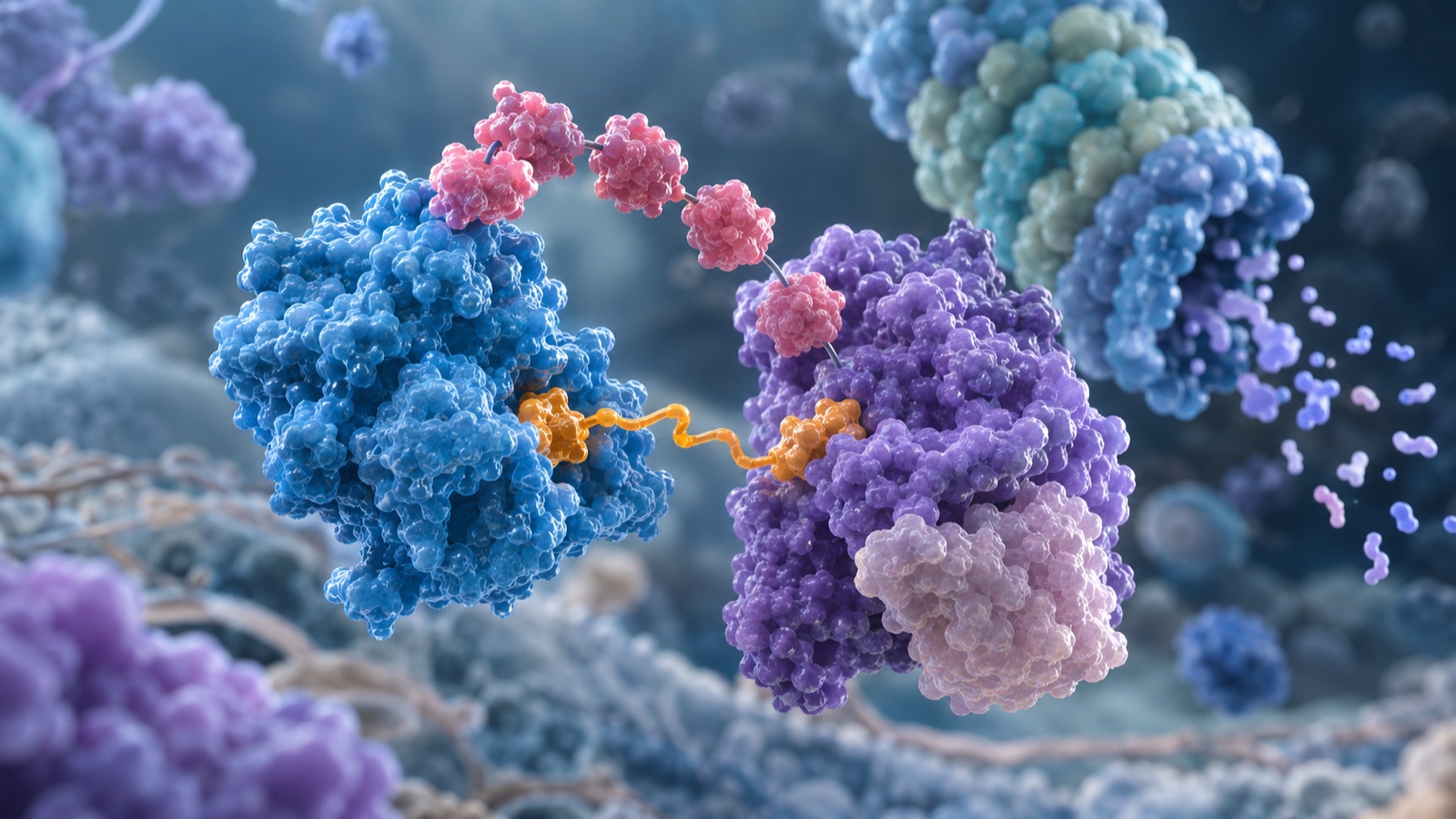
Targeted protein degraders (PROTACs and molecular glues) are small molecules that do not block a protein's function but hand the protein to the cell's own disposal machinery. Because the molecule is not used up and moves on to the next target, it behaves like a catalyst. The price is molecular size: the oral PROTAC that the FDA approved in May 2026 has a molecular weight of 723.90, far above the rule-of-thumb figure of 500 for oral drugs.
- What targeted protein degradation is (the short version)
- The ubiquitin–proteasome system — the cell's disposal machinery
- Two types — PROTACs and molecular glues
- How it differs from small-molecule inhibitors — from occupancy to events
- A materials engineer's view (1): this is less a drug than a catalyst
- E3 ligases — more than 600 exist, but mainly two are used
- Our calculation: how far does molecular weight swell?
- The oral-absorption barrier — the labels of the two approved drugs side by side
- A materials engineer's view (2): the formulation fills in for the missing solubility
- Development and approval status (as confirmed from regulators' published materials)
- Glossary / References / Claim-to-source audit
Sourced = stated in published material (link given)
Our calculation = a value this article derived from the assumptions stated
Not yet confirmed = a plan or goal, or something for which no record has been confirmed
Structural readings and materials- or formulation-design interpretations are kept apart and marked as Commentary.
This article explains chemistry, materials and formulation technology. It does not assess the efficacy or safety of any treatment and is not medical advice. It does not recommend any drug or treatment, or rank drugs against one another. Approval status, composition and pharmacokinetic values are quoted only where they appear in published material from the regulator (the US Food and Drug Administration, FDA). Where dosing is mentioned, it is quoted from the prescribing information to explain formulation constraints and is not a recommendation for use.
1. What targeted protein degradation is (the short version)
- What it does: Békés et al. describe targeted protein degradation (TPD) as "an emerging therapeutic modality with the potential to tackle disease-causing proteins that have historically been highly challenging to target with conventional small molecules"Sourced. Instead of blocking a protein's function, it has the cell degrade the protein
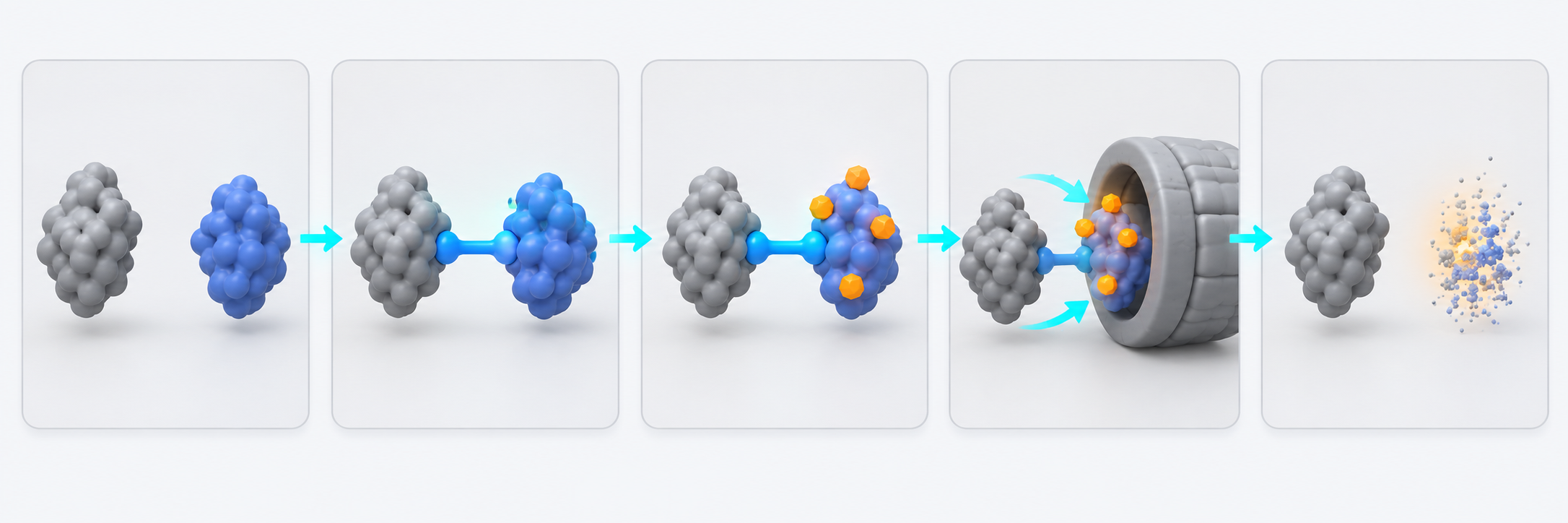
- How it works: a PROTAC molecule has one end that binds the target protein (the protein of interest, POI) and another end that recruits and binds an E3 ubiquitin ligase. Holding both at once induces ubiquitylation of the POI and its subsequent degradation by the ubiquitin–proteasome system (UPS), "after which the PROTAC is recycled to target another copy of the POI"Sourced
- What is different: the same review says that "this catalytic-type mechanism of action (MoA) and event-driven pharmacology" distinguishes PROTACs from classical inhibitors, which "have a one-to-one relationship with the POI and whose pharmacology is driven by stoichiometry and, usually, by interactions with a catalytic site"Sourced
The essence of this technology lies not in its mechanism but in a trade-off. To grasp two proteins at once, two ligands and a linker must fit into one molecule. As a result, molecular weight lands well above the usual guide for oral drugs. The label of vepdegestrant (VEPPANU), approved by the FDA on 1 May 2026, calls it "a heterobifunctional protein degrader" and "a small molecule comprised of an estrogen receptor binding domain joined by a linker to an E3 ligase binding domain", and gives its molecular weight as 723.90Sourced. The guide in Lipinski et al.'s "rule of 5" was a molecular weight of 500Sourced. How to make that excess work is the center of formulation and physical-property design in this field (our commentary).
2. The ubiquitin–proteasome system — the cell's disposal machinery
This technology borrows something the cell already has: a disposal line for proteins. Its discovery was the subject of the 2004 Nobel Prize in Chemistry.
The Royal Swedish Academy of Sciences decided to award the 2004 Nobel Prize in Chemistry "for the discovery of ubiquitin-mediated protein degradation" jointly to Aaron Ciechanover, Avram Hershko and Irwin RoseSourced.
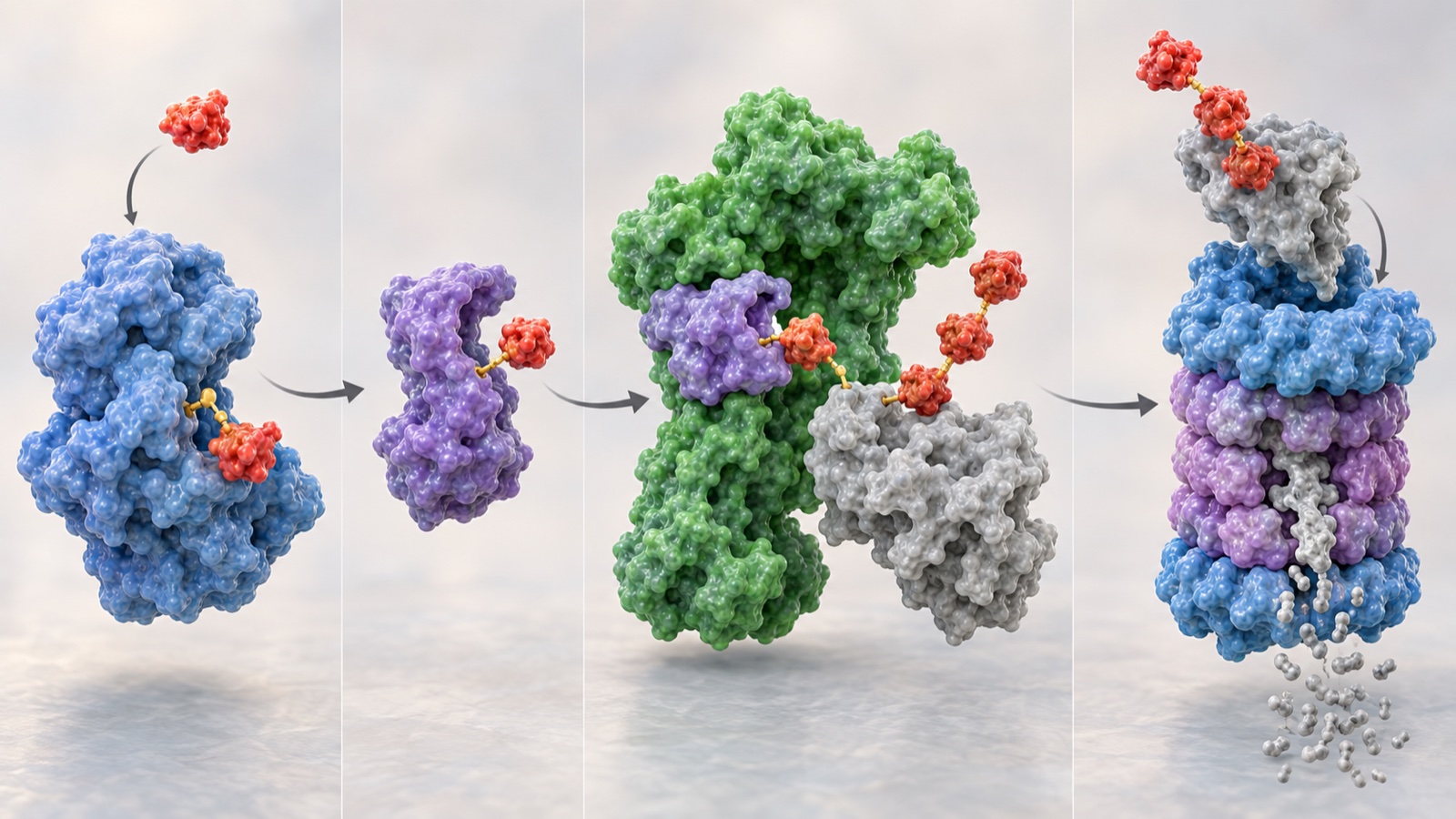
The announcement explains the mechanism. The degradation "is not indiscriminate but takes place through a process that is controlled in detail": the proteins to be broken down at any given moment are given a molecular label, "a 'kiss of death', to be dramatic". The labelled proteins are then fed into the cell's "waste disposers", the proteasomes, where they are chopped into small pieces and destroyedSourced
The label consists of a molecule called ubiquitin. It fastens to the protein to be destroyed and accompanies it to the proteasome, where it is recognised "as the key in a lock". "Shortly before the protein is squeezed into the proteasome, its ubiquitin label is disconnected for re-use"Sourced
Békés et al. set out the process enzyme by enzyme. Proteins are marked for degradation by the proteasome through a three-step process involving ubiquitin-activating enzymes (E1), ubiquitin-conjugating enzymes (E2) and, finally, ubiquitin–protein ligases (E3), which "coordinate the transfer of ubiquitin molecules to the target protein (substrate)"Sourced. They add that "the human genome is estimated to encode more than 600 E3 ligases, each with specificity for a different subset of proteins"Sourced.
Show the original schematic with sources and figures
Source diagram for Fig. 1 (vector drawing). The three E1/E2/E3 steps, the more than 600 E3 ligases and the catalytic mechanism of action are from Békés et al. (2022) [Ref. 1]; the description of the ubiquitin tag and the proteasome is from the Nobel Foundation's 2004 press release [Ref. 2]. The diagram is schematic and does not show the shape, size or number of molecules.
3. Two types — PROTACs and molecular glues
Degraders come in two types that arose in different ways: PROTACs, which are designed and built, and molecular glues, whose mechanism was understood only later.
Békés et al. write that "molecular glues, based on the serendipitous discovery that thalidomide and its analogues act as degrader molecules, constitute another important therapeutic class", and explain that "although not heterobifunctional in the manner of PROTAC molecules, molecular glues promote ubiquitylation of a POI by enhancing a protein–protein interaction (PPI) between a ligase and a potential substrate"Sourced.
The way they bind is also different. "Molecular glues can enhance complex formation between an E3 ligase and a target by wedging between protein–protein interfaces"Sourced.
The order of discovery was also reversed. "Historically, molecular glue degraders were discovered retrospectively — that is, the mechanism of action of cytotoxic compounds such as thalidomide were determined after their FDA approval"Sourced.
How the target of thalidomide was found
Two papers let us check what that "retrospective discovery" consisted of.
- 2010 (Ito et al., Science): the abstract says "Here, we identified cereblon (CRBN) as a thalidomide-binding protein. CRBN forms an E3 ubiquitin ligase complex with damaged DNA binding protein 1 (DDB1) and Cul4A"Sourced
- 2014 (Krönke et al., Science): the abstract says "Using quantitative proteomics, we found that lenalidomide causes selective ubiquitination and degradation of two lymphoid transcription factors, IKZF1 and IKZF3, by the CRBN-CRL4 ubiquitin ligase", and concludes that "these findings reveal a novel mechanism of action for a therapeutic agent, alteration of the activity of an E3 ubiquitin ligase leading to selective degradation of specific targets"Sourced
This mechanism is also written in the label of an approved product. The REVLIMID (lenalidomide) label says that "cellular activities of lenalidomide are mediated through its target cereblon, a component of a cullin ring E3 ubiquitin ligase enzyme complex. In vitro, in the presence of drug, substrate proteins (including Aiolos, Ikaros, and CK1α) are targeted for ubiquitination and subsequent degradation"Sourced.
The PROTAC side was designed from the start
The proof of concept for PROTACs was published in 2001. The abstract of Sakamoto et al. (PNAS) saysSourced:
"We sought to artificially target a protein to the SCF complex for ubiquitination and degradation." What they made was a chimeric compound, Protac-1: "One domain of Protac-1 contains the IκBα phosphopeptide that is recognized by the F-box protein β-TRCP, whereas the other domain is composed of ovalicin"Sourced
The result was that "MetAP-2 can be tethered to SCFβ-TRCP, ubiquitinated, and degraded in a Protac-1-dependent manner"Sourced.
Békés et al. describe this 2001 report as the in vitro proof of concept for the first fully synthetic PROTAC, and say that the later discovery of small-molecule mimetics of the HIF1α peptide (which binds VHL) "opened the door to the rational design of PROTACs based wholly on small molecular structures"Sourced.
Then, in 2015, a method using phthalimides was reported. Winter et al. describe attaching a competitive antagonist of the BET bromodomains to a phthalimide moiety to hijack the Cereblon E3 ubiquitin ligase complex; the resulting compound, dBET1, prompted Cereblon-dependent degradation of BET proteins with high specificity and showed efficacy in vivo in a human leukemia xenograftSourced.
4. How it differs from small-molecule inhibitors — from occupancy to events
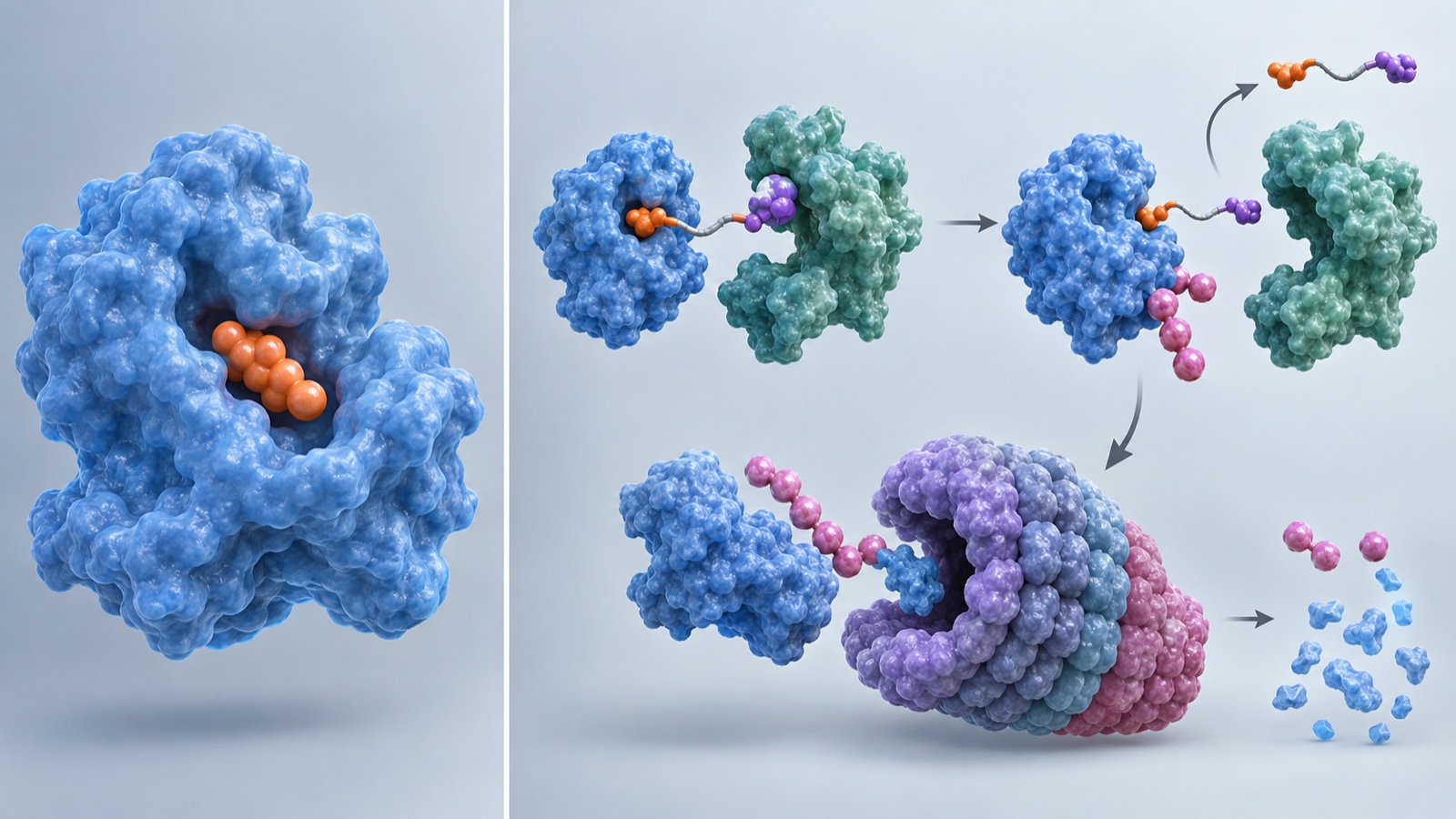
Békés et al. lay out the premise of conventional drug discovery. Small-molecule research against intracellular targets has often concentrated on developing high-affinity inhibitors of an enzyme active site or an allosteric site "(occupancy-driven pharmacology)". Although this has been highly effective, it "has left potential drug targets undrugged or underdrugged"Sourced
They continue: "PROTACs bring the degradation function to the target (event-driven pharmacology), negating the need for an active site and redefining undruggable targets as simply undrugged"Sourced.
The same review summarizes the conditions that make a target suitable for a PROTAC as the "Tenets of PROTAC targets"Sourced.
| Condition | What the paper says |
|---|---|
| A departure from the natural state | "A change away from the natural state, via overexpression, mutation, aggregation, isoform expression or localization, that results in a disease-causing gain of function" |
| A surface the E3 ligase can approach | "A binding surface that is approachable by an E3 ligase". Access by the recruited ligase to the target surface near the ligand-binding site is essential |
| A part that can be threaded into the proteasome | Ideally "an unstructured region to thread into the proteasome" |
| Binding affinity can be "moderate" | However, "moderate affinity (≥1–500 nM) is typically needed" |
| Suited to targets that have acquired resistance mutations | "Proteins that have evolved resistance mutations to targeted therapies, proteins with scaffolding functions and proteins that are considered 'undruggable' with other modalities can also be highly suitable PROTAC targets" |
| Cell-surface proteins are a poor fit | "Cell-surface proteins are currently not considered optimal targets for PROTAC therapy" |
All Sourced (Békés et al. 2022 [Ref. 1]). On resistance mutations the review also says that "owing to their event-driven (versus occupancy-driven) pharmacology, PROTACs may overcome insensitivity to such resistance mutations through catalytic degradation of the target"Sourced.
Békés et al. state an important caution about the ternary complex (ligase–PROTAC–target).
"Ternary complex formation is a necessary step in the action of a PROTAC molecule, but the degree of ternary complex formation may differ from substrate to substrate; that is, a ternary complex that forms too efficiently and remains tightly bound will not lead to efficient degradation"Sourced
They also note that cooperativity, a measure of ternary complex formation in a heterobifunctional system, may be positive or negative between a ligase and a target and has been shown to lead to degradation in both casesSourced.
Show the original schematic with sources and figures
Source diagram for Fig. 3 (vector drawing). The contrast between occupancy-driven and event-driven pharmacology, recycling and ternary complexes are described in Békés et al. (2022) [Ref. 1]. The diagram illustrates the idea and does not show actual turnover numbers, degradation rates or numbers of molecules.
5. A materials engineer's view (1): this is less a drug than a catalyst
Let us restate the quotations so far in the language of catalysis (our commentary).
- Substrate: the target protein
- Catalyst: the degrader (plus the E3 ligase)
- Intermediate: the ternary complex (ligase–degrader–target)
- Product: the ubiquitylated target, which is sent to the proteasome
- Catalyst regeneration: "the PROTAC is recycled to target another copy of the POI"Sourced
What makes this restatement useful is that the optimum of the design is no longer "the stronger the better". The sentence from Békés et al., "a ternary complex that forms too efficiently and remains tightly bound will not lead to efficient degradation"Sourced, has exactly the same shape as the familiar picture in heterogeneous catalysis (our commentary). If adsorption is too weak the reaction never starts; if it is too strong the product does not leave and the catalyst does not turn over. The optimum lies in between.
That is why the requirement on binding affinity is also phrased as a range: "moderate affinity (≥1–500 nM) is typically needed"Sourced. For an inhibitor, the usual wish would be to push affinity up into the picomolar range (our commentary).
There is one more point a materials engineer can read out. The time for the effect to return is set not by how long the molecule stays, but by how fast the cell rebuilds the protein. With an inhibitor, function returns when the drug is gone; with a degraded target, it does not return until the protein is synthesized again (our commentary). Duration of effect cannot be estimated from the molecule's half-life alone — and that changes the design philosophy of pharmacokinetics itself.
6. E3 ligases — more than 600 exist, but mainly two are used
In degrader design, the choice with the most room left open is which E3 ligase to use.
Békés et al. note that there are "more than 600 human ubiquitin E3 ligases to potentially explore", but that the ones actually used are mainly CRBN (cereblon) and VHL. The recent renaissance in the study of the UPS and E3 ligases, they say, "may well see CRBN and VHL supplanted as the initial 'workhorses' of TPD"Sourced.
They state explicitly that the choice of ligase changes the outcome. "The differences in degradation profiles conferred by different ligases can be driven by several factors. One is shape complementarity between the ligase and the target. The second is the ability of the ligase to form degradation-competent ternary complexes between the ligase and POI"Sourced
The review also gives CRL4–CRBN, CRL2–VHL, CRL1–β-TRCP and CHIP as examples, noting that "the assemblies demonstrate the different size, shape and electrostatic potential surface of each ligase, all potentially enabling degradation of a wide variety of proteins of interest"Sourced.
Put in the language of materials selection, the situation is easier to see (our commentary). There are more than 600 parts with the same function, "attach ubiquitin", each with a different shape and surface charge and a different pattern of expression across tissues. Yet only two types have reached practical use.
Why two? The constraint is that few ligases have usable ligands that have been found. To use an E3 ligase you need a small molecule that binds it, and such molecules were known for CRBN (thalidomide analogues) and for VHL (small-molecule mimetics of the HIF1α peptide)Sourced. So this is not a "performance choice" but an "inventory constraint" (our commentary).
If that constraint is lifted, the freedom of design widens at once. The review writes: "With more than 600 human ubiquitin E3 ligases to potentially explore, the question becomes not 'if' new E3 ligase-based TPD therapeutics will reach patients, but 'when' — and for what diseases?"Sourced This is an outlook, not a record of resultsNot yet confirmed.
7. Our calculation: how far does molecular weight swell?
To grasp two proteins at once, two ligands and a linker must fit into one molecule. The cost is molecular weight.
- The rule of 5: in the abstract, Lipinski et al. state that in the discovery setting "the rule of 5" predicts that "poor absorption or permeation is more likely when there are more than 5 H-bond donors, 10 H-bond acceptors, the molecular weight (MWT) is greater than 500 and the calculated Log P (CLogP) is greater than 5 (or MlogP > 4.15)"Sourced
- Vepdegestrant (PROTAC, oral): molecular formula C45H49N5O4, molecular weight 723.90Sourced
- Lenalidomide (molecular glue, oral): molecular formula C13H13N3O3, molecular weight 259.3Sourced
- Iberdomide hydrochloride (cereblon-modulating degrader, oral): molecular formula C25H27N3O5·HCl, molecular weight 485.97Sourced
Converted from the values aboveOur calculation.
- Ratio to the rule-of-5 guide: 723.90 ÷ 500 = about 1.45 times. The excess is about 224
- A rough share for the E3-binding part: 723.90 − 259.3 = about 465. The remaining "target binder + linker" alone already has the molecular weight of one small-molecule drug
- Iberdomide (estimate for the free base, without the hydrochloride): 485.97 − 36.46 (HCl) = about 449.5. This falls within the rule-of-5 guide
- Ratio of the two drugs: 723.90 ÷ 485.97 = about 1.49 times. Even among drugs that "make a protein degrade", the molecular weight differs by a factor of 1.5 depending on the type
Assumptions and limits: the "share for the E3-binding part" is a rough estimate that simply subtracts the molecular weight of lenalidomide. The E3-binding part of vepdegestrant is not lenalidomide itself. Comparing the chemical names, however, shows that both contain closely related substructures, "isoindol-2-yl" and "piperidine-2,6-dione" (glutarimide)Sourced (the structural comparison is our commentary). A high molecular weight does not in itself imply a problem of quality or safety.
8. The oral-absorption barrier — the labels of the two approved drugs side by side
In 2026 the FDA approved two degraders in quick succession: vepdegestrant (VEPPANU, heterobifunctional, that is, a PROTAC type) on 1 May, and iberdomide (ZENBEXUS, which the label calls "a cereblon-modulating protein degrader") on 13 AugustSourced. Both are oral drugs, and their labels describe pharmacokinetics in the same format. Set side by side, the difference in molecular size shows up directly in the numbers.
| Item | Vepdegestrant (VEPPANU) | Iberdomide (ZENBEXUS) |
|---|---|---|
| Type | Heterobifunctional: an ER-binding domain and an E3 ligase-binding domain joined by a linker | Binds cereblon and promotes recruitment, ubiquitination and degradation of Aiolos and Ikaros |
| Molecular weight | 723.90 | 485.97 (hydrochloride) |
| Dosage form and strength | Film-coated tablets, 100 mg and 200 mg | HPMC capsules, 0.75 mg and 1 mg |
| Solubility | pH dependent: "freely soluble under gastric pH conditions to slightly soluble under intestinal pH conditions" | (No corresponding statement in the material we checked) |
| Effect of food | With a high-fat meal, AUC rose 2.9-fold and Cmax 3.2-fold. Dosing is "with food" | "No clinically significant difference in iberdomide PK is expected following administration of ZENBEXUS with food" |
| Effect of acid-reducing agents | With esomeprazole, AUC fell to 84% and Cmax to 74% | (No corresponding statement in the material we checked) |
| Plasma protein binding | >99% | 75% |
| Apparent volume of distribution | 764 L | 415 L |
| Tmax (median) | about 6 hours | 2 hours |
| Elimination half-life | 19 hours | 37 hours |
| Excretion | Feces about 68% (18% unchanged), urine 1.5% (<0.02% unchanged) | Urine about 46% (16% unchanged), feces about 43% (11% unchanged) |
All Sourced (VEPPANU label [Ref. 8], ZENBEXUS label [Ref. 9]). AUC = area under the concentration–time curve; Cmax = peak concentration. The two drugs differ in target and disease, so this table is for looking at trends in physical properties and pharmacokinetics; it does not compare efficacy or safety.
Converted from the values in the tableOur calculation.
- Free (unbound) fraction: for vepdegestrant, 100% − >99% = under 1%; for iberdomide, 100% − 75% = 25%. A gap of 25 times or more
- Urinary excretion: 46% ÷ 1.5% = about 31 times. Vepdegestrant is a molecule that hardly passes through the kidney
- Moles per dose: 200 mg ÷ 723.90 g/mol = about 0.28 mmol; 1 mg ÷ about 449.5 g/mol (free-base estimate) = about 0.0022 mmol. A gap of about 120 times
- Mass per dose: 200 mg ÷ 1 mg = 200 times
Assumptions and limits: ">99%" is a lower bound, so the free fraction can only be said to be "under 1%". The two drugs differ completely in target, disease and the basis for dose selection, so a larger or smaller dose does not mean stronger or weaker action. These ratios are for seeing how molecular properties bear on the formulation.
9. A materials engineer's view (2): the formulation fills in for the missing solubility
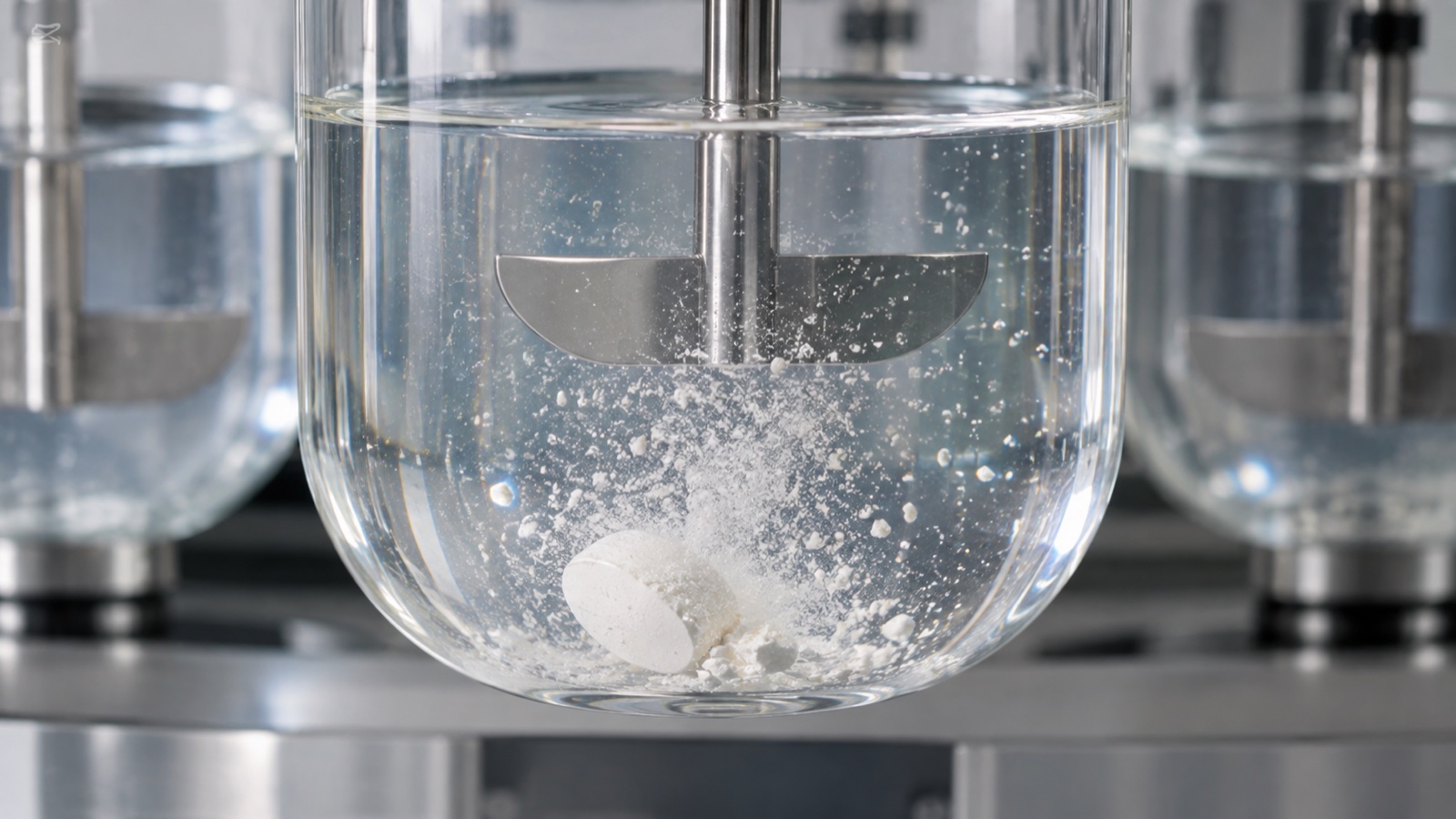
The VEPPANU label lists the inactive ingredients that come with the active substanceSourced.
- Tablet core: colloidal silicon dioxide, croscarmellose sodium, hypromellose, lactose monohydrate, microcrystalline cellulose, sodium stearyl fumarate, vitamin E-polyethylene glycol succinate
- Film coating: polyvinyl alcohol, polyvinyl alcohol–polyethylene glycol graft copolymer, glyceryl mono- and dicaprylocaprate, talc, titanium dioxide, colorants (indigo carmine aluminum lake, yellow and black iron oxide)
What catches the eye is vitamin E-polyethylene glycol succinate (our commentary). As the name says, it is an amphiphilic molecule in which a fat-soluble vitamin E (tocopherol) part and a water-soluble polyethylene glycol part are joined through succinic acid. By contrast, the contents of the capsule of iberdomide, with a molecular weight of about 486, are anhydrous lactose, pregelatinized starch and stearic acid onlySourced. An amphiphilic excipient appears only in the formulation of the drug that is larger, whose solubility depends on pH and whose absorption changes by nearly three times with food — this contrast can be read as the formulation making up for a shortfall in physical properties (our commentary).
The label does not state the purpose of this excipient. We therefore cannot assert that it was added "for solubilization" (our commentary). Still, the facts lined up in the label — freely soluble in the stomach and slightly soluble in the intestine, AUC 2.9 times higher with a high-fat meal, AUC 84% with an acid-reducing agentSourced — all indicate a constraint at the "dissolve and be absorbed" step.
This is exactly where materials engineers come in (our commentary). Degraders are designed on the premise that they go beyond the rule of 5Sourced. Filling that gap is the territory of chemical materials such as surfactants, polymeric dispersion stabilizers and coating copolymers. Békés et al. likewise name, for oral compounds outside the rule of 5, the need to watch "hydrogen-bond donors, topological polar surface area and cLogP", and note that short linkers can be used to modulate the molecular weight and properties of PROTACs and that the linker can contribute to the PROTAC's "solution conformation"Sourced. The linker inside the molecule and the excipient inside the tablet — the same problem is being solved at two levels (our commentary).
10. Development and approval status (as confirmed from regulators' published materials)
The table lists products that have an initial-approval (ORIG-1) date in the FDA's Drugs@FDA and whose degradation mechanism could be confirmed from a label or a peer-reviewed review. It does not discuss the relative merits of indications or clinical results.
| Product (generic name) | Type | First FDA approval | Description of mechanism and approval class |
|---|---|---|---|
| THALOMID (thalidomide) | Molecular glue (recognized later) | 16 July 1998 (NDA 020785) | Békés et al. state that thalidomide's mechanism of action was determined after FDA approval. The target CRBN was identified by Ito et al. (2010) |
| REVLIMID (lenalidomide) | Molecular glue (recognized later) | 27 December 2005 (NDA 021880) | The label says that Aiolos, Ikaros and CK1α are targeted for ubiquitination and degradation through cereblon |
| POMALYST (pomalidomide) | Molecular glue (recognized later) | 8 February 2013 (NDA 204026) | Békés et al. state that thalidomide, lenalidomide and pomalidomide use CRBN |
| VEPPANU (vepdegestrant) | Heterobifunctional (PROTAC type) | 1 May 2026 (NDA 219835, standard review) | The label calls it "a heterobifunctional protein degrader". It binds ER and CRBN. The label has no accelerated-approval statement. Use presupposes an ESR1 mutation confirmed by an FDA-authorized test |
| ZENBEXUS (iberdomide) | Cereblon-modulating degrader | 13 August 2026 (NDA 221075, priority review, orphan) | The label calls it "a cereblon-modulating protein degrader". It is under accelerated approval (based on minimal residual disease-negative complete response), and the label states that continued approval may be contingent on verification of clinical benefit in confirmatory trials. Used in combination with daratumumab and hyaluronidase and with dexamethasone |
Approval dates and review classes are from FDA Drugs@FDA [Ref. 11]; statements on mechanism and approval class are from the labels [Refs. 8, 9, 10]; the position of the thalidomide-type drugs is from Békés et al. (2022) [Ref. 1] and Ito et al. (2010) [Ref. 4]Sourced. NDA = New Drug Application. Approval of vepdegestrant and iberdomide in Japan (by the Pharmaceuticals and Medical Devices Agency, PMDA) could not be confirmed as of the research for this article (September 2026)Not yet confirmed.
Clinical trials (as checked on ClinicalTrials.gov)
| NCT number | Degrader studied | Phase, actual enrollment and status (as stated on ClinicalTrials.gov) |
|---|---|---|
| NCT03888612 | ARV-110 (targets the androgen receptor) | Phase 1/2, actual enrollment 248, completed (COMPLETED) |
| NCT04072952 | ARV-471 (= vepdegestrant; alone and with palbociclib) | Phase 1/2, actual enrollment 217, completed (COMPLETED) |
| NCT05654623 | Vepdegestrant (VERITAC-2) | Phase 3, actual enrollment 624, active, not recruiting (ACTIVE_NOT_RECRUITING) |
All Sourced (ClinicalTrials.gov [Refs. 12, 13, 14]). Békés et al. report that ARV-110 and ARV-471 entered first-in-human trials in 2019 as the first heterobifunctional degraders to do so, and that the first clinical proof of concept against the established cancer targets ER and AR was obtained in 2020Sourced. The VEPPANU label states that efficacy was evaluated in VERITAC-2 (randomized, open-label, active-controlled; 270 of the 624 patients had ESR1 mutations)Sourced. This article does not discuss trial results.
- A degrader does not block the target but puts it on the cell's disposal line. Of E1, E2 and E3, it brings the E3 ligase to the targetSourced
- A PROTAC is designed and assembled from three parts; a molecular glue wedges into an interface. The thalidomide-type drugs were later recognized as molecular gluesSourced
- The action is catalytic. But if the ternary complex binds too tightly, degradation does not proceed, so the optimum lies in betweenSourced
- There are more than 600 E3 ligases, yet mainly CRBN and VHL are usedSourced
- The oral PROTAC approved in 2026 has a molecular weight of 723.90, about 1.45 times the rule-of-5 guideOur calculation
- On the larger-molecule side, pH-dependent solubility, a large food effect and more than 99% protein binding cluster together. Its tablet contains an amphiphilic excipientSourced
11. Glossary
- Targeted protein degradation (TPD)
- The therapeutic idea of having the cell degrade a target protein rather than inhibiting it.
- PROTAC
- A heterobifunctional degrader made of a target-binding part, a linker and an E3-binding part.
- Molecular glue
- A degrader that fits into the interface between an E3 ligase and a target and strengthens their interaction.
- Ubiquitin
- A small protein attached as a "tag" to a protein that is to be degraded.
- Proteasome
- The cell's degradation machine, which chops up proteins carrying the ubiquitin tag.
- E1, E2, E3
- The three enzyme steps that activate ubiquitin, carry it and attach it to a substrate.
- E3 ligase
- The enzyme that decides which protein gets tagged. More than 600 are estimated in humans.
- CRBN (cereblon)
- A component of the E3 ligase complex that thalidomide binds.
- VHL
- The von Hippel–Lindau tumor suppressor. An E3 often used in PROTACs.
- Ternary complex
- The state in which the E3 ligase, the degrader and the target are all bound at once.
- Cooperativity
- A measure of whether the ternary complex forms more or less strongly than the individual bindings would predict.
- Occupancy-driven / event-driven
- Pharmacology that acts only while the drug is bound, versus pharmacology that acts through the event of degradation.
- Rule of 5
- A rule of thumb that absorption tends to be poor when, for example, the molecular weight exceeds 500.
- Free fraction
- The proportion of a drug not bound to plasma proteins.
- AUC
- Area under the concentration–time curve. An index of the total amount of drug that reaches the body.
- Accelerated approval
- An FDA pathway that approves a drug on a surrogate endpoint and requires confirmatory trials to verify it.
12. References (primary sources)
- Békés, M., Langley, D.R., Crews, C.M. "PROTAC targeted protein degraders: the past is prologue", Nature Reviews Drug Discovery 21(3), 181–200 (2022). doi:10.1038/s41573-021-00371-6 — pmc.ncbi.nlm.nih.gov
- The Royal Swedish Academy of Sciences "The Nobel Prize in Chemistry 2004 — Press release", 6 October 2004 — nobelprize.org
- Sakamoto, K.M. et al. "Protacs: chimeric molecules that target proteins to the Skp1-Cullin-F box complex for ubiquitination and degradation", PNAS 98(15), 8554–8559 (2001). doi:10.1073/pnas.141230798 — pmc.ncbi.nlm.nih.gov
- Ito, T. et al. "Identification of a primary target of thalidomide teratogenicity", Science 327(5971), 1345–1350 (2010). doi:10.1126/science.1177319 — pubmed.ncbi.nlm.nih.gov
- Krönke, J. et al. "Lenalidomide causes selective degradation of IKZF1 and IKZF3 in multiple myeloma cells", Science 343(6168), 301–305 (2014). doi:10.1126/science.1244851 — pmc.ncbi.nlm.nih.gov
- Winter, G.E. et al. "Phthalimide conjugation as a strategy for in vivo target protein degradation", Science 348(6241), 1376–1381 (2015). doi:10.1126/science.aab1433 — pmc.ncbi.nlm.nih.gov
- Lipinski, C.A., Lombardo, F., Dominy, B.W., Feeney, P.J. "Experimental and computational approaches to estimate solubility and permeability in drug discovery and development settings", Advanced Drug Delivery Reviews 46(1–3), 3–26 (2001). doi:10.1016/S0169-409X(00)00129-0 — pubmed.ncbi.nlm.nih.gov
- FDA "VEPPANU (vepdegestrant) tablets prescribing information", NDA 219835, 2026 (PDF) — accessdata.fda.gov
- FDA "ZENBEXUS (iberdomide) capsules prescribing information", NDA 221075, August 2026 (PDF) — accessdata.fda.gov
- DailyMed (U.S. National Library of Medicine) "REVLIMID (lenalidomide) capsules prescribing information" — dailymed.nlm.nih.gov
- FDA "Drugs@FDA: FDA-Approved Drugs" (first approval date and review class for each NDA) — accessdata.fda.gov
- ClinicalTrials.gov "NCT05654623 (VERITAC-2)" — clinicaltrials.gov
- ClinicalTrials.gov "NCT04072952 (ARV-471 phase 1/2)" — clinicaltrials.gov
- ClinicalTrials.gov "NCT03888612 (ARV-110 phase 1/2)" — clinicaltrials.gov
13. Claim-to-source audit
| Claim in the text | Basis | Class |
|---|---|---|
| The definition of TPD. That one end of a PROTAC binds the POI and the other binds an E3 ubiquitin ligase, inducing ubiquitylation of the POI and its degradation by the UPS, after which the PROTAC is recycled. That the catalytic mechanism of action and event-driven pharmacology distinguish PROTACs from classical inhibitors, which have a one-to-one relationship with the POI and are driven by stoichiometry. The three steps E1, E2 and E3 and that E3 coordinates the transfer of ubiquitin; that the human genome is estimated to encode more than 600 E3 ligases. That molecular glues arose from the serendipitous discovery of thalidomide analogues, are not bifunctional but enhance the PPI between ligase and substrate, and wedge into the interface; that thalidomide's mechanism was determined after FDA approval. That Protac-1 in 2001 is described as the in vitro proof of concept for the first fully synthetic PROTAC, that small-molecule mimetics of the HIF1α peptide opened the door to rational design of wholly small-molecule PROTACs, and that thalidomide, lenalidomide and pomalidomide use CRBN. The contrast between occupancy-driven and event-driven pharmacology and the redefinition of "undruggable" as "undrugged". The Tenets of PROTAC targets (departure from the natural state, a surface the E3 can approach, an unstructured region, moderate affinity of ≥1–500 nM, suitability for resistance mutations and scaffolding proteins, cell-surface proteins not optimal), and that PROTACs may overcome insensitivity to resistance mutations. That a ternary complex is necessary but one that forms too efficiently and stays tightly bound does not lead to efficient degradation, and that cooperativity may be positive or negative. That CRBN and VHL were the initial workhorses and may be supplanted, that differences in degradation profile between ligases arise from shape complementarity and the ability to form ternary complexes, that the ligases differ in size, shape and electrostatic potential, and the outlook that the question becomes "when" and "for what diseases". That the rule of 5 was developed in the 1990s as a guideline for assembling HTS libraries and that PROTACs fall outside it owing to their bifunctional nature, the attention to hydrogen-bond donors, topological polar surface area and cLogP, that short linkers can modulate molecular weight and properties, and that the linker contributes to solution conformation. That ARV-110 and ARV-471 entered first-in-human trials in 2019 and that the first clinical proof of concept against ER and AR was obtained in 2020 | Békés et al. (2022) Reference 1 https://pmc.ncbi.nlm.nih.gov/articles/PMC8765495/ | Sourced |
| That the 2004 Nobel Prize in Chemistry was awarded for the discovery of ubiquitin-mediated protein degradation to Ciechanover, Hershko and Rose, and that the announcement date was 6 October 2004. That degradation is controlled in detail, that proteins to be broken down are given a molecular label and chopped up in the proteasome. That the label is ubiquitin and that it is disconnected and reused shortly before the protein enters the proteasome | Nobel Foundation press release, Chemistry 2004 Reference 2 https://www.nobelprize.org/prizes/chemistry/2004/press-release/ | Sourced |
| That the authors sought to target a protein artificially to the SCF complex for ubiquitination and degradation, that Protac-1 has two domains (the IκBα phosphopeptide recognized by β-TRCP, and ovalicin), and that MetAP-2 was tethered to SCFβ-TRCP, ubiquitinated and degraded in a Protac-1-dependent manner | Abstract of Sakamoto et al. (2001) Reference 3 https://pmc.ncbi.nlm.nih.gov/articles/PMC37474/ | Sourced |
| That cereblon (CRBN) was identified as a thalidomide-binding protein and forms an E3 ubiquitin ligase complex with DDB1 and Cul4A | Abstract of Ito et al. (2010) Reference 4 https://pubmed.ncbi.nlm.nih.gov/20223979/ | Sourced |
| That quantitative proteomics showed lenalidomide to cause selective ubiquitination and degradation of IKZF1 and IKZF3 by CRBN-CRL4, revealing a mechanism of action in which the activity of an E3 ubiquitin ligase is altered to degrade specific targets | Abstract of Krönke et al. (2014) Reference 5 https://pmc.ncbi.nlm.nih.gov/articles/PMC4077049/ | Sourced |
| That a competitive antagonist of the BET bromodomains was attached to a phthalimide moiety to hijack the Cereblon E3 ubiquitin ligase complex, and that dBET1 prompted Cereblon-dependent degradation of BET proteins with high specificity and showed efficacy in vivo in a human leukemia xenograft | Abstract of Winter et al. (2015) Reference 6 https://pmc.ncbi.nlm.nih.gov/articles/PMC4937790/ | Sourced |
| That the rule of 5 predicts that absorption or permeation is more likely to be poor with more than 5 hydrogen-bond donors, more than 10 acceptors, a molecular weight above 500, and a CLogP above 5 (or MlogP above 4.15) | Abstract of Lipinski et al. (2001) Reference 7 https://pubmed.ncbi.nlm.nih.gov/11259830/ | Sourced |
| That vepdegestrant is "a heterobifunctional protein degrader", a small molecule with an ER-binding domain joined by a linker to an E3 ligase-binding domain; that it binds ER and CRBN and causes CRBN-mediated polyubiquitination and proteasomal degradation of ER; that its chemical name contains 2,6-piperidinedione and isoindol-2-yl moieties; molecular formula C45H49N5O4 and molecular weight 723.90; that solubility is pH dependent, freely soluble at gastric pH and slightly soluble at intestinal pH; film-coated tablets of 100 mg and 200 mg; the list of inactive ingredients (including vitamin E-polyethylene glycol succinate and polyvinyl alcohol–polyethylene glycol graft copolymer); that the dosage is 200 mg once daily with food; AUC 2.9-fold and Cmax 3.2-fold with a high-fat meal; AUC 84% and Cmax 74% with esomeprazole; protein binding above 99%, apparent volume of distribution 764 L, Tmax about 6 hours, effective elimination half-life 19 hours, feces about 68% (18% unchanged) and urine 1.5% (under 0.02% unchanged). That there is no accelerated-approval statement, that the ESR1 mutation is confirmed by an FDA-authorized test, and that efficacy was evaluated in VERITAC-2 (randomized, open-label, active-controlled; 270 of 624 patients with ESR1 mutations) | FDA VEPPANU prescribing information Reference 8 https://www.accessdata.fda.gov/drugsatfda_docs/label/2026/219835Orig1s000lbl.pdf | Sourced |
| That iberdomide is "a cereblon-modulating protein degrader" that binds cereblon and promotes recruitment, ubiquitination and proteasomal degradation of Aiolos and Ikaros; the hydrochloride formula C25H27N3O5·HCl and molecular weight 485.97; HPMC capsules of 0.75 mg and 1 mg with contents of anhydrous lactose, pregelatinized starch and stearic acid; that no clinically significant difference is expected with food; protein binding 75%, Vss/F 415 L, Tmax 2 hours, terminal elimination half-life 37 hours, urine about 46% (16% unchanged) and feces about 43% (11% unchanged); that it is under accelerated approval (based on MRD-negative complete response) with continued approval possibly contingent on verification in confirmatory trials; and that it is used with daratumumab and hyaluronidase and with dexamethasone | FDA ZENBEXUS prescribing information Reference 9 https://www.accessdata.fda.gov/drugsatfda_docs/label/2026/221075Orig1s000lbl.pdf | Sourced |
| That the cellular activities of lenalidomide are mediated through cereblon (a component of a cullin ring E3 ubiquitin ligase enzyme complex) and that Aiolos, Ikaros and CK1α are targeted for ubiquitination and degradation. That the chemical name is 3-(4-amino-1-oxo-1,3-dihydro-2H-isoindol-2-yl)piperidine-2,6-dione and that the molecular formula is C13H13N3O3 and the molecular weight 259.3 | DailyMed REVLIMID prescribing information Reference 10 https://dailymed.nlm.nih.gov/dailymed/drugInfo.cfm?setid=5fa97bf5-28a2-48f1-8955-f56012d296be | Sourced |
| First FDA approval dates and review classes (THALOMID 16 July 1998 / NDA 020785; REVLIMID 27 December 2005 / NDA 021880; POMALYST 8 February 2013 / NDA 204026; VEPPANU 1 May 2026 / NDA 219835, standard review; ZENBEXUS 13 August 2026 / NDA 221075, priority review, orphan) | FDA Drugs@FDA summaries for each NDA Reference 11 https://www.accessdata.fda.gov/scripts/cder/daf/index.cfm | Sourced |
| That NCT05654623 is a phase 3 trial of vepdegestrant with actual enrollment of 624, active and not recruiting | ClinicalTrials.gov Reference 12 https://clinicaltrials.gov/study/NCT05654623 | Sourced |
| That NCT04072952 is a phase 1/2 trial of ARV-471 alone and with palbociclib with actual enrollment of 217, completed | ClinicalTrials.gov Reference 13 https://clinicaltrials.gov/study/NCT04072952 | Sourced |
| That NCT03888612 is a phase 1/2 trial of ARV-110 with actual enrollment of 248, completed | ClinicalTrials.gov Reference 14 https://clinicaltrials.gov/study/NCT03888612 | Sourced |
| 723.90 ÷ 500 = about 1.45 (excess about 224); 723.90 − 259.3 = about 465; 485.97 − 36.46 = about 449.5; 723.90 ÷ 485.97 = about 1.49. Free fraction of under 1% versus 25%, a gap of 25 times or more; urinary excretion about 31 times; moles per dose of about 0.28 mmol versus about 0.0022 mmol, about 120 times; mass per dose 200 times | Our calculation. Standing in lenalidomide's molecular weight for the E3-binding part, and obtaining the free-base molecular weight of iberdomide by subtracting that of HCl, are assumptions made in this article. The ratios are for seeing trends in physical properties and pharmacokinetics and do not compare the efficacy, safety or appropriateness of dose of the two drugs | Our calculation |
| Approval of vepdegestrant and iberdomide in Japan (PMDA), and the practical use of degraders based on new E3 ligases among the more than 600 | As of the research for this article (September 2026), no primary source showing approval or practical use could be confirmed. The latter is an outlook given by Békés et al. | Not yet confirmed |
| The purpose of adding vitamin E-polyethylene glycol succinate, and the manufacturing process, manufacturing cost and crystal form of the active substance of each product | The labels do not state a purpose, and no published primary source within the scope of this research could confirm these, so they are not stated | Commentary |
| The relative merits of each product's indications, clinical results, safety assessment, and recommendations on dosage | This article explains chemistry, materials and formulation technology and does not evaluate efficacy or safety. Dosing (such as "with food") is quoted from the labels to explain formulation constraints | Commentary |
| The likening of degraders to catalysts and of the optimum of the ternary complex to the optimum of adsorption strength in heterogeneous catalysis. The reading that duration of effect depends on the rate of protein resynthesis. The framing of the bias in E3 ligases as an "inventory constraint". The reading that properties indicating a dissolution and absorption constraint cluster on the larger-molecule side. The reading of the amphiphilic excipient as making up for a shortfall in physical properties, and the framing of linker and excipient as "the same problem solved at two levels". The reading of related substructures from the chemical names of the two drugs | This article's own organization and commentary based on published content; not views expressed by the authors of the papers, regulators or companies | Commentary |
| That the figures combine ImageGen-generated explanatory images with vector drawings, and are distinguished from real objects or measured images | Note by this article | Commentary |
Last updated 26 September 2026. Sources are limited to primary material (FDA-approved prescribing information and Drugs@FDA, ClinicalTrials.gov, the Nobel Foundation announcement, and peer-reviewed papers). Because the article includes readings of chemical design and formulation design, those are marked as Commentary and kept separate from sourced fact. The purpose of the added excipient, the manufacturing process, the manufacturing cost and the approval status in Japan could not be confirmed from the primary information published, and are not stated here. The comparison of the pharmacokinetics of the two drugs is for looking at trends in physical properties; it is not a comparison of efficacy or safety. This article explains chemistry, materials and formulation technology; it does not evaluate the efficacy or safety of any treatment and is not medical advice. All figures are explanatory concept graphics. The figures combine ImageGen-generated explanatory images with vector drawings. The generated images are not photographs of real objects, micrographs or measured data. The original schematics, which contain figures and sources, are kept either as displayed or in a form that can be expanded below the new images.