Background: The Computational Frontier of Materials Science
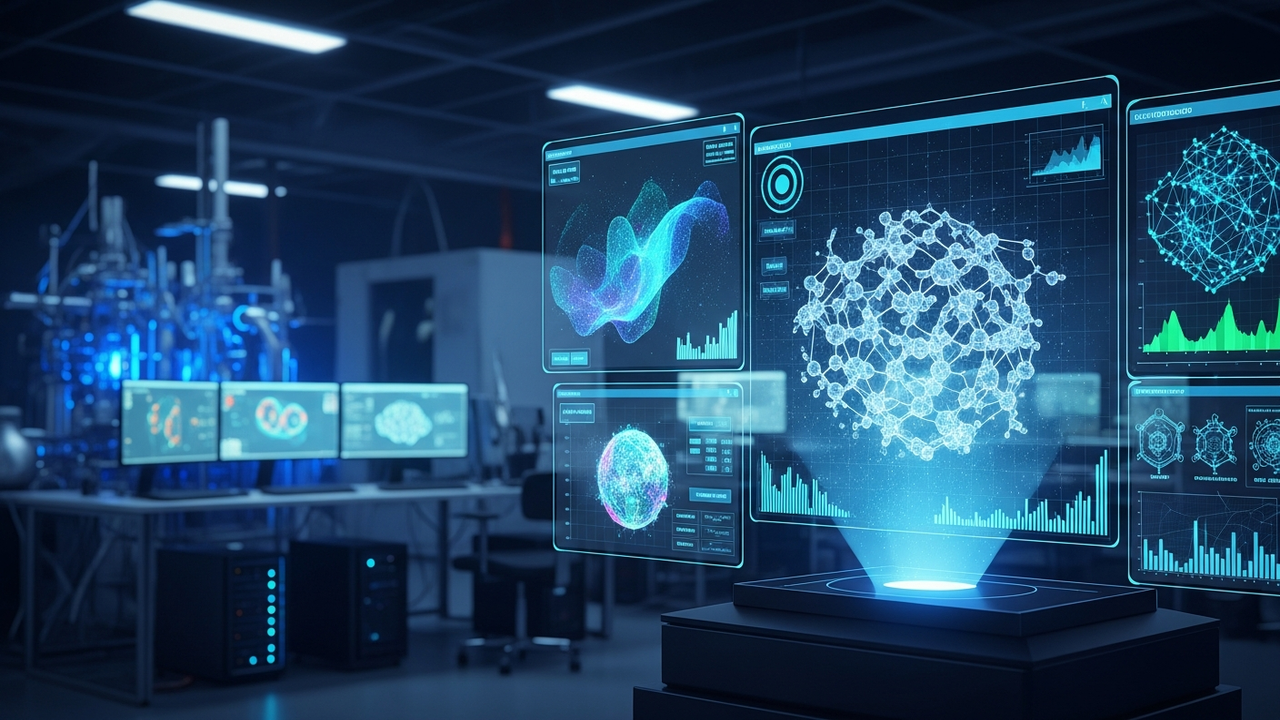
The discovery and optimization of new materials have historically been a labor-intensive and time-consuming process, relying heavily on experimental trial-and-error. However, the convergence of Artificial Intelligence (AI) and High-Performance Computing (HPC) is revolutionizing this field, promising to dramatically accelerate the pace of innovation. Argonne National Laboratory, a leading scientific research center, is at the forefront of this transformation, leveraging these advanced computational tools to enhance materials design and unlock capabilities for critical industries such as aerospace, infrastructure, and advanced manufacturing.
Key Findings: MIRAGE Team’s AI-Driven Materials Simulation
- AI-HPC Synergy for Materials Design: Argonne National Laboratory is strategically combining AI algorithms with its powerful HPC infrastructure. This synergy allows for the rapid exploration of vast materials design spaces, enabling scientists to predict material properties and behaviors with unprecedented speed and accuracy, moving beyond traditional experimental limitations.
- Expanding Industrial Applications: The enhanced materials design capabilities directly translate into significant potential for aerospace (e.g., lighter, stronger alloys), infrastructure (e.g., more resilient construction materials), and advanced manufacturing (e.g., optimized components for 3D printing). This broadens the scope for creating materials with tailored properties for specific high-demand applications.
- MIRAGE Team’s Optimization Focus: Argonne’s MIRAGE (Materials Informatics, Real-time Analysis, and Grid-based Experimentation) team is specifically focused on optimizing AI models to efficiently simulate materials across a wide range of properties and behaviors. This includes both known and novel material compositions and structures.
- Robustness with Incomplete Data: A crucial aspect of their work involves designing methods for AI models to function effectively even when faced with incomplete or unknown material details. This is vital for real-world scenarios where full data sets may not be available.
- Development of Surrogate Models: The team is actively creating surrogate models, which are simplified computational models that can emulate the outputs of more complex, time-intensive simulations at a fraction of the computational cost. These surrogate models efficiently reuse existing experimental and simulation data, dramatically accelerating the exploration and identification of optimal materials by providing quick, accurate approximations.
Significance & Outlook: Accelerating Innovation in Critical Sectors
Argonne’s work in AI-driven materials design signifies a profound shift in how new materials are discovered and engineered. By drastically reducing the time and resources required for material development, this approach will accelerate innovation in sectors critical to national and global economic competitiveness. The ability to simulate and predict material properties with high fidelity, even with incomplete initial data, empowers researchers and engineers to develop next-generation materials for sustainable energy solutions, advanced electronics, and biomedical applications more rapidly. The MIRAGE team’s advancements in surrogate modeling and robust AI deployment ensure that these computational tools are not only powerful but also practical for real-world application, positioning the US at the forefront of materials science and engineering. This will lead to the deployment of more resilient infrastructure, more efficient manufacturing processes, and revolutionary advancements across a multitude of industries.
Source: https://www.anl.gov/article/ai-unlocks-new-possibilities-for-materials-design







Comments