Background: The Evolving Landscape of Large Language Models
The field of Large Language Models (LLMs) is undergoing rapid transformation in 2026. A pivotal shift is the increasing prevalence of agent architectures, enabling LLMs to execute complex, multi-step tasks autonomously, moving beyond simple conversational interfaces. Concurrently, context windows of 1 million tokens are becoming standard, allowing models to process and comprehend vast amounts of information, critical for intricate reasoning and extensive document analysis. This expansion in capabilities is further fueled by innovations in AI hardware, such as NVIDIA’s new technologies significantly accelerating LLM training times.
Key Findings: Performance Benchmarks and Market Trends
A comprehensive analysis highlights the strengths of leading LLM models including GPT-5.5, Claude Opus 4.7, Gemini 3.5 Flash, DeepSeek V4 Pro, and Qwen 3.7 Max across several critical dimensions:
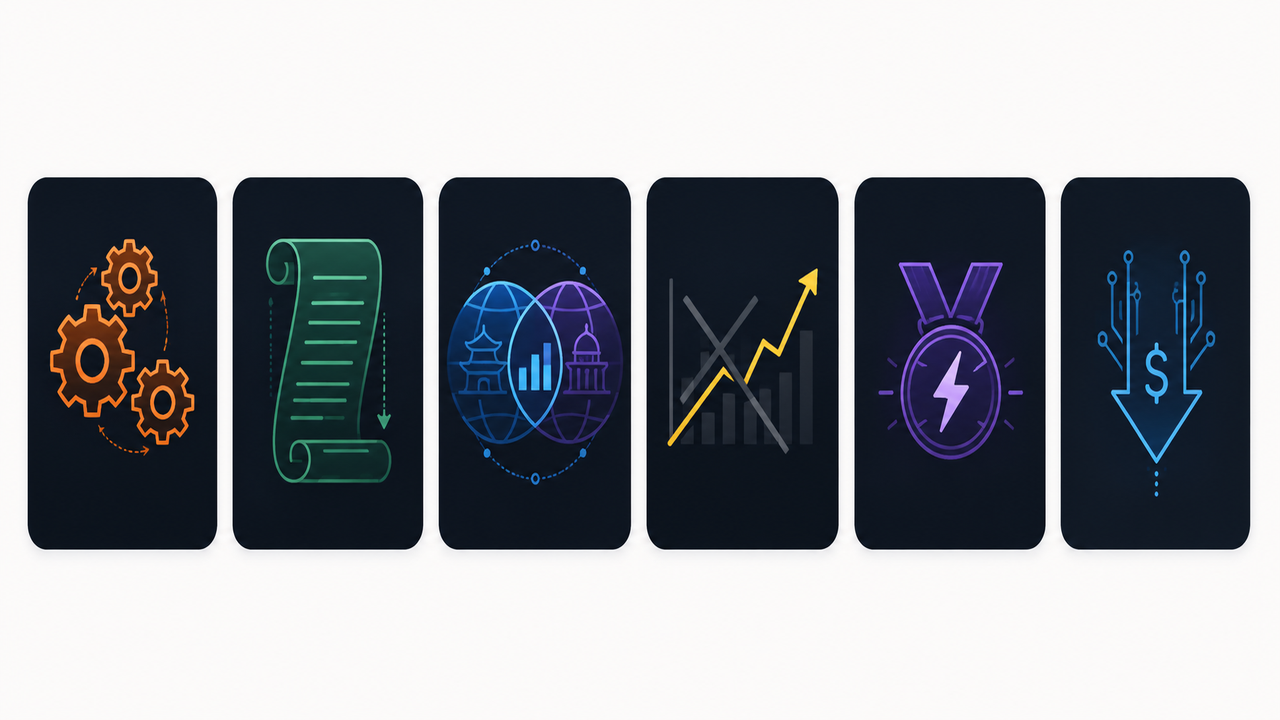
- Agentic AI Becoming Mainstream: LLMs are now designed to perform autonomous actions, plan workflows, and execute multi-stage decision-making, transitioning from reactive chatbots to proactive agents. This is automating complex business processes across various sectors.
- 1-Million-Token Context Window Standardization: The capacity to process extremely long contexts has become a baseline feature, allowing for unprecedented understanding of large datasets, legal documents, and extensive codebases. This enhances precision and reduces the need for constant re-contextualization.
- Rise of Chinese Open-Weight Models: Models like DeepSeek V4 Pro and Qwen 3.7 Max are demonstrating performance parity or superiority in specific benchmarks compared to established Western models. Their open-source availability is fostering innovation and competition, particularly in coding and complex reasoning tasks.
- Enhanced Multimodal Capabilities: The integration of visual, auditory, and textual processing is advancing, enabling LLMs to interact with and generate content across various modalities, expanding their applicability in areas like content creation and human-robot interaction.
- Optimized Cost-Performance Ratios: Beyond sheer power, models like Gemini 3.5 Flash are focusing on efficiency, offering robust performance at significantly lower operational costs, making advanced AI accessible to a broader range of enterprises.
Technical Significance & Outlook: Impact on AI Development and Industry
The observed trends carry profound implications for AI development and industry adoption. The maturation of agentic AI promises to revolutionize supply chain management, customer service, and R&D by enabling autonomous operations and driving unprecedented efficiency gains. For instance, enterprises are leveraging agentic AI to break through ‘pilot purgatory,’ moving from experimental deployments to scalable, production-ready solutions. However, challenges persist, particularly concerning the ethical governance of increasingly autonomous AI systems and the substantial energy demands of AI factories. The scarcity of advanced packaging technologies like CoWoS for AI chips remains a critical bottleneck, with major players like NVIDIA securing a significant portion of the supply. Continued innovation in chip design and cooling solutions, such as direct-to-chip liquid cooling, will be essential to sustain this growth. The democratization of powerful LLMs and diversified offerings are shaping a dynamic and competitive AI ecosystem, pushing the frontier of what intelligent systems can achieve.









Comments