Background
As electric vehicles (EVs) and energy storage systems (ESS) become more widespread, there is an escalating demand for higher-performance lithium-ion batteries. EV batteries, in particular, require high energy density for extended driving range, high power output for rapid charging, and long cycle life for durability over prolonged use. Pouch-type batteries, widely adopted for EVs due to their flexible form factor and superior thermal management characteristics, have nonetheless faced the reduction of internal resistance as a critical technical challenge to meet these escalating demands. The focus by leading battery manufacturers like LG Chem in this area is crucial for establishing a competitive edge in the global battery technology race.
Key Findings
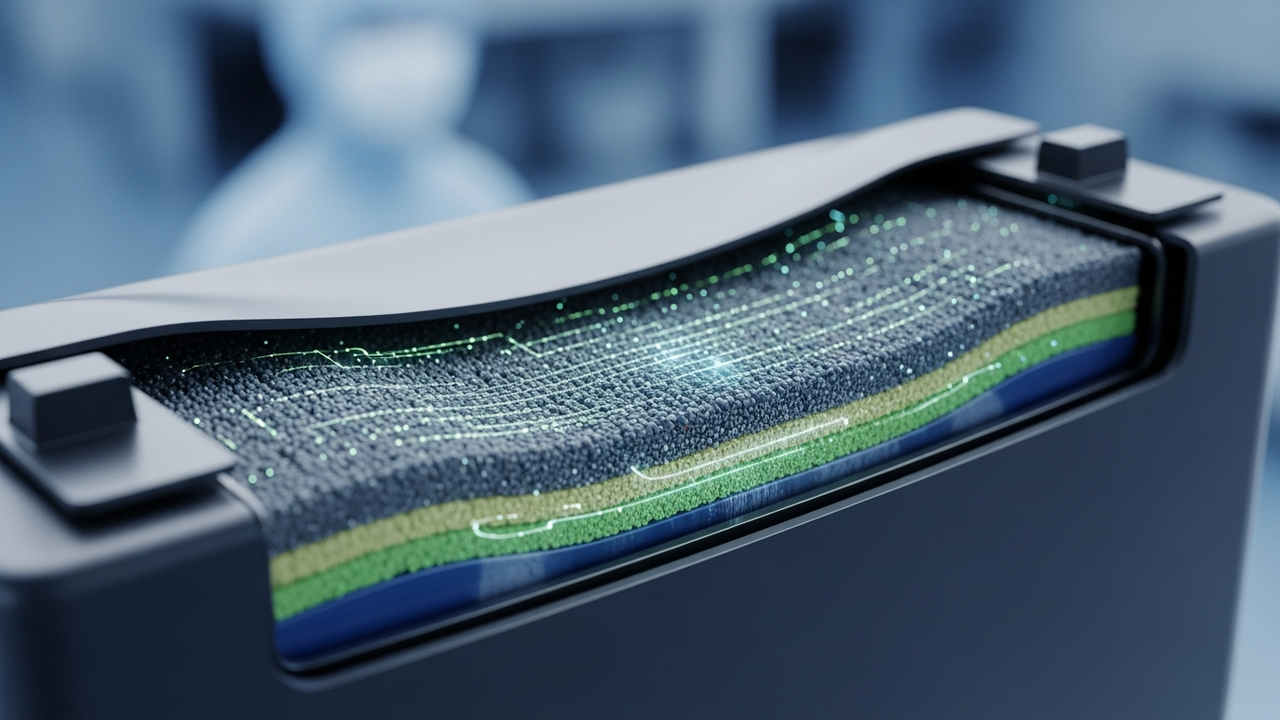
LG Chem has made significant strides in developing low-resistance materials that minimize the internal resistance of pouch-type batteries, leveraging advanced cathode and anode materials engineering. Their research is focused on creating nanostructured electrode materials that increase electrode surface area and shorten ion diffusion pathways, specifically utilizing carbon nanotube (CNT) additives and graphene-enhanced conductive agents to establish highly conductive networks within the electrode structure.
Technical Deep Dive
Internal resistance in pouch-type lithium-ion batteries is a critical performance indicator, directly influencing charge/discharge efficiency, heat generation, and cycle life. To mitigate this, LG Chem’s research team has adopted two primary approaches: nanostructuring electrode materials and optimizing conductive additives. Nanostructured electrode materials are designed at the nanoscale for active material particles, maximizing the contact area with the electrolyte and accelerating the intercalation and deintercalation rates of lithium ions. This shortens ion diffusion pathways and suppresses resistance increases during high-rate charging and discharging.
Furthermore, highly conductive nanomaterials like carbon nanotubes (CNTs) and graphene are uniformly dispersed within the electrode matrix as conductive additives to strengthen the electron conduction network. CNTs, with their high aspect ratio and excellent conductivity, efficiently facilitate electron transfer within the electrode even with minimal addition. Graphene, boasting a vast surface area and high conductivity, comprehensively boosts the overall conductivity of the electrode. The synergistic effect of these nanomaterials enhances electronic conductivity between electrodes, resulting in a substantial reduction in the overall internal resistance of pouch cells.
Future Outlook
LG Chem’s development of low-resistance nanostructured electrode materials holds the potential to dramatically enhance the performance of next-generation pouch-type batteries. Moving forward, this technology is expected to accelerate the realization of EV batteries that simultaneously achieve high energy density and high power output, contributing to shorter charging times and extended driving ranges. Furthermore, for ESS supporting the integration of renewable energy, it will enable the construction of more efficient and stable power storage systems. By further advancing this technology, optimizing manufacturing processes, and improving cost efficiency, LG Chem aims to strengthen its leadership in the global battery market and make significant contributions to the realization of a sustainable energy society.