Key Findings
China is actively promoting its national ‘AI for Science (AI4S)’ strategy, with a particular focus on integrating AI technologies into advanced materials science to gain global competitive advantages. This comprehensive strategy spans from basic research to industrial applications, with Chinese companies already demonstrating concrete achievements.
Technical / Clinical Details
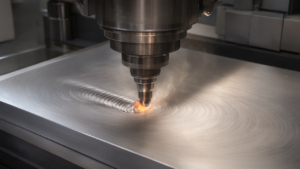
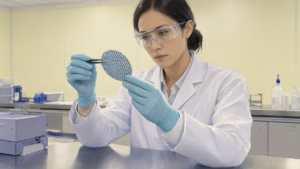
China’s AI4S strategy emphasizes integrating AI into every stage of materials development. For instance, DeepChem has developed autonomous ‘intelligent labs’ capable of screening and synthesizing materials at significantly higher speeds than traditional experimental methods. These labs combine robotics and AI to manage experimental design, execution, data analysis, and subsequent experiment planning in a seamless workflow. Xiaomi, on the other hand, has leveraged AI to accelerate the design of lightweight metal alloys used in products like smartphones, successfully optimizing both material performance and cost-efficiency. Furthermore, DPTech has developed an AI model to optimize the production process for sodium-ion cathode materials, a promising next-generation battery material for electric vehicles and stationary energy storage. This model enhances production efficiency and stabilizes material quality, thereby accelerating the commercialization of these materials. These examples demonstrate China’s commitment to positioning AI not just as a research tool but as a practical technology for solving specific industrial challenges and accelerating product development.
Background & Context
Materials science is a foundational field for many strategic industries, including clean energy, information and communication technology, aerospace, and defense. The discovery and development of new materials typically require years to decades and enormous costs. AI has the potential to dramatically accelerate and streamline this process. The Chinese government views AI’s potential as indispensable for strengthening national competitiveness and achieving technological self-reliance, backing it with substantial investment and policy support. Particularly amidst intensifying technological competition with the United States, China aims to seize future technological leadership by placing AI at the core of its scientific research and industrial applications.
Strategic Significance & Outlook
China’s AI4S strategy will continue to be a priority, with the application of AI in advanced materials expected to expand further. The proliferation of autonomous labs and improved AI model accuracy will accelerate the pace of material discovery and enable the creation of novel materials. This initiative is anticipated to be a key driver for China to lead the world in areas such as sustainable energy, high-performance electronics, and advanced manufacturing. Both in terms of international collaboration and competition, the progress of China’s AI-driven materials science will significantly impact the global scientific and technological landscape.
Source: https://ucigcc.org/blog/inside-chinas-ai-for-science-strategy/