Key Findings
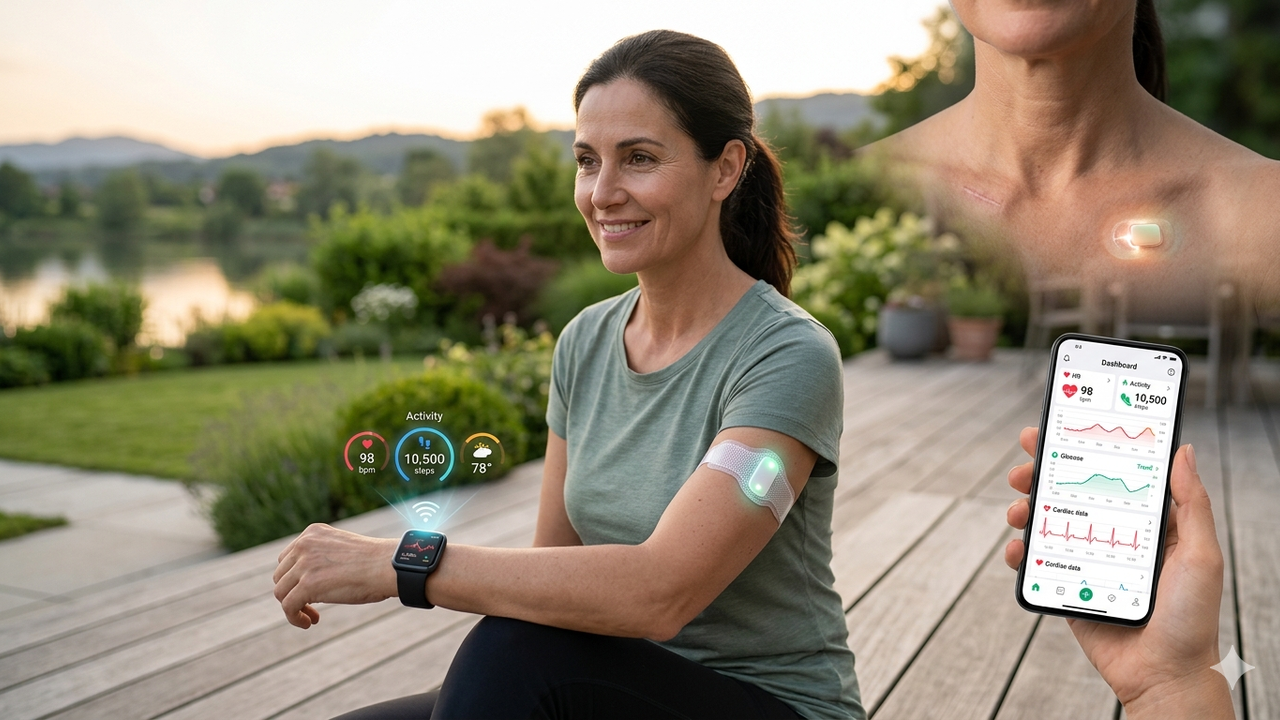
Continuous health sensors, broadly categorized into implantable and non-invasive wearable devices, are fundamentally reshaping the landscape of modern medical care. Among the most successful examples are continuous glucose monitors (CGMs), widely used in diabetes management, where FDA-approved systems can remain implanted subcutaneously for up to one year, providing highly accurate and real-time biometric data. The seamless integration of these sensors with AI algorithms and wireless communication technologies is crucial for realizing a future characterized by personalized, preventive, and data-driven healthcare.
Technical and Clinical Details
Implantable sensors, placed beneath the skin, continuously measure biomarkers in interstitial fluid, such as glucose. This allows patients to monitor daily glucose fluctuations in real-time, enabling timely interventions regarding diet, exercise, and insulin administration. Non-invasive wearable sensors, worn on the skin surface, collect physiological data like heart rate, activity levels, sleep patterns, and skin temperature. AI algorithms analyze this vast amount of sensor data to identify anomalous patterns, predict disease risks, and offer personalized health improvement recommendations. Wireless communication facilitates data transfer from sensors to smartphones or cloud-based platforms, simplifying remote monitoring between patients and healthcare providers.
Background and Industry Context
The rising incidence of chronic diseases and the progression of aging societies pose significant challenges to traditional healthcare systems. As the demand shifts from hospital-centric treatment to more preventive and patient-centric care, continuous health sensors play a vital role. Real-time data is indispensable for early intervention and preventing complications in the management of chronic conditions such as diabetes, cardiovascular diseases, and neurological disorders. Advances in AI and IoT technologies enable the conversion of enormous sensor data into meaningful information, supporting clinical decision-making and enhancing patients’ self-care capabilities.
Strategic Significance and Outlook
The market for continuous health sensors is projected for rapid growth. Future developments will likely include multi-analyte sensors capable of detecting a broader range of biomarkers, as well as the widespread adoption of ‘hybrid closed-loop systems’ integrated with drug delivery systems like insulin pumps. Miniaturization of sensors, extended battery life, and improved biocompatibility are also key research and development priorities. These technologies hold the potential to dramatically enhance the quality and efficiency of healthcare by providing comprehensive insights into patients’ health status and enabling personalized preventive care.
Source: https://www.eletimes.ai/implantable-and-non-invasive-continuous-health-sensors