Key Findings
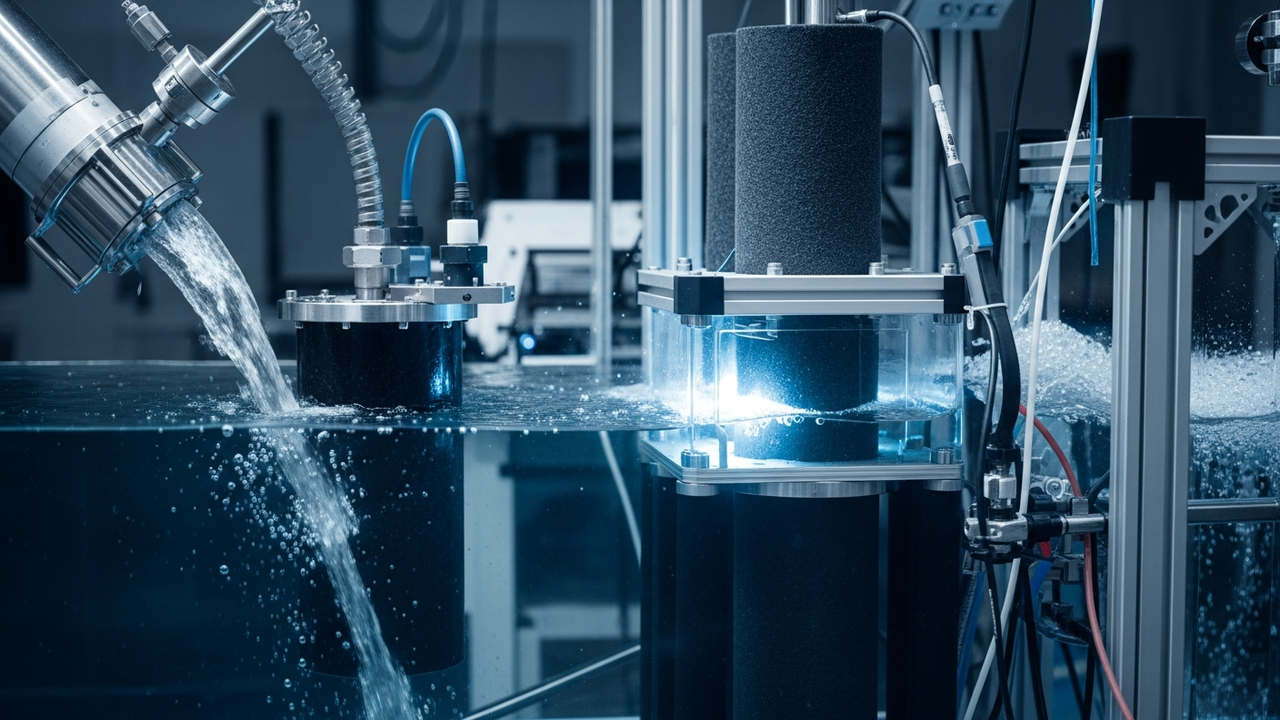
Groundbreaking research has led to the development of an integrated interface engineering-enhanced process for the efficient concentration and subsequent complete destruction of short-chain and emerging per- and polyfluoroalkyl substances (PFAS) from contaminated water. This novel system, which combines the adsorption capabilities of polypyrrole-modified phosphate-doped carbon felt (PPy@P-CF) with photochemical degradation, successfully removed over 96% of 27 types of PFAS from real contaminated water, ultimately achieving complete defluorination.
Technical and Clinical Details
The developed PPy@P-CF material demonstrates exceptionally high efficiency in adsorbing PFAS molecules from water, attributed to its optimized surface properties and porosity. Crucially, for short-chain PFAS and GenX, which are notoriously difficult to remove with conventional activated carbon, PPy@P-CF exhibited a significantly higher adsorption capacity—ranging from 5 to 21 times greater. Following the adsorption phase, the PFAS-concentrated PPy@P-CF is subjected to a photochemical process. This process employs ultraviolet light and oxidizing agents to break down the highly stable carbon-fluorine bonds of PFAS, leading to the complete removal of hazardous fluorine atoms from the water. This two-stage approach ensures both effective concentration and complete destruction of PFAS, preventing their re-release into the environment.
Background and Industry Context
PFAS, widely used in industry due to their exceptional water and oil repellency, are often dubbed “forever chemicals” because of their extreme persistence in the environment and growing concerns about their human health impacts. PFAS contamination is a severe global issue, making their removal from drinking water and soil an urgent priority. However, traditional adsorbents and degradation technologies often prove insufficient, especially for short-chain PFAS and complex mixed contaminations. This research presents a highly promising solution to address these persistent environmental challenges.
Strategic Significance and Outlook
This integrated PFAS removal technology has the potential to profoundly impact the water treatment industry. Its high removal efficiency and ability to achieve complete defluorination will be indispensable for meeting increasingly stringent future PFAS regulations. Further research and development are anticipated to scale up these laboratory-proven successes for practical, large-scale applications. Should this technology be commercialized, it could revolutionize PFAS remediation from drinking water sources and industrial effluents, significantly contributing to environmental protection and public health improvement worldwide.
Get our weekly technology intelligence — free
Receive an infographic that lets you judge at a glance whether each field’s analysis report is worth reading.
Subscribe Free — Weekly Tech Intelligence
By subscribing, you’ll receive Troy-Technical’s weekly technology intelligence newsletter.
- Your email and selected fields are used only to deliver the newsletter.
- We never share your information with third parties.
- You can unsubscribe anytime via the link in each email.
See our Privacy Policy for details.
Takes about a minute · Unsubscribe anytime