Key Findings: AI Achieves 20% Reduction in Forecasting Errors, 30% Reduction in Sales Loss Through Manufacturing Supply Chain Optimization
Artificial intelligence (AI) is delivering significant results in manufacturing supply chain optimization, with Danone reporting a 20% reduction in forecasting errors and a 30% reduction in sales loss after implementing an AI-optimized supply chain. This demonstrates AI’s potency as a tool for improving operational efficiency, enhancing quality, and reducing overall costs through use cases such as predictive maintenance, real-time monitoring, quality control, and supply chain management. By adopting AI, manufacturers can transition from reactive responses to proactive, predictive approaches, minimizing costly downtime and strengthening quality assurance.
Technical & Clinical Details: Specific Applications of AI Agents Across Diverse Industries
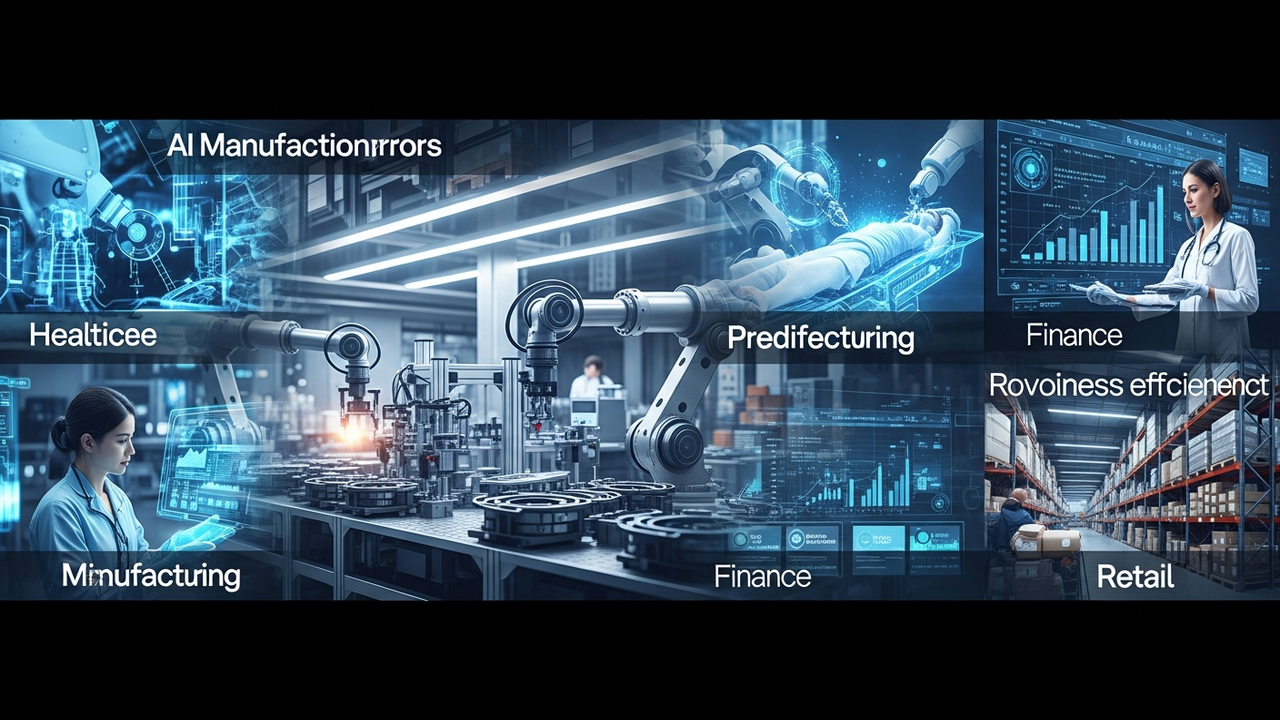
- Manufacturing:
- Predictive Maintenance: AI analyzes sensor data from machinery to detect early signs of failure, dramatically reducing unplanned downtime.
- Quality Control: AI-driven vision systems identify defects on production lines in real-time, ensuring consistent product quality.
- Production Optimization: AI optimizes demand forecasting and production scheduling, reducing resource waste and accelerating time-to-market.
- Healthcare:
- Diagnostic Assistance: AI agents analyze medical images and detect anomalies, improving diagnostic accuracy for physicians and contributing to early detection.
- Personalized Treatment: AI proposes optimal treatment plans based on patient genetic information, medical history, and lifestyle, maximizing therapeutic efficacy.
- Administrative Automation: Automating repetitive tasks like patient scheduling, medical record management, and billing, freeing up healthcare staff to focus on patient care.
- Finance: Includes fraud detection, credit risk assessment, and automated customer service.
- Retail: Involves customer behavior analysis, inventory optimization, and personalized marketing.
Background & Context: AI Addresses Business Challenges
The modern business landscape faces challenges such as complex supply chains, increasing data volumes, rapidly changing markets, and elevated customer expectations. AI is proving its value as a powerful solution to these challenges. AI agents, in particular, are being utilized across various sectors to automate tasks, enhance decision-making, and improve patient care.
By building custom AI solutions based on industry-specific data, workflows, and compliance rules, companies can deeply integrate technology into their actual business operations, thereby realizing greater ROI.
Strategic Significance & Outlook: AI Driving Efficiency and Innovation
The adoption of AI extends beyond mere efficiency gains, offering opportunities for business model transformation and new value creation. In manufacturing, the fusion of AI with the physical world (physical AI) will drive robotics and real-time automation, accelerating the realization of smart plants. In healthcare, AI holds the potential to dramatically improve patient outcomes by further enhancing diagnostic accuracy and providing personalized care more broadly. AI is expected to increasingly become a key driver of innovation and sustainable growth across all industries.
Source: https://www.webex.com/us/en/articles/ai-in-business.html
Get our weekly technology intelligence — free
Receive an infographic that lets you judge at a glance whether each field’s analysis report is worth reading.
Subscribe Free — Weekly Tech Intelligence
By subscribing, you’ll receive Troy-Technical’s weekly technology intelligence newsletter.
- Your email and selected fields are used only to deliver the newsletter.
- We never share your information with third parties.
- You can unsubscribe anytime via the link in each email.
See our Privacy Policy for details.
Takes about a minute · Unsubscribe anytime







Comments