Key Findings
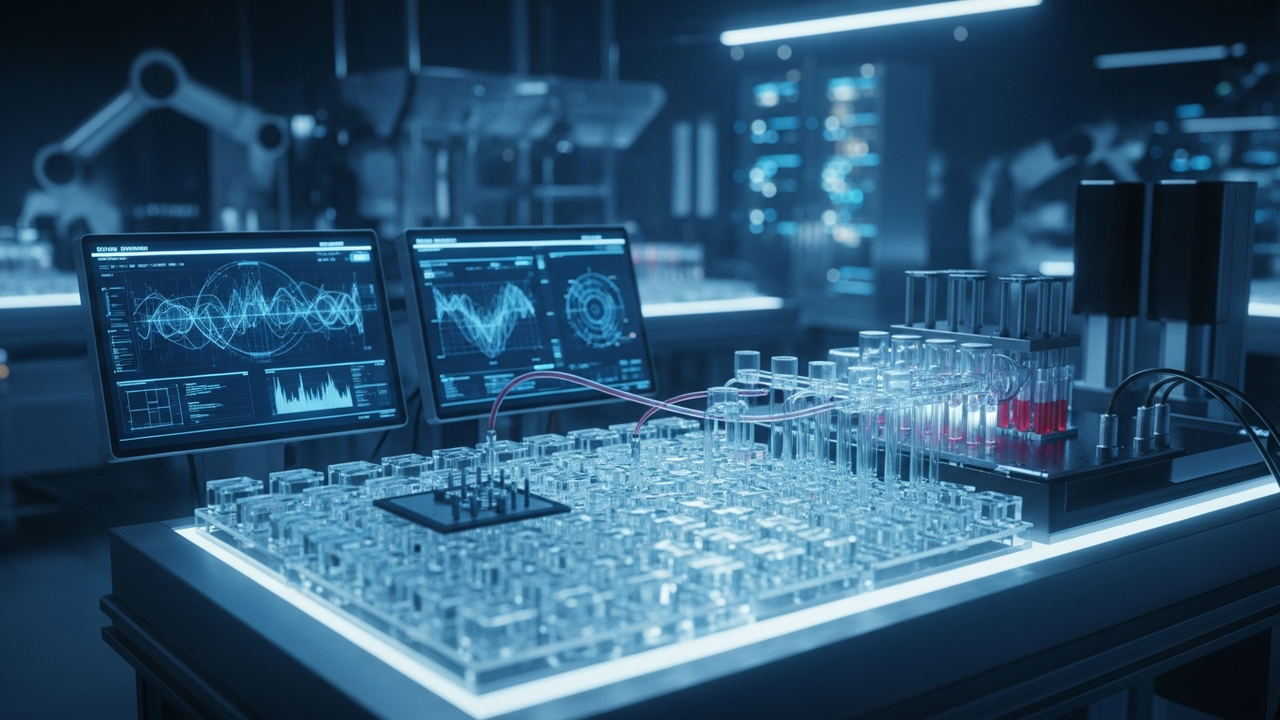
At the intersection of biosensing, microfluidics, and microphysiological systems (MPS), the integration of electrochemical sensors into Organ-on-a-Chip (OoC) microfluidic platforms is emerging as a major achievement set to revolutionize drug development and precision medicine. These sensors convert complex biochemical and biophysical events occurring at the tissue-device interface into quantifiable electrical signals in real-time, without labels, and with high sensitivity. This enables continuous monitoring of a wide range of critical physiological parameters, including changes in metabolic activity, biomolecule gradients, cell barrier function, and the tissue’s response to drugs and toxic compounds, offering profound insights previously unattainable with conventional methods.
Technical/Clinical Details
Electrochemical sensors function by measuring electrochemical reactions between an electrode and an analyte. When integrated into OoC platforms, these sensors operate within minute liquid volumes (microliters) and are strategically placed in specific locations of the microenvironment where living cells or tissues are cultured. For instance, they can detect real-time changes in the concentrations of metabolites such as glucose, lactate, oxygen, pH, and reactive oxygen species. This allows for direct observation of changes in cellular energy metabolism or tissue inflammatory responses following drug administration. Furthermore, electrical impedance measurements can be used for non-destructive monitoring of cell barrier integrity and cellular morphological changes. These sensors enable automated data acquisition and analysis, providing more reliable results in high-throughput drug screening and toxicity testing.
Background and Industry Context
Traditional drug development has relied heavily on animal models and 2D cell cultures, which have limitations in adequately replicating human physiological responses. Organ-on-a-chip technology is an innovative platform that overcomes these challenges by mimicking the microenvironment and function of human organs, enabling more physiologically relevant drug response assessments. However, for OoC platforms to realize their full potential, the ability to monitor the state of cultured tissues in detail and in real-time was crucial. The integration of electrochemical sensors dramatically enhances this monitoring capability, promising to significantly increase the accuracy of drug screening, toxicity testing, disease modeling, and drug response prediction in personalized medicine.
Strategic Significance & Outlook
The technology of electrochemical sensor-integrated OoC platforms holds the potential to accelerate the drug discovery process and reduce failure rates in preclinical stages. In the future, these systems will play a central role in more accurately modeling systemic pharmacokinetics (PK) and pharmacodynamics (PD) within ‘human-on-a-chip’ systems, which involve connecting multiple organ-on-a-chip units. Moreover, by integrating sensors into OoC platforms utilizing patient-derived cells, personalized drug screening becomes feasible, contributing to the realization of ‘precision medicine’ by selecting optimal treatments for specific patients. Furthermore, when combined with AI, these platforms are expected to open new research avenues, such as automated analysis of vast sensor data and the development of predictive models for drug responses.
Source: https://pubmed.ncbi.nlm.nih.gov/42398121/
Get our weekly technology intelligence — free
Receive an infographic that lets you judge at a glance whether each field’s analysis report is worth reading.
Subscribe Free — Weekly Tech Intelligence
By subscribing, you’ll receive Troy-Technical’s weekly technology intelligence newsletter.
- Your email and selected fields are used only to deliver the newsletter.
- We never share your information with third parties.
- You can unsubscribe anytime via the link in each email.
See our Privacy Policy for details.
Takes about a minute · Unsubscribe anytime




Comments