Key Findings
In the field of tissue engineering, electrospun nanofiber scaffolds are emerging as highly versatile 3D networks that closely mimic the structure and function of the native extracellular matrix (ECM). This innovation is particularly impactful in bone tissue regeneration, where it shows groundbreaking potential to overcome the existing limitations associated with autologous bone grafting, paving the way for more effective and patient-friendly therapeutic solutions.
Technical / Clinical Details
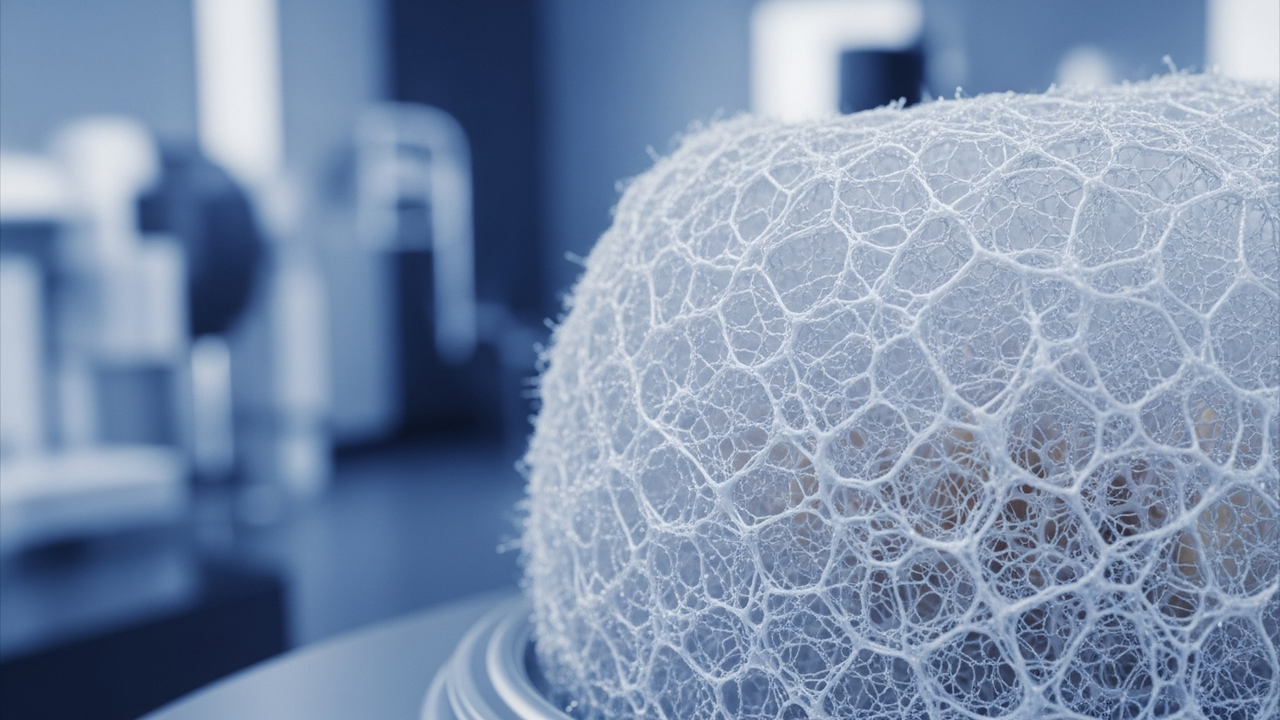
The electrospinning process involves applying a high voltage to a polymer solution or melt, generating ultra-fine fibers that range from nanometers to micrometers in diameter. These fibers assemble into 3D scaffolds characterized by high porosity and an exceptional surface-area-to-volume ratio, providing an ideal microenvironment for cell adhesion, proliferation, and differentiation. For bone tissue regeneration, studies both in vitro and in vivo have demonstrated that nanofiber scaffolds can induce osteogenic differentiation and support the formation of new bone tissue, positioning them as a promising alternative to autologous grafts. The technology offers unparalleled control over fiber orientation, size, mechanical properties, and the incorporation of bioactive molecules, allowing for precise customization of scaffolds to meet specific tissue requirements.
Background & Context
Traditional approaches to tissue regeneration, such as autologous bone grafting, face challenges including donor site morbidity, limited supply, and complex surgical procedures. Electrospun nanofibers offer a potential solution to these issues by providing a biodegradable and biocompatible platform that can be engineered to deliver therapeutic agents. The ability to integrate drugs or growth factors directly into the nanofiber matrix allows for controlled release, enhancing tissue regeneration and modulating inflammatory responses. This nuanced control over the biological and mechanical properties of the scaffold makes it a superior option for addressing complex regenerative challenges.
Strategic Significance & Outlook
To accelerate the clinical adoption of electrospun nanofiber scaffolds, key challenges include developing scalable manufacturing processes, conducting rigorous long-term in vivo safety and efficacy studies, and navigating regulatory approvals. As personalized medicine advances, the development of customized nanofiber scaffolds tailored to individual patient needs is poised to become a major trend, shaping the future of tissue engineering. Beyond bone, this technology holds broad promise for regenerating other hard and soft tissues, including skin, nerves, heart, and blood vessels, potentially revolutionizing the landscape of regenerative medicine globally.
Source: https://www.jmst.org/article/2020/1005-0302/1005-0302-59-0-243.shtml
Get our weekly technology intelligence — free
Receive an infographic that lets you judge at a glance whether each field’s analysis report is worth reading.
Subscribe Free — Weekly Tech Intelligence
By subscribing, you’ll receive Troy-Technical’s weekly technology intelligence newsletter.
- Your email and selected fields are used only to deliver the newsletter.
- We never share your information with third parties.
- You can unsubscribe anytime via the link in each email.
See our Privacy Policy for details.
Takes about a minute · Unsubscribe anytime