Key Findings
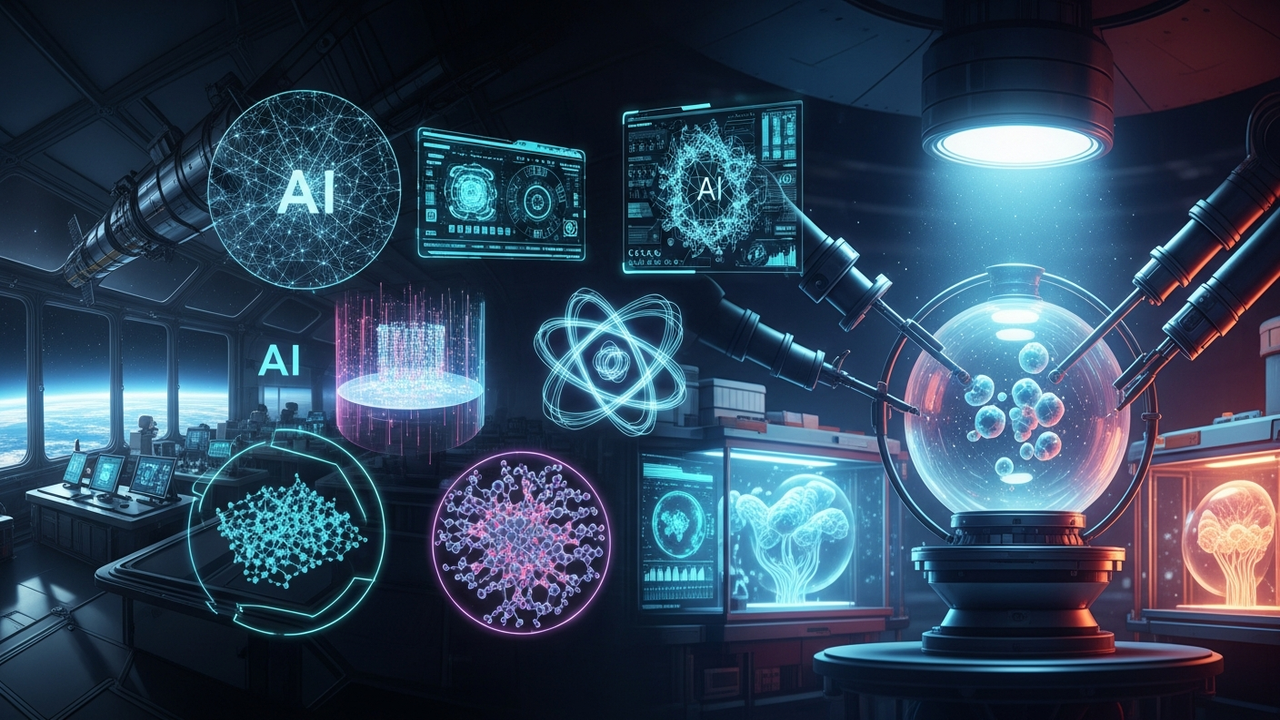
A Forbes article highlights the escalating reliance on space infrastructure in modern society and the innovative opportunities arising from the convergence of exponential technologies such as AI, quantum computing, and nanotechnology. It specifically emphasizes that microgravity research holds transformative potential to accelerate new drug discovery and advance regenerative medicine by dramatically improving protein crystallization and stem cell studies.
Technical / Clinical Details
Microgravity environments offer unique physical conditions that are difficult to replicate on Earth. For instance, in microgravity, the effects of gravitational sedimentation and convection are eliminated during protein crystallization, allowing for the growth of larger and more perfect crystals. This precision in structural analysis of drug target proteins enhances the efficiency of new drug development. In stem cell research, microgravity uniquely influences cell proliferation, differentiation, and three-dimensional tissue formation, potentially leading to new approaches and therapies in regenerative medicine. These space-based research outcomes provide invaluable insights unattainable through terrestrial research, expected to significantly impact the pharmaceutical and biotechnology industries.
The article also mentions AI’s role in analyzing vast amounts of data from space (e.g., Earth observation, communications, navigation) to optimize decision-making processes. Quantum computing offers the potential to surpass conventional computational capabilities in planning complex space missions, enhancing cryptographic security, or simulating materials science. Nanotechnology is crucial for developing smaller, lighter, and higher-performance satellite components, sensors, and propulsion systems, thereby improving the cost-efficiency and effectiveness of space exploration. The synergistic interaction of these technologies is causing the space industry to evolve at an unprecedented pace, leading to the creation of new services and products.
Background & Context
The space industry is rapidly diversifying, shifting from government-led exploration to commercialized satellite services, space tourism, and resource development. This growth intensifies dependence on space infrastructure, which is deeply embedded in every aspect of daily life, including smartphones, GPS, weather forecasting, and internet connectivity. However, such exponential technological advancements and the accompanying expansion of space assets create new cybersecurity vulnerabilities. Cyberattacks by hostile state actors, terrorist groups, or hackers could cripple space system functionalities, with potentially devastating impacts on terrestrial infrastructure. Therefore, robust cybersecurity measures to protect these critical space assets are not merely technical challenges but strategic imperatives directly linked to national security and economic stability.
Strategic Significance & Outlook
The convergence of space, AI, quantum computing, and nanotechnology will continue to accelerate, driving unprecedented innovation. Advancements in microgravity research are expected to propel the development of new pharmaceuticals and regenerative medicine techniques for treating intractable diseases, making significant contributions to human health and welfare. Concurrently, cybersecurity for space systems will remain an indispensable component to safely harness the benefits these technologies offer. Governments, industries, and academia must collaborate to build resilient infrastructure and robust security frameworks in space to maximize the potential of this ‘exponential tech moment.’ International cooperation will also play a vital role in ensuring the safety and stability of outer space.
Get our weekly technology intelligence — free
Receive an infographic that lets you judge at a glance whether each field’s analysis report is worth reading.
Subscribe Free — Weekly Tech Intelligence
By subscribing, you’ll receive Troy-Technical’s weekly technology intelligence newsletter.
- Your email and selected fields are used only to deliver the newsletter.
- We never share your information with third parties.
- You can unsubscribe anytime via the link in each email.
See our Privacy Policy for details.
Takes about a minute · Unsubscribe anytime