Background
Water pollution from nitrogen compounds, such as ammonia and nitrates, poses a severe global challenge, exacerbated by population growth and industrialization. These compounds contribute to eutrophication, devastating aquatic ecosystems and necessitating increasingly stringent nitrogen removal standards in wastewater treatment. Consequently, there is an urgent need for high-efficiency, sustainable water treatment technologies. Nanotechnology, especially nanofiber materials, has emerged as a promising solution due to its unique physicochemical properties, offering a pathway to significantly enhance existing wastewater treatment methods like Membrane Bioreactors (MBR) and Moving Bed Biofilm Reactors (MBBR).
Key Findings
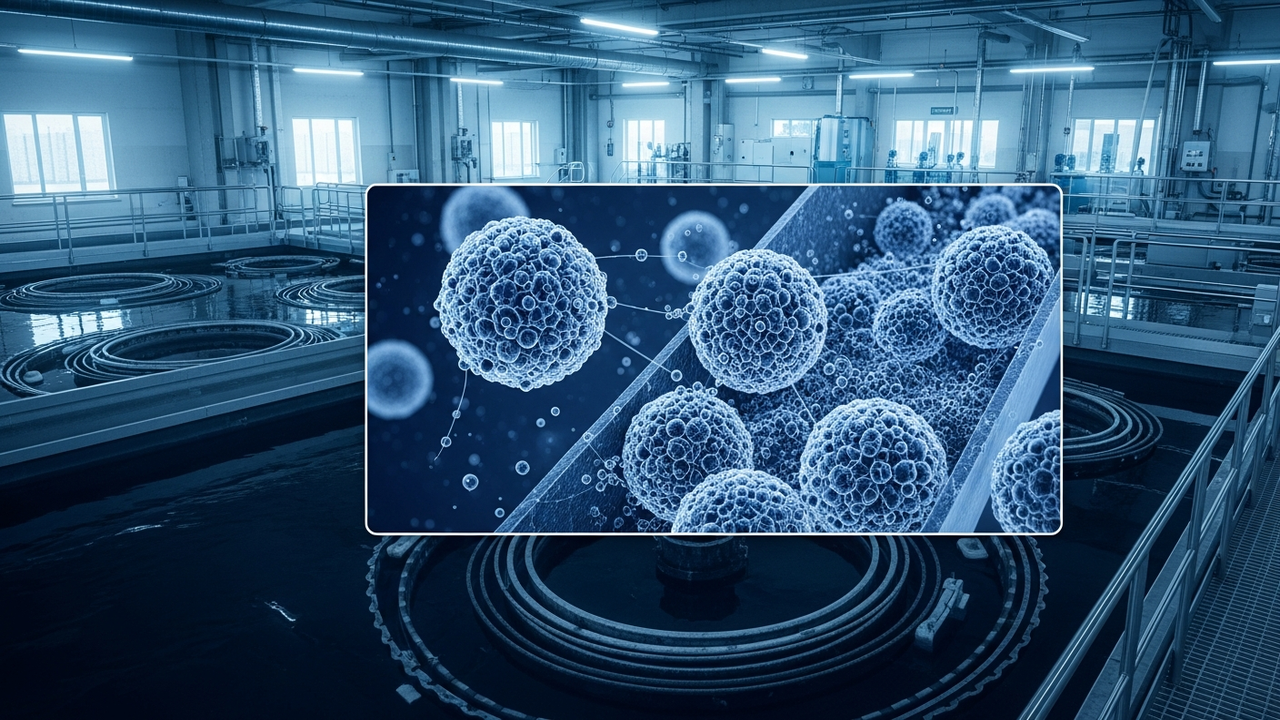
Led by Karel Havlíček and his team at CXI TUL in the Czech Republic, the HYMNA project has pioneered a hybrid system that integrates novel nanofiber biomass carriers with established Membrane Bioreactor (MBR) and Moving Bed Biofilm Reactor (MBBR) wastewater treatment technologies. This innovative approach promises to significantly enhance ammonia nitrogen removal, offering a powerful solution to mitigate the environmental impact of harmful nitrogen compounds in aquatic ecosystems and potentially revolutionize current wastewater treatment paradigms.
Technical Details
The HYMNA project’s hybrid system capitalizes on the strengths of both MBR and MBBR technologies while mitigating their respective drawbacks. MBR systems deliver high-quality effluent via fine membrane filtration but are susceptible to membrane fouling. Conversely, MBBR systems achieve efficient biological treatment using microorganisms immobilized on bio-carriers, though these carriers can necessitate maintenance.
The core innovation lies in the integration of nanofiber biomass carriers. These nanofibers, characterized by their exceptionally high specific surface area and porosity, create an optimal microenvironment for microbial adhesion and proliferation. This fosters the rapid development of active microbial layers, accelerating the nitrification process (converting ammonia nitrogen to nitrate nitrogen) and subsequent denitrification (converting nitrate to inert nitrogen gas). Crucially, the nanofibers offer physical protection to the microorganisms, leading to more stable biofilm formation and enhanced biological treatment capacity. These ‘nanofiber-core beads’ are engineered for modularity, allowing for seamless integration into existing MBR/MBBR infrastructure, providing significant flexibility for system upgrades and diverse applications.
Experimental data unequivocally demonstrated that this hybrid system achieved a significant improvement in ammonia nitrogen removal efficiency compared to conventional standalone MBR or MBBR systems. While precise numerical removal rates are reserved for detailed reporting, Havlíček highlights ‘measurable results’ and ‘significant potential for real-world application,’ underscoring its superior performance. This enhanced capability promises a substantial reduction in nitrogen loads in treated wastewater, thereby minimizing detrimental environmental impacts on natural water bodies.
Strategic Significance & Outlook
The HYMNA project’s demonstration of nanofiber-core bead integration marks a groundbreaking advancement in wastewater treatment. Future research will focus on the long-term operational stability, cost-effectiveness, and scalability of this technology for large-scale municipal and industrial applications. Furthermore, evaluating its efficiency in removing other trace pollutants, such as pharmaceuticals and per- and polyfluoroalkyl substances (PFAS), will be a critical next step.
This modular design holds immense strategic value, particularly for decentralized wastewater treatment systems and the phased upgrading of existing facilities. Widespread adoption of this nanofiber-enhanced bioreactor technology is poised to make a substantial contribution to preserving clean water resources globally, serving as a pivotal step towards a more sustainable future.
Source: https://lcms.labrulez.com/article/7675
Get our weekly technology intelligence — free
Receive an infographic that lets you judge at a glance whether each field’s analysis report is worth reading.
Subscribe Free — Weekly Tech Intelligence
By subscribing, you’ll receive Troy-Technical’s weekly technology intelligence newsletter.
- Your email and selected fields are used only to deliver the newsletter.
- We never share your information with third parties.
- You can unsubscribe anytime via the link in each email.
See our Privacy Policy for details.
Takes about a minute · Unsubscribe anytime