Key Findings
A recent review article in ACS Sensors underscores the transformative potential of nucleic acid biosensors that integrate DNA nanotechnology and CRISPR-Cas systems for highly sensitive detection of low-abundance cancer biomarkers in liquid biopsies. This innovative synergy is poised to overcome significant barriers in current liquid biopsy techniques, enabling earlier and more precise cancer diagnostics by targeting microRNAs (miRNAs), circulating tumor DNA (ctDNA), and messenger RNAs (mRNAs) with unprecedented accuracy.
Technical / Clinical Details
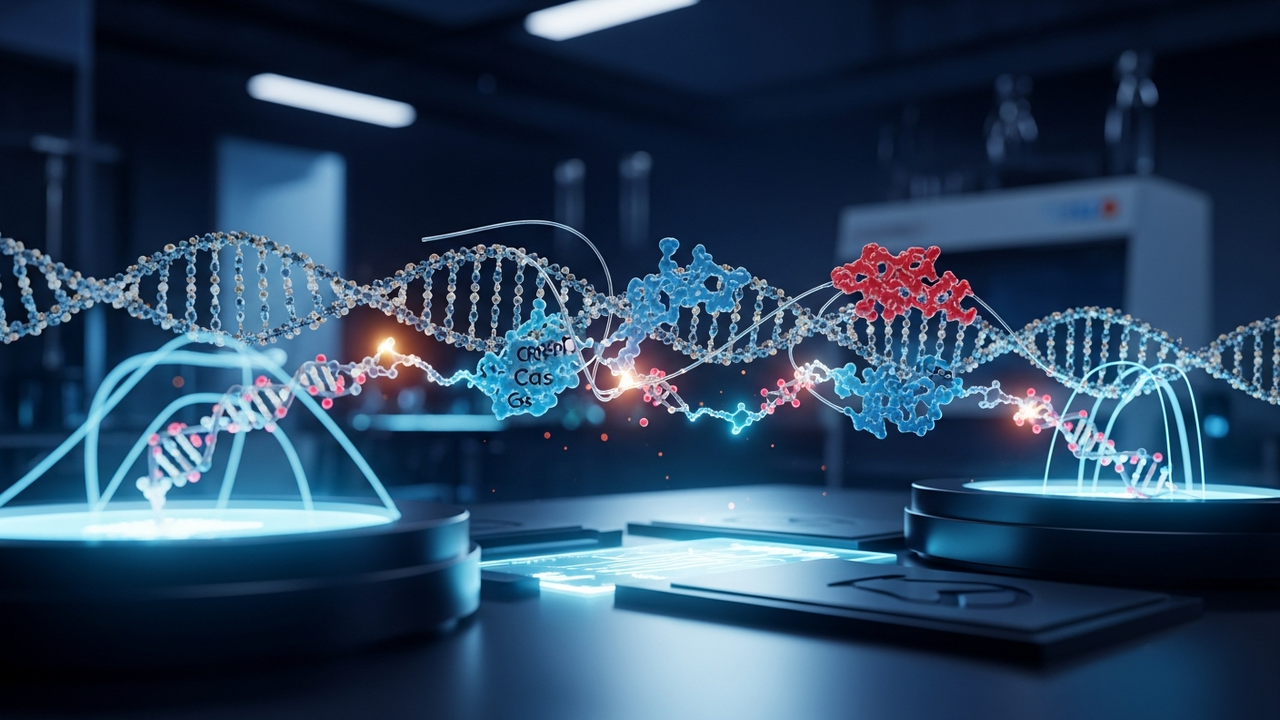
The review details how DNA nanotechnology enables the construction of intricate, self-assembled nanostructures that can precisely capture and recognize target nucleic acids. When coupled with the unparalleled specificity and amplification capabilities of CRISPR-Cas systems, these biosensors can detect minute quantities of biomarkers, even in complex biological matrices like blood or urine. The CRISPR-Cas system’s sequence-specific cleavage activity plays a crucial role in reducing background noise and amplifying the signal from target molecules, leading to ultra-sensitive detection. This technological integration not only promises superior analytical sensitivity but also emphasizes the critical need for clinical robustness beyond laboratory settings. The authors highlight advancements in microfluidic integration for automated sample processing, AI-assisted data analysis for improved interpretation, and the development of theranostic nanostructures that combine diagnostic detection with therapeutic delivery, offering a holistic approach to cancer management.
Background & Context
Liquid biopsy has emerged as a less invasive and potentially more comprehensive alternative or complement to traditional tissue biopsies for cancer diagnosis, monitoring, and recurrence detection. However, the extremely low concentrations of cancer-specific biomarkers in bodily fluids have posed a formidable challenge for achieving the necessary sensitivity and specificity. Conventional methods often lack the detection limits required for early-stage cancer or minimal residual disease. The convergence of DNA nanotechnology, which offers precise control over molecular architecture, and CRISPR-Cas systems, known for their powerful gene-editing capabilities, provides a potent solution to these challenges. This field is experiencing rapid global growth, with significant research efforts dedicated to translating these advanced biosensor concepts from bench to bedside.
Strategic Significance & Outlook
Nucleic acid biosensors integrating DNA nanotechnology and CRISPR-Cas systems are set to play a pivotal role in the future of cancer precision theranostics. Their ability to sensitively and specifically detect low-abundance biomarkers holds immense promise for early cancer screening, real-time monitoring of treatment response, and detection of disease recurrence, even before overt clinical symptoms appear. The envisioned integration with microfluidic platforms will facilitate rapid, automated, and multiplexed analysis at the point of care, making advanced cancer diagnostics more accessible and efficient. Furthermore, the potential for AI-driven data interpretation will enhance diagnostic accuracy and aid in personalized treatment decisions. This research indicates a clear trajectory towards creating smart, integrated diagnostic systems that offer non-invasive, highly sensitive, and actionable insights for personalized cancer care, ultimately improving patient outcomes on a global scale.
Source: https://pubs.acs.org/doi/10.1021/acssensors.6c01673
Get our weekly technology intelligence — free
Receive an infographic that lets you judge at a glance whether each field’s analysis report is worth reading.
Subscribe Free — Weekly Tech Intelligence
By subscribing, you’ll receive Troy-Technical’s weekly technology intelligence newsletter.
- Your email and selected fields are used only to deliver the newsletter.
- We never share your information with third parties.
- You can unsubscribe anytime via the link in each email.
See our Privacy Policy for details.
Takes about a minute · Unsubscribe anytime