Key Findings
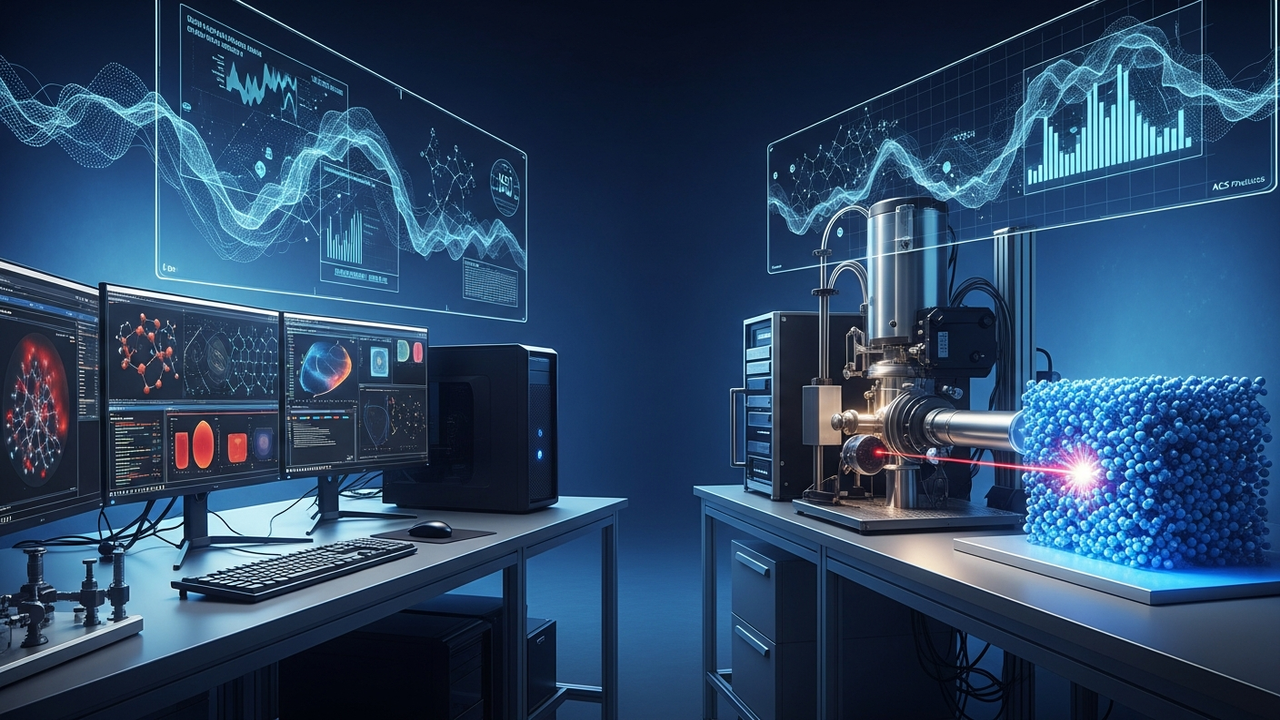
Research published in ACS Publications’ Industrial & Engineering Chemistry Research journal has established an AI-driven alloy design framework for the data-driven discovery of ternary anodes (Mg-Sr-X alloys) for high-performance magnesium-air (Mg-air) batteries. This framework successfully integrates machine learning, explainable AI (XAI), and operations research techniques, utilizing an XGBoost model trained on a curated dataset of 819 experimental records to significantly enhance the prediction accuracy of discharge performance metrics.
Technical / Clinical Details
This AI-driven framework operates through the following steps:
- Data Curation: Constructing a large and high-quality dataset consisting of 819 experimental records for Mg-air batteries (including alloy composition, manufacturing conditions, and discharge performance data).
- Machine Learning Model Construction: Training an XGBoost (eXtreme Gradient Boosting) model using this dataset. XGBoost is an ensemble learning method known for its high predictive accuracy and processing speed.
- Discharge Performance Prediction: The trained XGBoost model accurately predicts the discharge performance (e.g., discharge voltage, current density, energy density, cycle stability) of a new Mg-Sr-X alloy when its composition is provided.
- Explainable AI (XAI): Incorporating XAI tools to interpret the model’s predictions. This helps understand which alloy compositional elements or process conditions have the greatest impact on performance, assisting material scientists in more intuitively refining designs.
- Operations Research Techniques: Based on the prediction model and XAI results, efficiently identifying the most promising alloy compositions to be experimentally synthesized and tested, thereby optimizing experimental design.
This integrated approach dramatically shortens the discovery cycle for high-performance Mg-air battery anodes and reduces development costs compared to conventional trial-and-error methods.
Background & Context
Metal-air batteries are garnering significant attention as next-generation battery technologies for electric vehicles and large-scale energy storage due to their high theoretical energy density. Mg-air batteries, in particular, offer advantages over lithium, being abundant in resources and safer. However, the performance of anode materials (especially discharge stability and efficiency) has been a major hurdle to practical implementation. Traditional alloy design processes, heavily reliant on experimentation, are time-consuming and costly, making it difficult to find optimal compositions. AI and data-driven approaches offer powerful solutions to overcome this bottleneck, enabling more efficient material exploration and optimization.
Strategic Significance & Outlook
The established AI-driven alloy design framework will accelerate the performance enhancement of Mg-air batteries, marking a critical step towards their commercialization. The combination of a highly accurate XGBoost model and explainable AI will enable material scientists to gain deeper insights and rapidly design unprecedented high-performance anodes. This technology is applicable not only to Mg-air batteries but also to other metal-air battery systems and the development of a wide range of energy storage materials, holding the potential to contribute to the integration of renewable energy and the realization of sustainable transportation systems. This is a powerful example of AI as an indispensable element in shaping the future of clean energy technologies.
Get our weekly technology intelligence — free
Receive an infographic that lets you judge at a glance whether each field’s analysis report is worth reading.
Subscribe Free — Weekly Tech Intelligence
By subscribing, you’ll receive Troy-Technical’s weekly technology intelligence newsletter.
- Your email and selected fields are used only to deliver the newsletter.
- We never share your information with third parties.
- You can unsubscribe anytime via the link in each email.
See our Privacy Policy for details.
Takes about a minute · Unsubscribe anytime