Key Findings
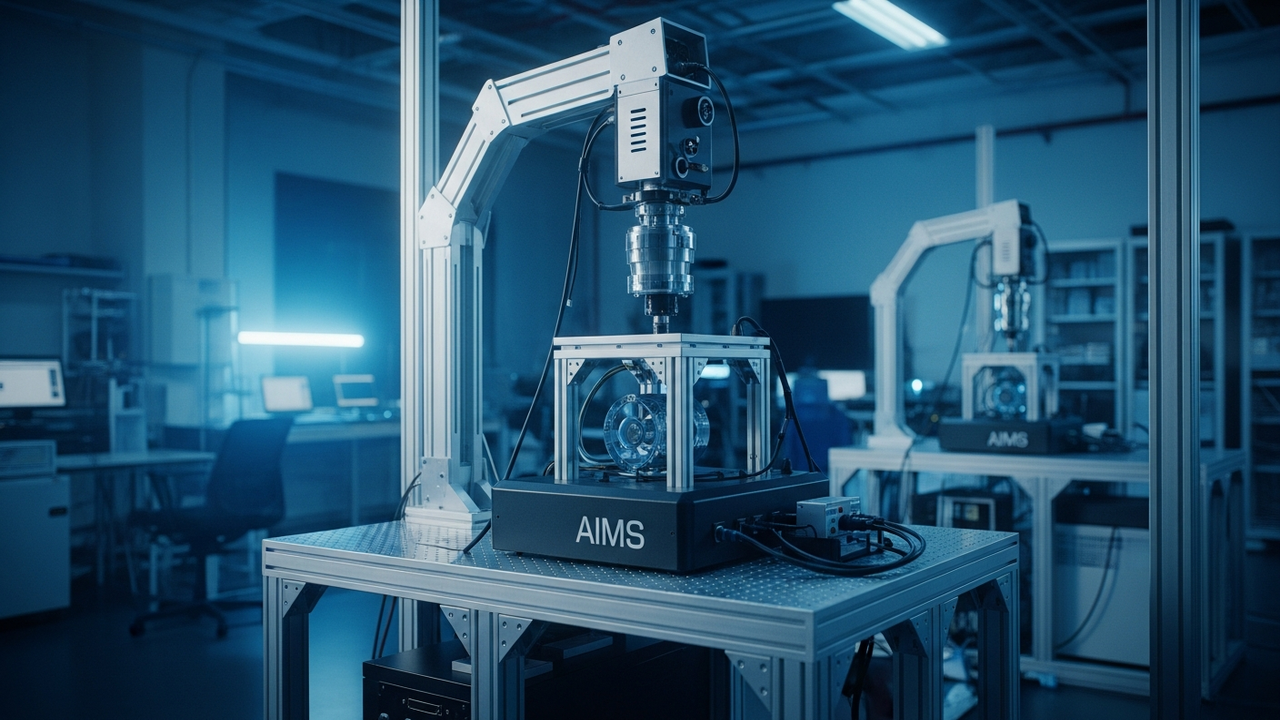
A paper published on arXiv announces that an AI experimentalist named “AIMS” (AI-driven Materials Scientist) has successfully demonstrated uncertainty-aware closed-loop agency in cryogenic scanning probe quantum materials experiments. This groundbreaking system integrates perception recovery, adaptive measurement selection, and mechanism attribution within a cohesive experimental workflow, effectively eliminating many redundant manual steps traditionally performed by researchers and fundamentally transforming the quantum material discovery process.
Technical / Clinical Details
AIMS combines advanced machine learning algorithms with reinforcement learning approaches. Firstly, its “perception recovery” function accurately reconstructs the true physical state from noisy or incomplete experimental data. Secondly, the “adaptive measurement selection” function autonomously identifies experimental points where the current understanding has the highest uncertainty, thus promising the most significant information gain. This ensures optimal utilization of limited experimental resources, leading to the most efficient path for scientific insight. Lastly, “mechanism attribution” involves inferring physical mechanisms or models from experimental results, allowing the AI to refine existing hypotheses or generate new ones. Through the closed-loop integration of these functions, AIMS can generate deeper, quantitative explanations of “why” and “how” for the unknown behaviors of quantum materials, rather than simple binary answers. Specifically, this AI collaborates with scanning probe microscopes (e.g., STM) to autonomously map the electronic states and magnetic properties of quantum materials at the nanoscale, elucidating the underlying physical laws of their behavior.
Background & Context
Quantum materials exhibit unique physical phenomena, such as superconductivity, topological insulation, and the quantum Hall effect, which are not observed in conventional materials. These properties hold immense promise for applications in next-generation electronic devices, quantum computing, and energy technologies. However, research into these materials is highly challenging due to the complex experimental manipulations required under extreme conditions (e.g., cryogenic temperatures, ultra-high vacuum) and the advanced expertise needed to analyze vast amounts of data, making it both time-consuming and costly. AI experimentalists like AIMS have the potential to resolve these bottlenecks and dramatically accelerate the research process. This aligns with the vision of “self-driving laboratories” in materials science, aiming to maximize the speed and efficiency of scientific discovery with minimal human intervention.
Strategic Significance & Outlook
The demonstration of AIMS signifies the potential for AI to assume the role of an experimentalist not only in quantum materials science but also in other fundamental scientific disciplines. This system will liberate human researchers from routine experimental tasks, allowing them to concentrate on higher-level scientific thinking and hypothesis generation. In the future, AIMS’ capabilities are expected to be further expanded and applied to more complex experimental systems and diverse materials, thereby accelerating breakthroughs in various fields such including quantum computing, energy storage, and new drug development. The AI’s ability to autonomously explore while managing uncertainty holds the potential to expand the frontiers of science and lead to discoveries previously unimagined.
Source: https://arxiv.org/html/2607.16544v2
Get our weekly technology intelligence — free
Receive an infographic that lets you judge at a glance whether each field’s analysis report is worth reading.
Subscribe Free — Weekly Tech Intelligence
By subscribing, you’ll receive Troy-Technical’s weekly technology intelligence newsletter.
- Your email and selected fields are used only to deliver the newsletter.
- We never share your information with third parties.
- You can unsubscribe anytime via the link in each email.
See our Privacy Policy for details.
Takes about a minute · Unsubscribe anytime