Key Findings
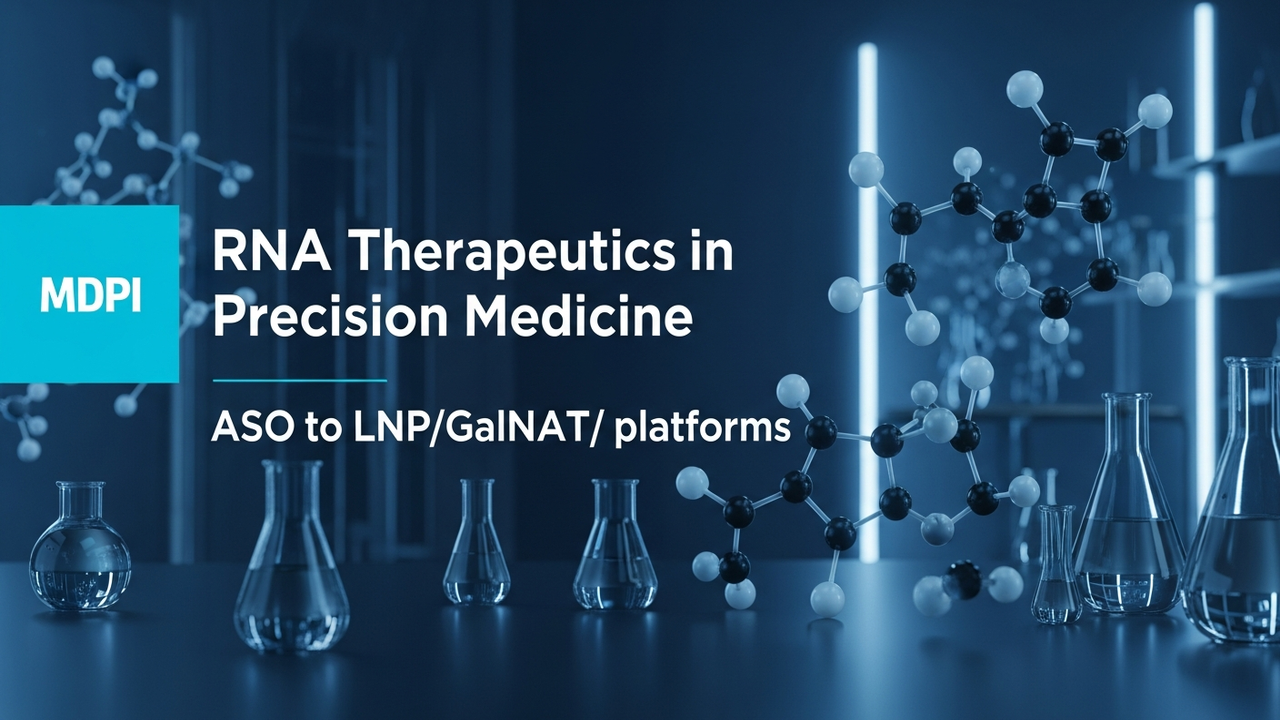
A comprehensive guide published by MDPI, titled ‘Engineering the Future of Precision Medicine: A Comprehensive Guide to RNA Therapeutics,’ provides a detailed overview of the historical and technological evolution of RNA therapeutics. It traces progress from the early days of Antisense Oligonucleotides (ASOs) to contemporary siRNA and mRNA-Lipid Nanoparticle (LNP)-based therapies. A key highlight is the growing trend among regulatory bodies to support platform-based approvals, allowing safety data from delivery vehicles like LNPs and GalNAc scaffolds to be reused for multiple drug candidates, which significantly impacts development efficiency and time-to-market.
Technical / Clinical Details
The guide delves deep into the mechanisms of action, chemical modifications, and delivery strategies for the primary RNA therapeutic modalities: ASOs, siRNAs, and mRNAs. ASOs target specific mRNAs to induce their degradation or modulate splicing, thereby suppressing or correcting disease-related protein production. siRNAs leverage the RNA interference (RNAi) pathway to degrade target mRNAs, silencing protein expression. mRNA therapeutics deliver engineered mRNA encoding a desired protein, enabling temporary expression within cells for therapeutic effect. LNPs and GalNAc conjugates are critical drug delivery system (DDS) technologies that enhance RNA molecule stability and enable efficient, targeted delivery to specific organs or cell types. The accumulation of safety data for these platforms dramatically reduces the development timelines and costs for new RNA drug candidates, a pivotal factor for rapid innovation.
Background & Context
RNA therapeutics gained widespread recognition for their transformative potential following the success of mRNA vaccines during the COVID-19 pandemic. Prior to this, ASOs and siRNAs had achieved success in certain rare diseases. However, the development of effective delivery systems always posed a significant challenge. The advent of advanced DDS technologies, such as LNPs and GalNAc conjugates, has dramatically expanded the applicability of RNA therapeutics. Currently, active clinical development of RNA therapeutics is underway across a wide range of diseases with high unmet needs, including cancer, neurodegenerative disorders, and genetic diseases. The flexible stance of regulatory bodies towards platform-based approvals further catalyzes this rapid progress, making the path to clinic more efficient.
Strategic Significance & Outlook
RNA therapeutics are expected to continue their rapid development as a crucial pillar of precision medicine. This guide provides invaluable information for researchers, developers, and investors to understand the complexities of this field and identify future innovation directions. The establishment of platform-based approval models reduces pipeline risk and paves the way for new RNA therapeutics to reach patients more quickly. Furthermore, the development of next-generation RNA modalities, such as self-amplifying RNA (saRNA) and circular RNA (circRNA), along with more advanced targeted delivery systems, will further expand the scope and efficacy of RNA therapeutics. Ultimately, through personalized treatment strategies, these advancements are poised to improve the quality of life for a vast number of patients worldwide.
Source: https://www.mdpi.com/1467-3045/48/8/809
Get our weekly technology intelligence — free
Receive an infographic that lets you judge at a glance whether each field’s analysis report is worth reading.
Subscribe Free — Weekly Tech Intelligence
By subscribing, you’ll receive Troy-Technical’s weekly technology intelligence newsletter.
- Your email and selected fields are used only to deliver the newsletter.
- We never share your information with third parties.
- You can unsubscribe anytime via the link in each email.
See our Privacy Policy for details.
Takes about a minute · Unsubscribe anytime