Background
Prostate cancer remains one of the most prevalent cancers among men, often presenting significant treatment challenges in advanced stages. While current therapies demonstrate efficacy, they are frequently associated with severe side effects and the development of drug resistance. Nanotechnology has emerged as an extensively researched, promising approach within precision medicine to address these limitations. Encapsulating therapeutic agents within nanoparticles is envisioned to maximize treatment efficacy while concomitantly minimizing systemic side effects. However, the transition of these laboratory successes to broad clinical application necessitates overcoming significant hurdles related to manufacturing standardization, robust quality assurance, and overall cost-effectiveness—challenges common to nanomedicine development across various indications.
Key Findings
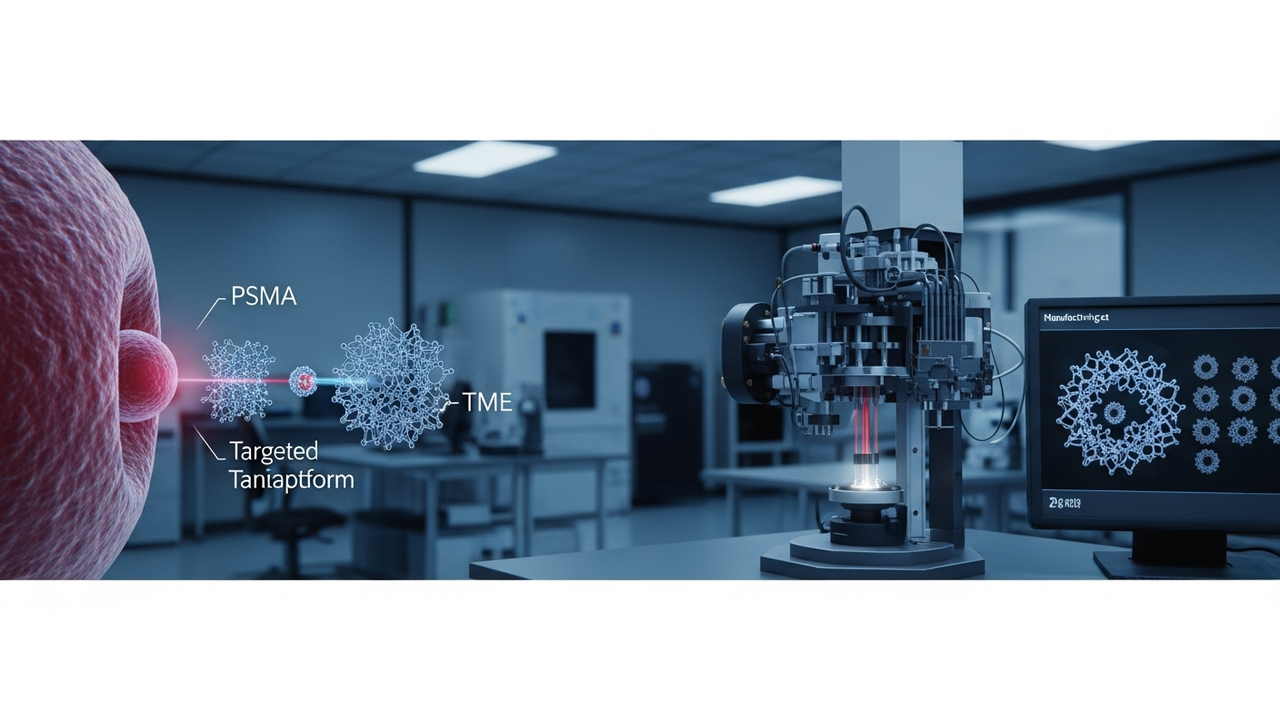
The application of nanotechnology in prostate cancer treatment shows significant advancements in drug delivery, particularly via prostate-specific membrane antigen (PSMA)-targeted nanoplatforms and tumor microenvironment (TME)-responsive therapies. These innovative approaches yield improved pharmacokinetic profiles and enhanced selective drug accumulation at tumor sites, demonstrating the potential to significantly reduce systemic toxic side effects common with conventional anticancer drugs. However, high manufacturing costs remain a considerable challenge for clinical translation.
Technical and Clinical Details
Nanomedicine delivery systems exploit their nanoscale properties to precisely target drugs to cancer cells, thereby minimizing adverse effects on healthy tissues. PSMA-targeted nanoplatforms achieve efficient drug concentration at cancerous sites by selectively binding to PSMA molecules, which are overexpressed on the surface of prostate cancer cells. Concurrently, TME-responsive therapies are engineered to precisely release their payload in response to specific physical (e.g., low pH, hypoxia) or biochemical (e.g., specific enzymes) triggers prevalent within the tumor microenvironment, thereby significantly enhancing therapeutic efficacy. These sophisticated systems confer crucial pharmacokinetic advantages, including prolonged blood half-life, improved drug solubility, and facilitated intracellular uptake. Despite these advancements, the manufacturing of such nanomedicines demands stringent Good Manufacturing Practice (GMP)-compliant infrastructure, ultra-high-purity raw materials, and elaborate quality control testing. These requirements collectively drive up manufacturing costs, presenting a formidable barrier to widespread clinical translation.
Strategic Significance and Outlook
Research into nanotechnology for prostate cancer holds immense potential for developing truly groundbreaking therapies. PSMA targeting and TME-responsive nanoplatforms are poised to be pivotal in realizing more effective treatments with significantly fewer side effects. Nevertheless, translating these innovative technologies from the lab to patient care necessitates a critical focus on optimizing manufacturing costs and ensuring scalability. Future endeavors are anticipated to concentrate on developing more efficient nanoparticle synthesis methods, securing high-purity raw materials at reduced costs, and implementing advanced automated quality control systems. Through concerted collaboration among government agencies, academic institutions, and pharmaceutical companies, successful navigation of these formidable challenges could enable nanomedicine to dramatically improve outcomes for prostate cancer patients and usher in a transformative new era of cancer treatment.
Get our weekly technology intelligence — free
Receive an infographic that lets you judge at a glance whether each field’s analysis report is worth reading.
Subscribe Free — Weekly Tech Intelligence
By subscribing, you’ll receive Troy-Technical’s weekly technology intelligence newsletter.
- Your email and selected fields are used only to deliver the newsletter.
- We never share your information with third parties.
- You can unsubscribe anytime via the link in each email.
See our Privacy Policy for details.
Takes about a minute · Unsubscribe anytime