Key Findings
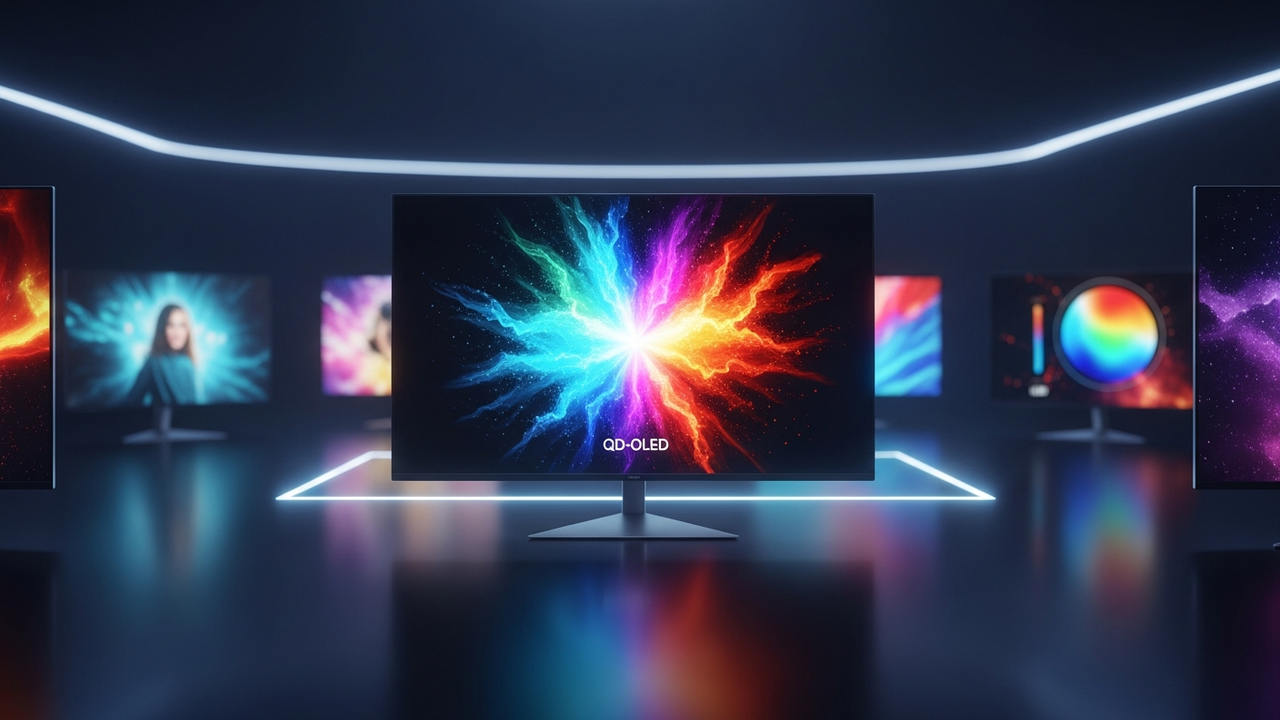
In the 2026 OLED monitor market, QD-OLED technology is driving flagship products due to its exceptional color reproduction, high saturation, and vibrant High Dynamic Range (HDR) performance. QD-OLED, which combines blue OLED pixels with a quantum dot color conversion layer, is widely adopted, especially in gaming monitors and professional applications, offering consumers the ultimate visual experience. While competing technologies like WOLED and Tandem OLED are also evolving, QD-OLED demonstrates a clear advantage in terms of color gamut and peak brightness.
Technical / Clinical Details
The OLED monitor market primarily features three panel technologies:
- QD-OLED (Quantum Dot Organic Light Emitting Diode): This technology combines a blue OLED emissive layer with red and green quantum dot color conversion layers deposited above it. This architecture achieves an extremely wide color gamut (BT.2020 compliant), high color purity, and vivid saturation. Because quantum dots are not self-emissive, precise pixel-by-pixel light control is easier, which truly shines in bright HDR highlights. Samsung Display is the sole mass producer of QD-OLED panels, supplying them for both televisions and monitors.
- WOLED (White Organic Light Emitting Diode): This technology generates color by layering color filters over a white OLED light source. While widely adopted across numerous products, light is lost when passing through the color filters, potentially leading to inferior color gamut and peak brightness compared to QD-OLED.
- Tandem OLED: This technology stacks multiple OLED emissive layers to enhance brightness and lifespan. Its adoption is beginning in automotive displays and certain high-performance monitors, though cost and complexity can be challenges.
The latest generation of QD-OLED panels incorporates optimizations such as the “Quantum Black Film” developed by Samsung Display. This improvement enhances black level performance in brightly lit rooms and eliminates the previous purplish tint. Furthermore, the panel’s hardness has increased from 2H to 3H, improving scratch resistance by 2.5 times, boosting physical durability. Burn-in remains a common concern for OLED technology; however, advanced anti-burn-in features like pixel shift, logo detection, and brightness limiting are implemented by manufacturers, significantly reducing the risk in daily use.
Background & Context
OLED technology has garnered high acclaim as the next-generation display technology, replacing LCDs due to its perfect black levels, infinite contrast ratio, and rapid response times. Especially in gaming, where the absence of motion blur and vibrant colors are paramount, the demand for OLED monitors has rapidly increased. QD-OLED has solidified its position as the industry’s flagship technology by retaining the strengths of OLED and further enhancing color reproduction through the introduction of quantum dots. This technological competition is a driving force for providing consumers with higher quality visual experiences.
Strategic Significance & Outlook
QD-OLED displays are expected to continue leading the market for high-resolution, high-refresh-rate gaming monitors and professional creative monitors. Quantum dot supplier Nanosys has outlined a roadmap aiming for brighter QD-OLED TVs by 2026 and next-generation electroluminescent QDEL (Quantum Dot Electroluminescent Display) by 2029. This includes plans for improved quantum dots supporting the BT.2020 color gamut and enhanced quantum dot converters to boost QD-OLED TV brightness. These advancements suggest that QD display technology will continue to evolve, holding the potential to create new markets.
Source: https://root-nation.com/en/articles-en/top-devices-en/en-choosing-an-oled-monitor/
Get our weekly technology intelligence — free
Receive an infographic that lets you judge at a glance whether each field’s analysis report is worth reading.
Subscribe Free — Weekly Tech Intelligence
By subscribing, you’ll receive Troy-Technical’s weekly technology intelligence newsletter.
- Your email and selected fields are used only to deliver the newsletter.
- We never share your information with third parties.
- You can unsubscribe anytime via the link in each email.
See our Privacy Policy for details.
Takes about a minute · Unsubscribe anytime