Key Findings
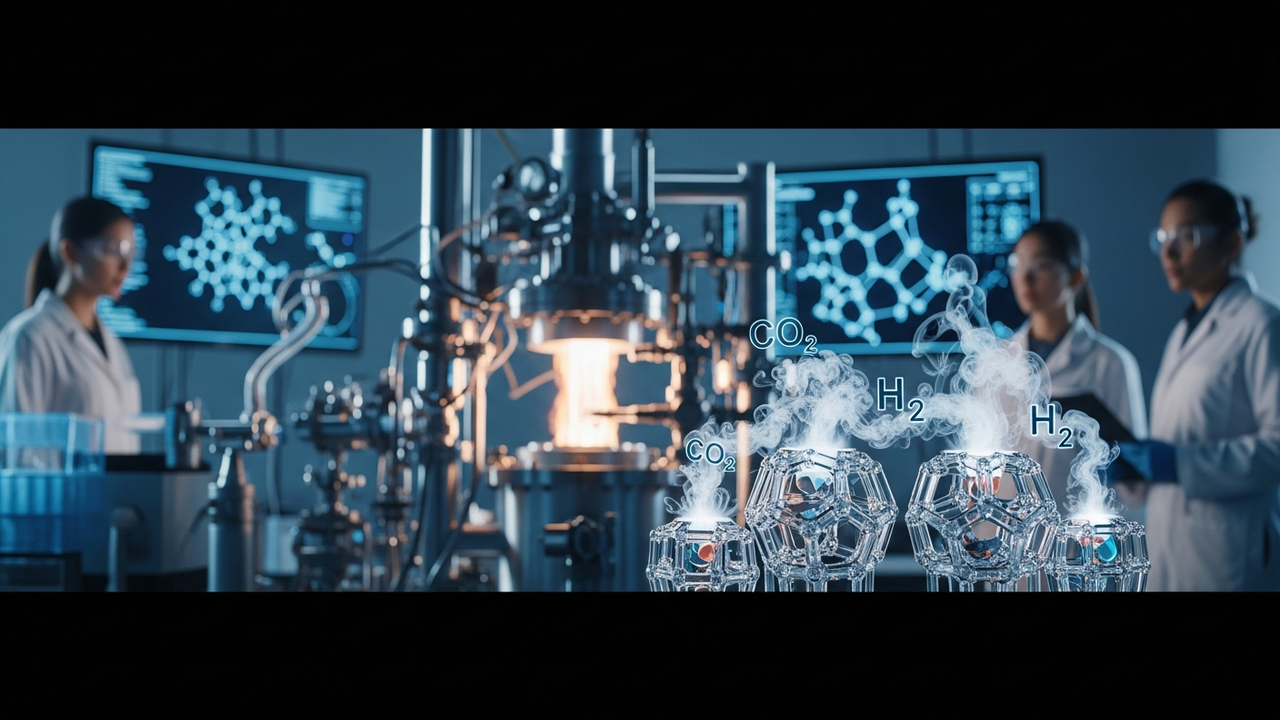
Scientists have made a significant discovery that drastically improves the processability of Metal-Organic Framework (MOF) glass, a highly porous material renowned for its efficiency in trapping gases like CO₂ and hydrogen. The innovation involves incorporating small amounts of sodium- or lithium-containing compounds, which effectively lowers the softening temperature of the MOF glass and enhances its flow properties when heated. This breakthrough resolves a long-standing manufacturing challenge, propelling MOF glass towards broader practical applications in gas separation, chemical storage, advanced coatings, and clean energy systems.
Technical / Clinical Details
MOF glasses are highly promising materials for gas storage and separation due to their exceptionally high surface area and tunable pore structures. However, traditional MOFs are synthesized as crystalline powders, making large-scale manufacturing and forming into specific shapes challenging. While MOF glasses offer the advantage of being melt-processable, their high softening temperatures and complex processing requirements have hindered their widespread adoption. The newly discovered method introduces specific compounds containing sodium or lithium ions into the MOF glass precursor, which modifies the material’s network structure. This effectively lowers both the glass transition temperature and the softening temperature, enabling MOF glass to be molded and processed under milder and simpler conditions. This significantly boosts manufacturing efficiency and scalability.
Background & Context
With climate change and energy security as pressing global concerns, technologies for CO₂ capture and hydrogen storage are indispensable for achieving a sustainable society. MOFs have garnered considerable attention as next-generation materials exhibiting superior performance in these areas, but manufacturing complexities have been a major barrier to their practical implementation. The poor processability of conventional MOF glasses limited their use in specific device designs and large-scale production. This improvement in processability is a crucial breakthrough that allows MOF glass to translate its inherent advantage of gas capture capability into a wider array of industrial applications.
Strategic Significance & Outlook
The enhanced processability of MOF glass, achieved through the addition of sodium or lithium, is set to accelerate the commercialization of this innovative material. By making it easier and more cost-effective to manufacture, MOF glass is expected to find applications in high-performance gas separation membranes, efficient direct air capture technologies for CO₂, safer hydrogen storage solutions, and durable intelligent coatings. Investors are likely to show strong interest in the market expansion of MOF glass as a new material technology contributing to energy efficiency and environmental protection. This technology is projected to drive breakthroughs in the clean energy sector, playing a vital role in the transition to a sustainable future.
Get our weekly technology intelligence — free
Receive an infographic that lets you judge at a glance whether each field’s analysis report is worth reading.
Subscribe Free — Weekly Tech Intelligence
By subscribing, you’ll receive Troy-Technical’s weekly technology intelligence newsletter.
- Your email and selected fields are used only to deliver the newsletter.
- We never share your information with third parties.
- You can unsubscribe anytime via the link in each email.
See our Privacy Policy for details.
Takes about a minute · Unsubscribe anytime