Key Findings
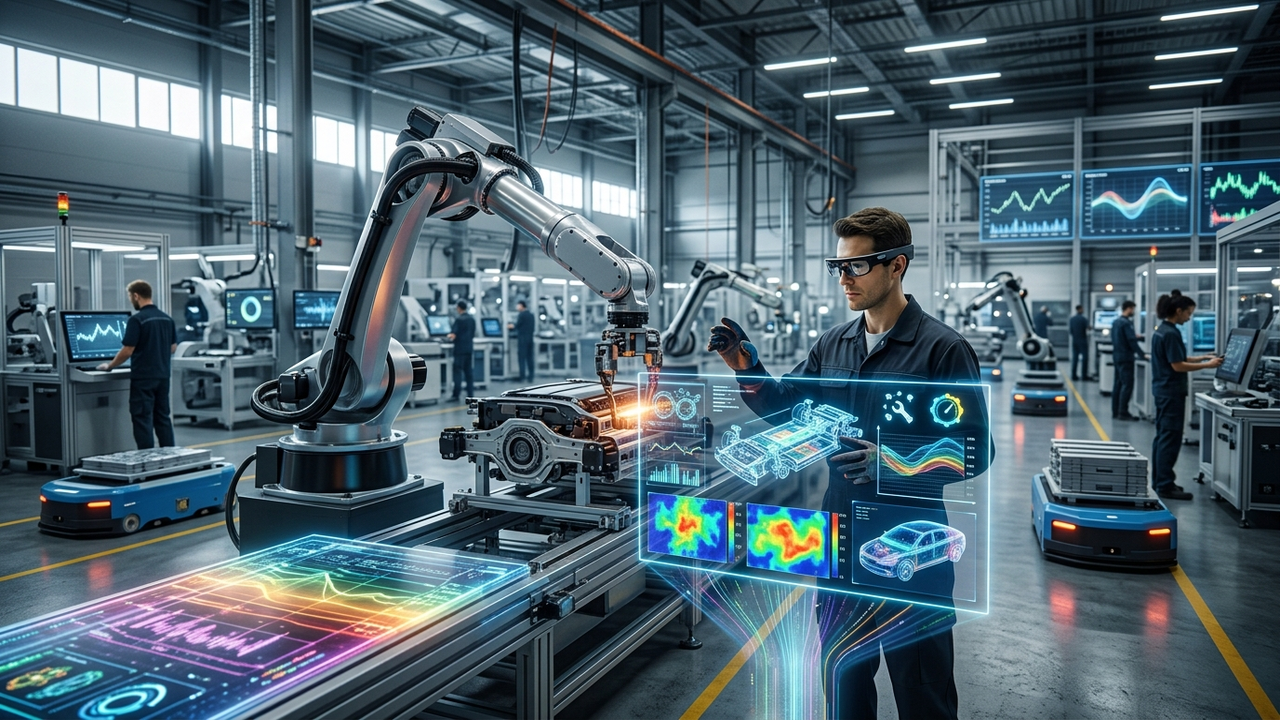
According to the latest research report from ABI Research, industrial AI activity witnessed an astounding growth of over 218% year-on-year in 2025. This significant surge indicates that advancements in Generative AI and Physical AI, coupled with cross-industry strategic partnerships, are fundamentally redefining the manufacturing sector’s framework.
Technical / Clinical Details
Industrial AI activities are extending beyond conventional manual tasks and automation processes, introducing higher levels of intelligence and autonomy into manufacturing systems. Generative AI is dramatically shortening design cycles and accelerating innovation through its capabilities in product design optimization, simulation, and autonomous generation of complex manufacturing processes. Meanwhile, Physical AI, facilitated by autonomous robots, drones, and smart sensor networks, is enhancing real-time data collection, quality inspection, predictive maintenance, and human-robot collaboration on factory floors. These technologies enable data-driven decision-making across the entire supply chain, increasing production line flexibility and resilience. Partnerships are crucial for combining diverse expertise across industries to facilitate the rapid development and deployment of AI solutions.
Background & Context
The manufacturing industry faces challenges such as labor shortages, cost pressures, and supply chain vulnerabilities, for which AI is emerging as a critical solution. The market is shifting from conceptual proof-of-concept (PoC) stages to commercialized solutions that deliver tangible return on investment (ROI). Companies are accelerating the adoption and scaling of AI technologies to maintain competitiveness and drive digital transformation. This movement is paramount for enhancing productivity, quality, and sustainability in manufacturing.
Strategic Significance & Outlook
The continuous rapid growth of industrial AI signals the future direction of innovation in manufacturing. Moving forward, more companies are expected to integrate generative AI and physical AI, accelerating the realization of smart factories and autonomous production systems. This will lead to mass customization, maximization of resource efficiency, and improved occupational safety. Furthermore, the development of new regulations and standards concerning AI ethics, data privacy, and cybersecurity will be crucial for the healthy evolution of this sector. Industrial AI is unequivocally poised to become a leading technology that enhances global competitiveness and shapes the future of manufacturing.
Get our weekly technology intelligence — free
Receive an infographic that lets you judge at a glance whether each field’s analysis report is worth reading.
Subscribe Free — Weekly Tech Intelligence
By subscribing, you’ll receive Troy-Technical’s weekly technology intelligence newsletter.
- Your email and selected fields are used only to deliver the newsletter.
- We never share your information with third parties.
- You can unsubscribe anytime via the link in each email.
See our Privacy Policy for details.
Takes about a minute · Unsubscribe anytime








Comments