August 2026– date –
-

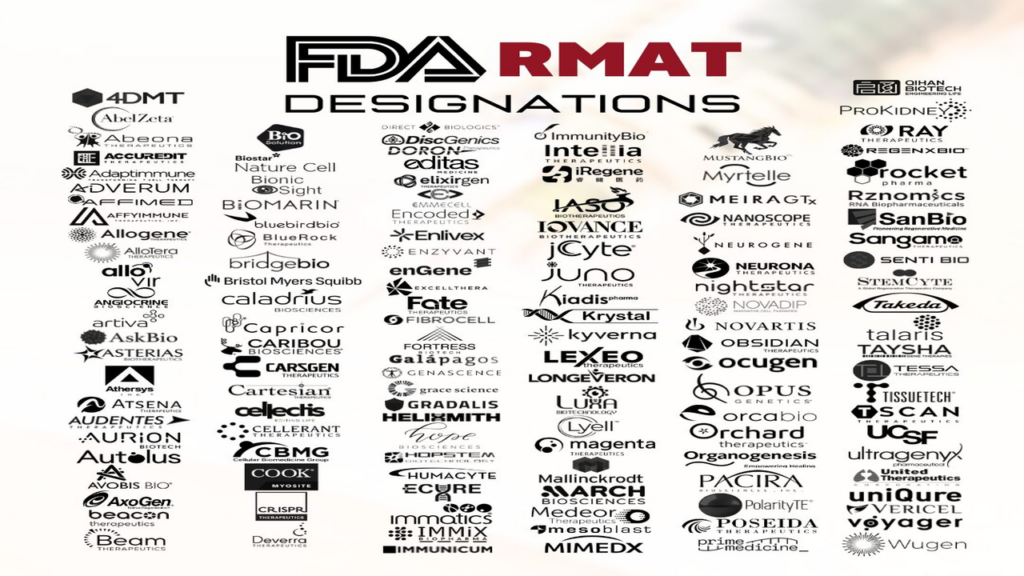
U.S. FDA Regenerative Medicine Advanced Therapy (RMAT) Designations: 168 Publicly Announced by 2026, Accelerating Transformative Therapies in Oncology and Rare Diseases
BioInformant USA Overview According to BioInformant, as of August 2026, the U.S. FDA has publicly announced 168 Regenerative Medicine Advanced Therapy (RMAT) designations. These designations are granted to cell and gene therapy products ... -
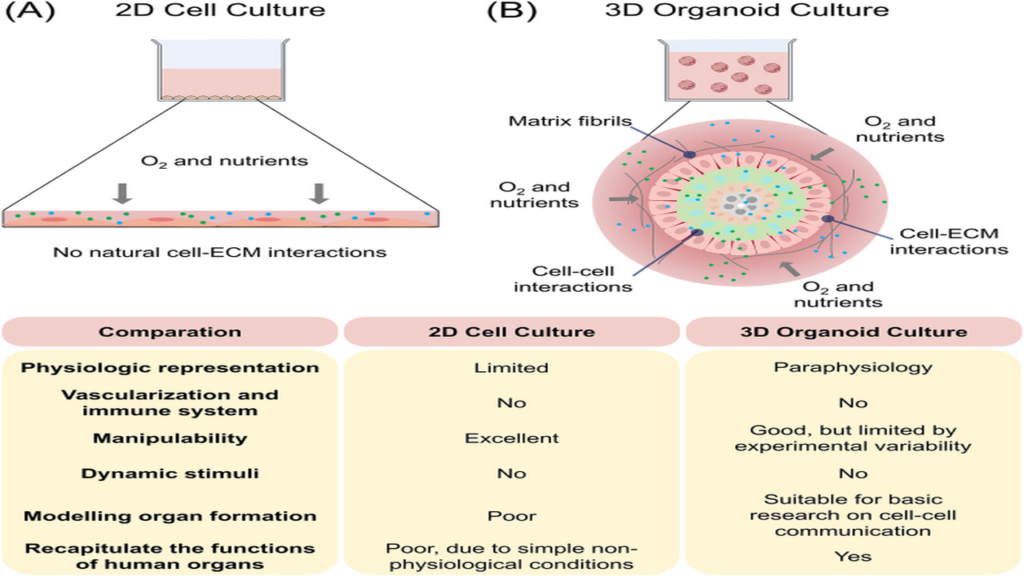
Advances in 3D Bioprinting for Organoid Construction: Enhancing Physiological Relevance and Promoting Diverse Biomedical Applications
PMC (NIH) International Overview A comprehensive review article highlights recent advancements in 3D bioprinting technology for organoid construction. This technique overcomes challenges of traditional organoid culture methods by precise... -
Intellia Therapeutics Reports Positive Phase 3 HAELO Data for lonvo-z in HAE and Resumes Nex-z ATTR Phase 3 Enrollment
Intellia Therapeutics USA Overview Intellia Therapeutics announced positive Phase 3 HAELO clinical data for lonvo-z in hereditary angioedema (HAE), published in the New England Journal of Medicine. The company anticipates FDA Biologics L... -
Capra Biosciences Boosts Domestic Manufacturing of Essential Medicines with Continued HHS Support, Strengthening Biopharmaceutical Supply Chain Resilience
BioSpace USA Overview Capra Biosciences announced plans to strengthen its domestic manufacturing capabilities for essential medicines with ongoing financial support from the U.S. Department of Health and Human Services (HHS). This initia... -
Pharmaceuticals and Medical Devices Agency (PMDA) Updates Regenerative Medicine Product Approval List and Advances International Regulatory Harmonization
Pharmaceuticals and Medical Devices Agency (PMDA) Japan Overview On August 5, 2026, Japan’s Pharmaceuticals and Medical Devices Agency (PMDA) updated its approval list for regenerative medicine products, covering April 2015 to May 2026. ... -
XellSmart Secures FDA Fast Track Designation for Off-the-Shelf iPSC-Derived Cell Therapy XS411 for Parkinson’s Disease
BioSpace (XellSmart) USA Overview XellSmart announced that its allogeneic, off-the-shelf iPSC-derived cell therapy candidate, XS411, for Parkinson's disease has received Fast Track Designation (FTD) from the U.S. FDA. XS411 aims to repla... -
Washington University-Developed CAR-T Therapy for T-Cell Leukemia and Lymphoma Receives FDA Breakthrough Therapy Designation: Off-the-Shelf Approach Improves Access
Washington University School of Medicine in St. Louis USA Overview A cell-based immunotherapy developed by Washington University School of Medicine in St. Louis, designed to treat rare and aggressive T-cell acute lymphoblastic leukemia a... -
Editas Medicine’s CRISPR Candidate EDIT-401 Achieves Over 90% Reduction in LDL Cholesterol in Non-Human Primates, Suggesting Long-Term Durability for Dyslipidemia
Editas Medicine USA Overview Editas Medicine announced updated preclinical data for EDIT-401, a CRISPR-based investigational drug for dyslipidemia, showing highly promising results. A single dose of EDIT-401 in non-human primate models a... -
FDA Grants Four Regenerative Medicine Advanced Therapy (RMAT) Designations in July: Advancements in Musculoskeletal, Ophthalmic, Oncology, and Neurological Fields
Pharmacally USA Overview In July 2026, the U.S. FDA granted Regenerative Medicine Advanced Therapy (RMAT) designations to four distinct investigational drugs, spanning diverse regenerative medicine modalities including cell therapies, ge... -
Promises and Pitfalls of In Vivo CAR Gene Therapy: Clinical Proof-of-Concept Progresses Amidst Focus on Safety and Biological Factors
Blood - ASH Publications USA Overview While ex vivo CAR-T cell therapies demonstrate high efficacy in lymphoid hematologic malignancies, their logistical complexity and high costs limit patient access. In contrast, in vivo CAR gene thera...