
Key Findings
A review published in Analytical Chemistry reveals that biosensors integrating molecularly imprinted polymers (MIPs) and aptamers have achieved substantial performance enhancements in sensitive and highly selective detection of small molecules. This synergistic strategy combines the robust structural stability of MIPs with the exceptional target specificity of aptamers, leading to significant improvements in selectivity, anti-interference capability, cost-efficiency, and response speed compared to conventional technologies.
Technical & Clinical Details
The review demonstrates the broad applicability of MIP-aptamer integrated biosensors across various fields, including life sciences, healthcare, food safety, and environmental monitoring, for detecting diverse targets. Of particular note is the frequent adoption of electrochemical MIP-apt sensors for small molecule detection. These sensors utilize embedded structures that offer protection against nuclease degradation and effectively reduce non-specific interference from complex biological matrices. This design is expected to enhance diagnostic accuracy, yielding more reliable analytical results, which is critical for clinical and field applications.
Background & Context
Biosensor technology is an indispensable tool in modern society, where rapid and precise detection is often critical. However, existing biosensors have faced challenges such as non-specific binding in complex sample matrices, limitations in long-term stability, and high production costs. MIPs, as synthetic recognition receptors, have gained attention for their high stability and cost-effectiveness but often suffer from specificity issues compared to natural bioreceptors. Aptamers, conversely, offer high specificity and versatility in binding diverse targets but can have structural stability limitations. The integration of these two technologies effectively mitigates their individual weaknesses, paving the way for the development of high-performance biosensors with broad impact on diagnostics and monitoring.
Strategic Significance & Outlook
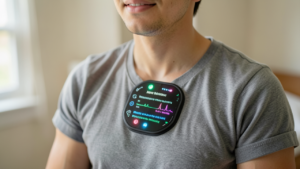
Looking forward, MIP-aptamer integrated biosensors are anticipated to see expanded clinical applications and integration into point-of-care testing (POCT) devices. The combination with embedded structures and microfluidic technologies promises the development of smaller, more automated systems. This will facilitate groundbreaking advancements in areas such as early disease diagnosis, personalized medicine, and rapid infectious disease screening, transforming many aspects of healthcare. Furthermore, this technology is projected to play a crucial role in ensuring food safety and monitoring environmental pollutants, offering robust and cost-effective solutions.
Source: https://pubs.acs.org/ancham/article/98/34/24605/5260995/Development-and-Applications-of-Biosensors
Get our weekly technology intelligence — free
Receive an infographic that lets you judge at a glance whether each field’s analysis report is worth reading.
Subscribe Free — Weekly Tech Intelligence
By subscribing, you’ll receive Troy-Technical’s weekly technology intelligence newsletter.
- Your email and selected fields are used only to deliver the newsletter.
- We never share your information with third parties.
- You can unsubscribe anytime via the link in each email.
See our Privacy Policy for details.
Takes about a minute · Unsubscribe anytime








Comments