
Key Findings
A newly developed microwave metamaterial biosensor has revolutionized diagnostic technology by enabling label-free blood and hemoglobin analysis through the utilization of a compact microstrip architecture. Simulations indicate that this sensor achieves an exceptionally high sensitivity of 600 MHz/RIU (refractive index unit), demonstrating significant potential for rapid biological sensing.
Technical & Clinical Details
This microwave metamaterial biosensor leverages the unique properties of metamaterials, which are artificially engineered structures designed to manipulate electromagnetic waves. The sensor employs a compact microstrip architecture, ideal for integration and miniaturization. Its primary function is to detect changes in electromagnetic response caused by the presence of blood or hemoglobin samples on the sensor surface. This change corresponds to alterations in the refractive index or dielectric properties of analytes in the sample, allowing for ‘label-free’ detection without the need for special fluorescent or radioactive tags. Simulation results demonstrate the sensor’s outstanding sensitivity of 600 MHz/RIU, meaning it can detect subtle changes in refractive index with extremely high precision. Such high sensitivity is critical for detecting trace biomarkers and for real-time monitoring of compositional changes in complex biofluids. Label-free analysis of blood and hemoglobin is directly applicable to various clinical diagnoses, including anemia, blood disorders, and blood compatibility testing.
Background & Context
Blood analysis is essential for disease diagnosis, treatment monitoring, and health screening. However, many conventional blood tests require time-consuming sample preparation, the use of expensive reagents, and specialized laboratory equipment. Methods requiring labels, in particular, can complicate the process, increase costs, and potentially alter the function of the analyte molecules. Label-free technology has gained attention as a promising approach to overcome these challenges, enabling simpler and faster diagnostics. Microwave-frequency sensors are particularly well-suited for biological sample analysis due to their immunity to electromagnetic interference and their ability to directly measure the dielectric properties of various substances. The advancement of this technology is crucial for accelerating the development of Point-of-Care Testing (POCT) devices and improving healthcare access.
Strategic Significance & Outlook
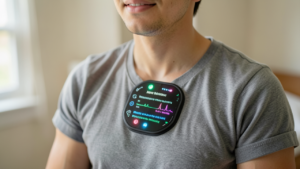
The newly developed microwave metamaterial biosensor represents a significant step towards realizing portable POCT diagnostic systems. Future research and development will focus on further enhancing sensitivity, integrating multiplex detection capabilities, and reducing manufacturing costs. For example, integration into smart devices could enable home health monitoring and rapid diagnostics in remote healthcare settings. Applications are expected across a wide range of biomarkers for label-free detection, from early screening for blood disorders to monitoring glucose levels, infectious disease markers, and even specific drug levels. This innovative sensor is predicted to significantly contribute to the advancement of personalized and preventive medicine by streamlining diagnostic processes and reducing patient burden.
Get our weekly technology intelligence — free
Receive an infographic that lets you judge at a glance whether each field’s analysis report is worth reading.
Subscribe Free — Weekly Tech Intelligence
By subscribing, you’ll receive Troy-Technical’s weekly technology intelligence newsletter.
- Your email and selected fields are used only to deliver the newsletter.
- We never share your information with third parties.
- You can unsubscribe anytime via the link in each email.
See our Privacy Policy for details.
Takes about a minute · Unsubscribe anytime








Comments